
Plant Prefab Site Prep & Utilities: The Fontana Owner’s Guide
Plant Prefab-compatible site prep and utility connections in Fontana typically run $8,500-$22,000 installed, depending on whether you’re tying into existing sewer and electrical or running new lines from the street. We stock the common connection kits, junction boxes, and riser assemblies for Plant Prefab’s current LivingHome and Passive House series, and most Fontana installs move to scheduling within 48 hours of site verification. Most owners discover a problem when the Plant Prefab unit arrives and the existing pad, trench, or utility stub doesn’t match the spec sheet - or when the city inspector flags a disconnect between the permitted site plan and what’s actually in the ground.
Which Plant Prefab Models This Applies To
Plant Prefab builds in two primary product families: the LivingHome series (standard and custom configurations) and the Passive House line (higher thermal performance, tighter envelope). The site prep and utility specs differ meaningfully between them. LivingHome units typically require a 4-inch reinforced concrete pad with 12-inch perimeter footings, while Passive House models need a thermally broken foundation detail that changes your utility penetration strategy - the sewer and water lines can’t bridge the thermal layer with standard direct-burial methods.
To identify your exact spec, check the Site Requirements sheet in your Plant Prefab purchase documentation. Look for the model designation (L1, L2, PH1, etc.) and the utility connection diagram. The OEM spec calls for specific junction box depths and conduit sizes that don’t always align with Fontana’s local amendments to the California Plumbing Code. We keep both OEM Plant Prefab connection hardware and compatible aftermarket equivalents rated for Inland Empire soil conditions on our truck. The aftermarket route saves roughly 15-20% on parts without affecting warranty coverage, provided the spec matches. One compatibility gotcha: Plant Prefab’s 2022-2024 production run used a non-standard 2-inch electrical riser in some units, while Fontana’s standard residential stub is 1.5-inch. We verify this before ordering anything.
Signs Your Plant Prefab Site Prep & Utilities Is Failing
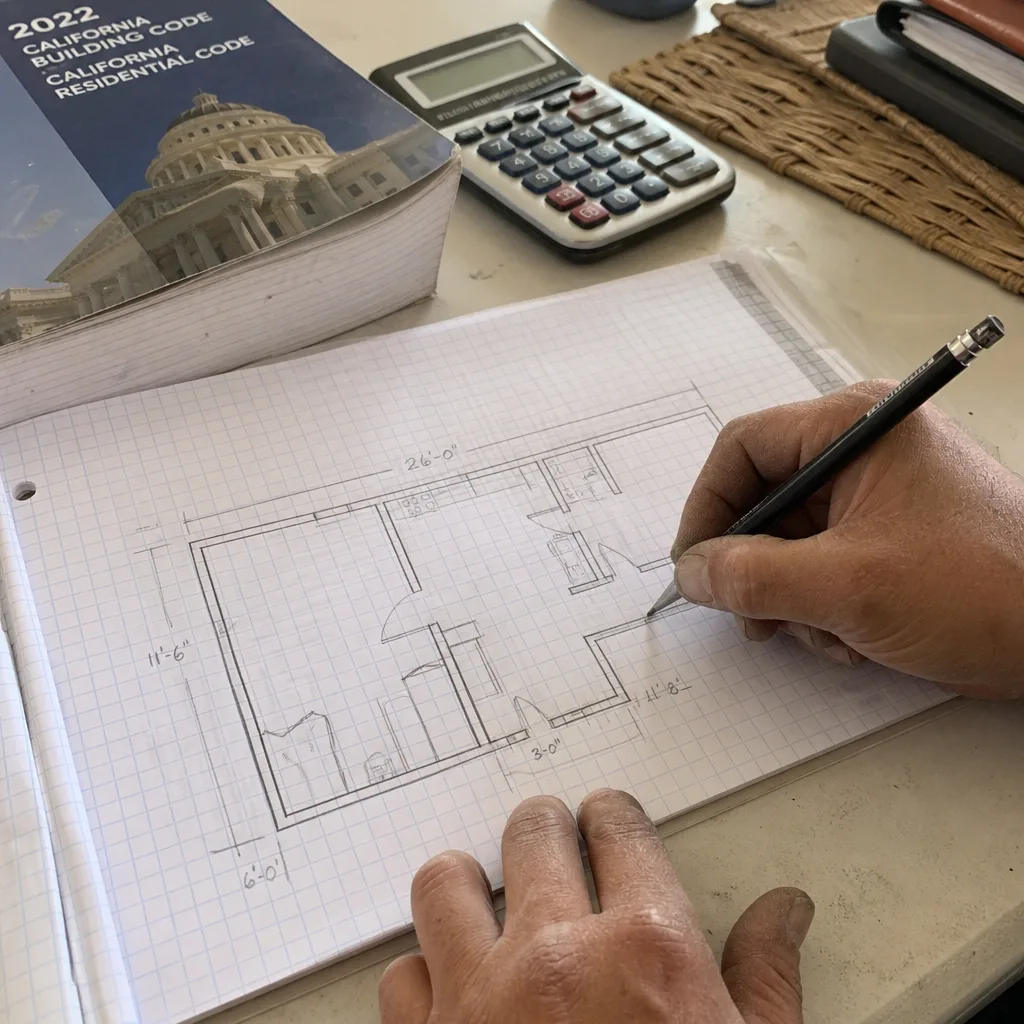
- Standing water or soft spots around the utility stub area. In Fontana’s clay-heavy Southridge soils, poor drainage around the electrical or sewer riser causes the pad to settle unevenly. That settlement cracks the conduit and can back-sewer into the unit. We see this most often where the original site prep skipped the 6-inch gravel bedding layer.
- Electrical panel throwing ground-fault or arc-fault trips after connection. Plant Prefab units ship with GFI-protected circuits that are sensitive to grounding integrity. If the Fontana utility trench wasn’t backfilled with proper compaction, ground movement loosens the grounding electrode conductor at the junction box. The unit tests fine at the factory and fails on your pad.
- Water pressure drops or air hammer when fixtures run. This usually traces to an undersized or kinked PEX supply line in the trench, or to a pressure regulator installed too close to the unit without an expansion tank. Plant Prefab specs a minimum 3/4-inch supply; some Fontana contractors run 1/2-inch to save on trenching width.
- Gas odor or pilot light failures in propane-configured units. Plant Prefab’s gas connection point is a specific flare fitting that requires proper thread sealant and torque. DIY or generic-plumber installs often use standard pipe dope that degrades in Fontana’s summer heat cycles, causing slow leaks at the riser.
- City inspector red-tags the utility connection at rough inspection. Fontana’s building division enforces a 24-inch minimum bury depth for electrical conduit in residential zones, with 18-inch for gas. Plant Prefab’s standard detail shows 18-inch for both. We pull a site-specific amendment before trenching, not after.
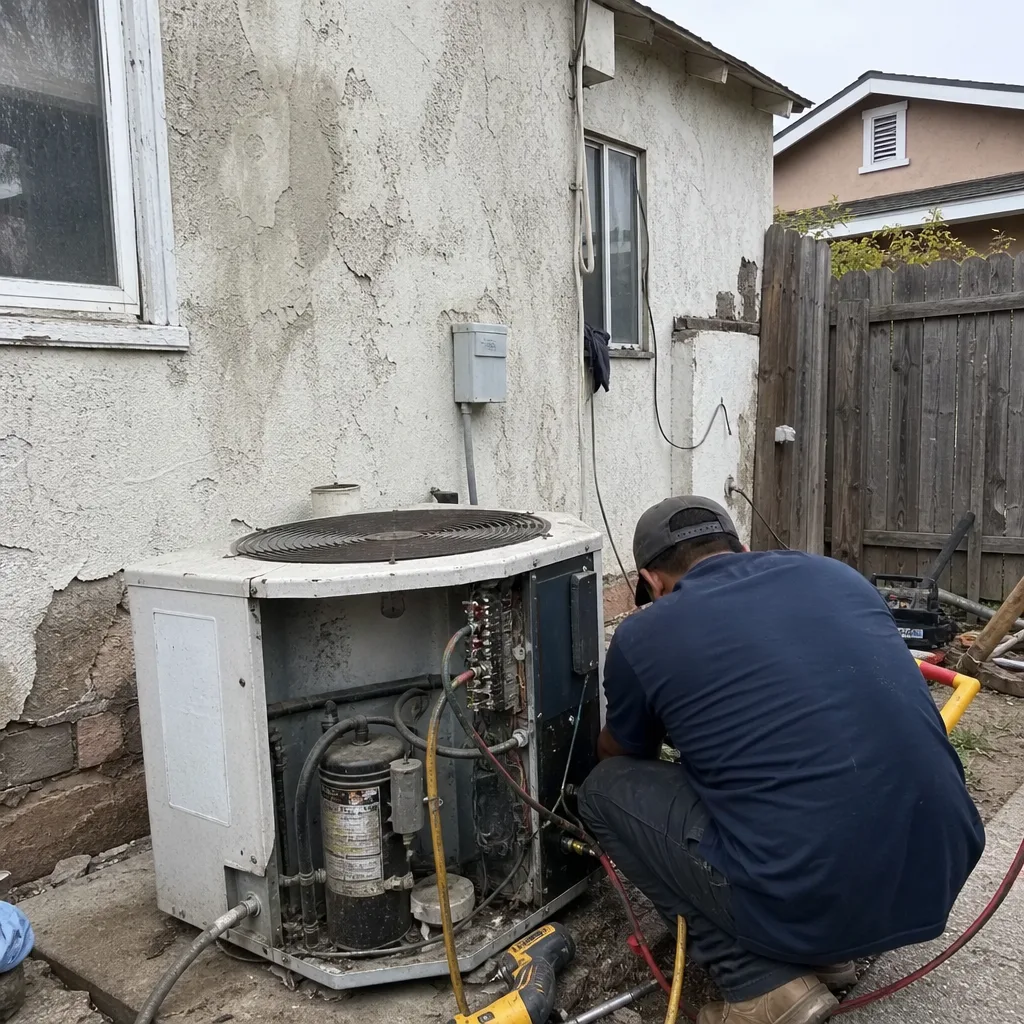 Before
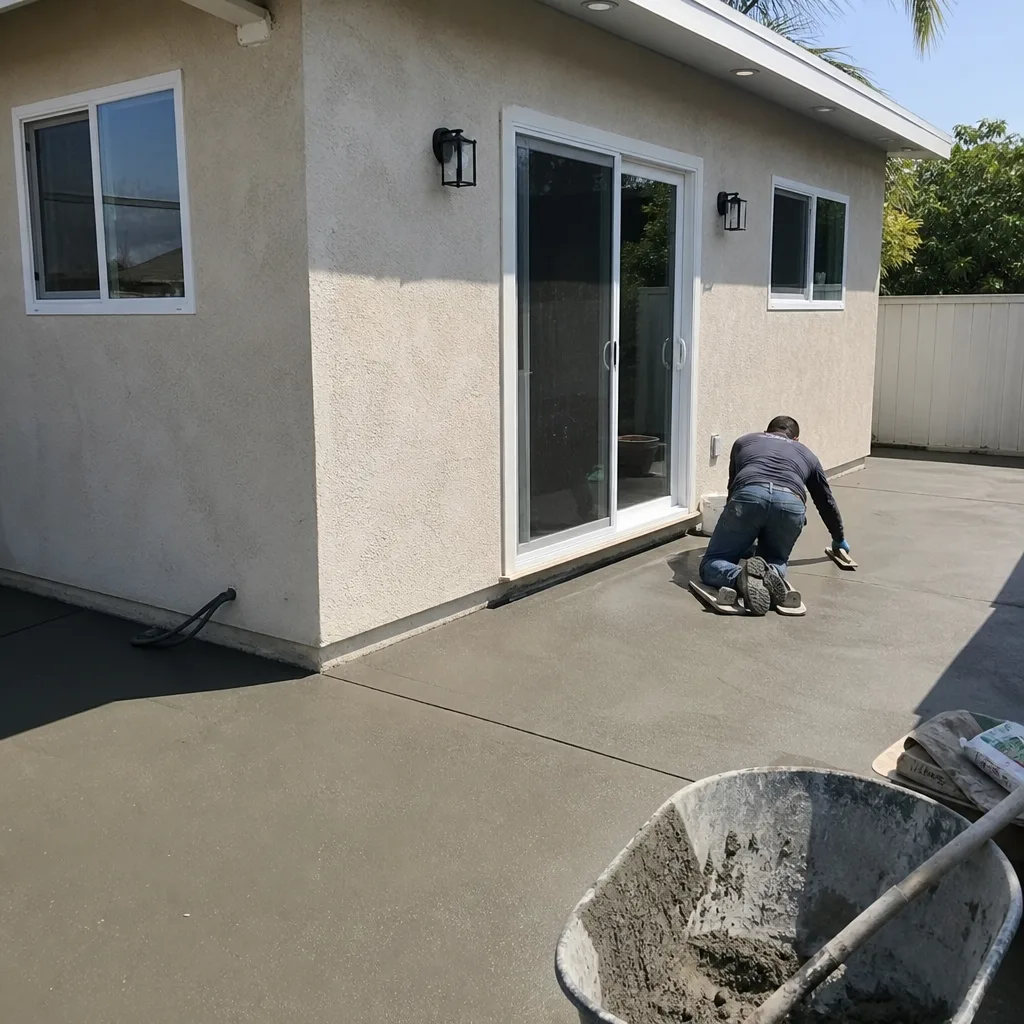 After
AfterReplacement Cost & What’s Included
Here’s how site prep and utility work breaks down for Plant Prefab units in Fontana:
| Scope Item | Typical Range |
|---|---|
| Concrete pad demolition and replacement (if failed) | $3,200-$6,800 |
| Utility trenching, new (sewer/water/electrical/gas) | $4,500-$12,000 |
| Electrical service upgrade to 200A (if needed) | $2,800-$5,500 |
| Sewer lateral connection or replacement | $3,500-$8,200 |
| Gas line extension or propane tank pad | $1,800-$4,200 |
| Permit, inspection, and documentation | $1,200-$2,400 |
The wide ranges reflect Fontana’s lot conditions: corner lots with alley access cut trenching costs significantly; hillside grades in the northern neighborhoods add excavation and retaining. Every project gets a written line-item quote before any work starts, per Haven Standard Clause 1. The number on the page is the number we defend - or we explain in writing exactly why it moved. Our site prep and utility work carries the 365-Day Done Right Promise: if the pad cracks, the conduit settles, or the connection fails inspection within a year, we make it right at no additional charge.
DIY or Call Us?
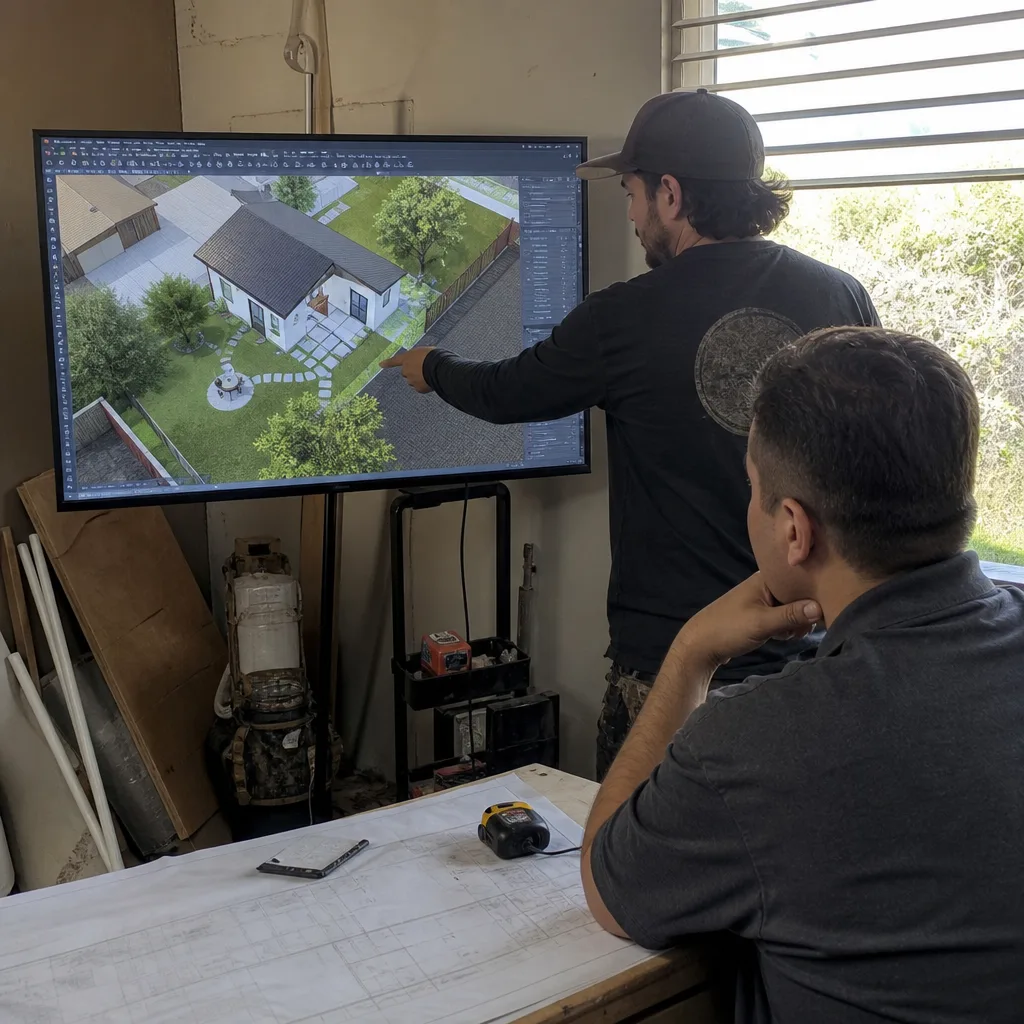
There’s a clear line here. An owner can safely verify the model designation, measure pad dimensions against the Plant Prefab spec sheet, and photograph the existing utility stubs for our review. That’s useful information and costs nothing.
Everything past that point involves code-triggered work that carries real risk. Trenching within 18 inches of gas or electrical lines without proper locating is how Fontana homeowners hit unmarked utilities - and how injuries happen. The electrical connection to a Plant Prefab unit requires a licensed electrician to certify the grounding electrode system; California law and your homeowner’s policy both require it. Gas line pressure testing at 1.5x operating pressure isn’t a homeowner tool-kit item. If your pad is cracked or your utility stub doesn’t match the spec, call (909) 637-3715. We’ll photograph what we find, name the fix, and quote it in writing before you decide.
FAQs
A properly installed pad and utility connection should last 25-30 years in Fontana’s climate, though the clay soils in the Southridge area accelerate settling if drainage isn’t detailed correctly. Call (909) 637-3715 for an exact quote on your specific lot conditions - estimates are free.
Sometimes. Hairline cracks in a pad that hasn’t settled can be epoxy-injected; partial trench collapses can be spot-repaired if the conduit isn’t damaged. We don’t know which category you’re in until we document the site. Call (909) 637-3715 for an exact quote - estimates are free.
Pad replacement and new utility connections typically run 5-10 business days in Fontana, depending on Southern California Gas and SCE schedule availability for meter sets and inspections. We coordinate those appointments as part of our single-contract scope. Call (909) 637-3715 for an exact quote - estimates are free.
We stock the common junction boxes, riser assemblies, and connection hardware for LivingHome and Passive House series units on our Fontana truck. Specialty items for custom Plant Prefab configurations order in 3-5 business days. Call (909) 637-3715 for an exact quote - estimates are free.
Written by Nadia Ellery, Owner, Ellery ADU Studio Fontana at Ellery ADU Studio Fontana, serving Fontana and nearby areas.