
James Hardie Site Prep & Utilities: The Fontana Owner’s Guide
James Hardie site prep and utilities for ADU projects in Fontana typically run $8,500-$18,000 installed, depending on existing service capacity and trench length. We stock James Hardie-compatible utility connection hardware and HardieZone-specific flashing integration kits on our Fontana trucks, and most replacements or upgrades are completed within one permit inspection cycle. Most owners discover a problem when their James Hardie siding crew arrives and finds the existing electrical sub-panel won’t accept the ADU load, or when the city inspector flags a gas line that was sleeved but not properly bedded per Fontana’s expansive-soil requirements.
Which James Hardie Models This Applies To
James Hardie doesn’t manufacture utility components directly, but their HardieZone system (HZ5 for wet/cold, HZ10 for hot/humid) dictates how site prep interfaces with siding installation. For Fontana’s inland-empire climate, we specify HZ10-compatible housewrap and drainage-plane details that integrate with utility penetrations. The critical match points are the 0.42-inch thickness of HardiePlank lap siding and the 5/16-inch HardiePanel, both of which require specific j-channel and utility-box depths that standard vinyl-compatible boxes don’t accommodate.
We source OEM James Hardie HardieTrim boards for utility boxing-out, or we fabricate equivalent from marine-grade plywood sealed with James Hardie-recommended joint sealant when the project budget demands it. The OEM trim carries a 30-year limited warranty; our fabricated equivalent carries our 365-Day Done Right Promise. To identify what you need, check the stamped code on existing HardiePlank (usually on the back face, upper left corner) for the product date and HZ rating. Pre-2017 HardiePlank in Fontana often used a different nail-line placement that affects how utility flashing integrates at the penetration point.
Signs Your James Hardie Site Prep & Utilities Is Failing
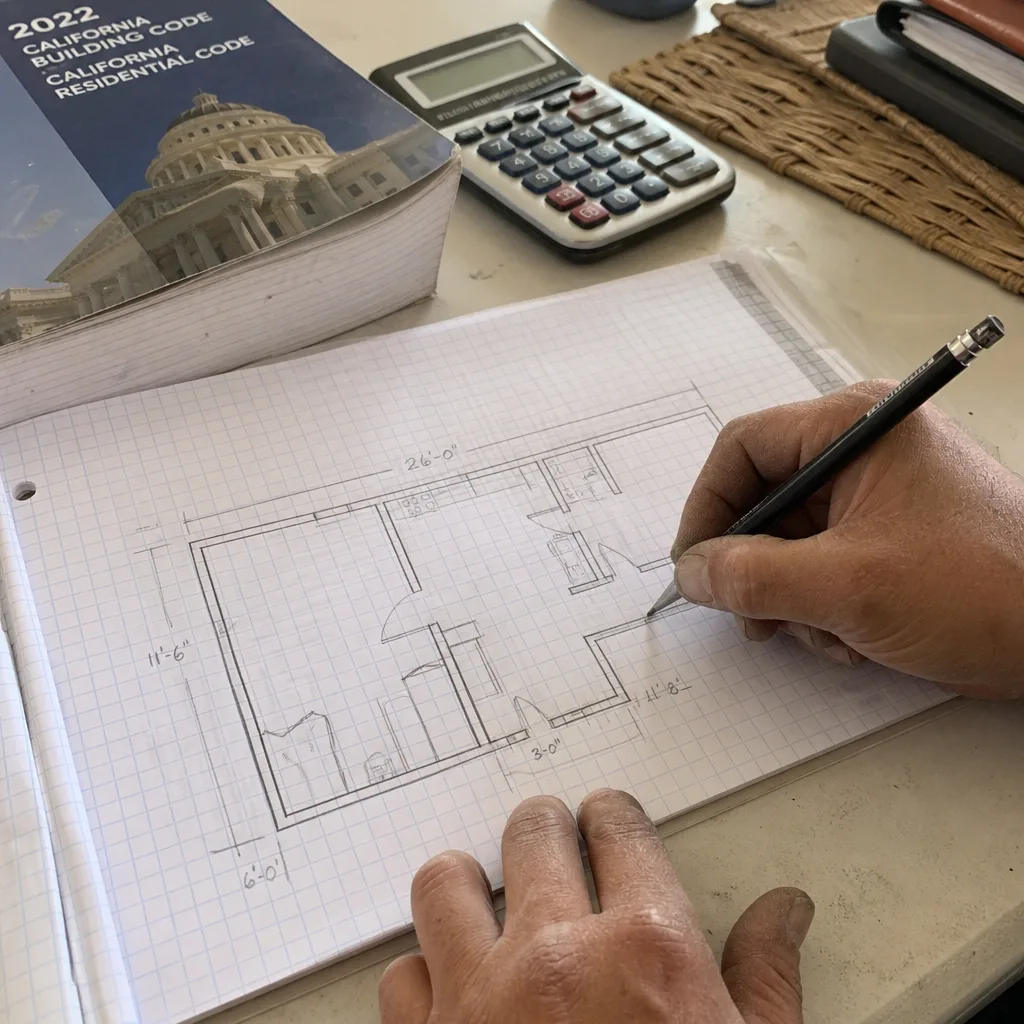
- Cracking or spalling at utility penetrations. Fontana’s clay-heavy soil expands and contracts with seasonal moisture shifts. If the gas or electrical sleeve wasn’t bedded in sand or granular fill per city code, the rigid conduit transmits ground movement directly into the HardiePanel, cracking the factory seal and allowing water behind the drainage plane.
- Inspector red-tag at rough electrical or plumbing. The city of Fontana requires 18-inch minimum cover for electrical conduit and 12 inches for gas in residential zones. We’ve seen DIY trenching stop at 14 inches because the owner hit caliche, only to fail inspection and require full re-dig with proper bedding material.
- Sub-panel humming or breaker trip under modest load. James Hardie ADU specifications don’t include electrical sizing, but the combined load of a 400-square-foot unit with electric heat often exceeds the 100-amp service common in Fontana’s 1980s-2000s housing stock. The symptom is the panel, but the root cause is site prep that didn’t account for service upgrade.
- Standing water within 10 feet of the ADU foundation. Hardie’s installation requirements specify finished grade 6 inches below sill plate with positive drainage away from structure. If site grading was skipped or the utility trench backfill settled into a bowl, water pools and voids the James Hardie material warranty, which explicitly excludes moisture damage from improper drainage.
- Gas odor or pressure drop at the meter during load test. Fontana’s SoCalGas territory requires a pressure test at 1.5 times working pressure for 15 minutes. A failing corrugated stainless steel tubing (CSST) run, often installed too close to HardiePanel edges without proper strike protection, can leak at the penetration clamp point.
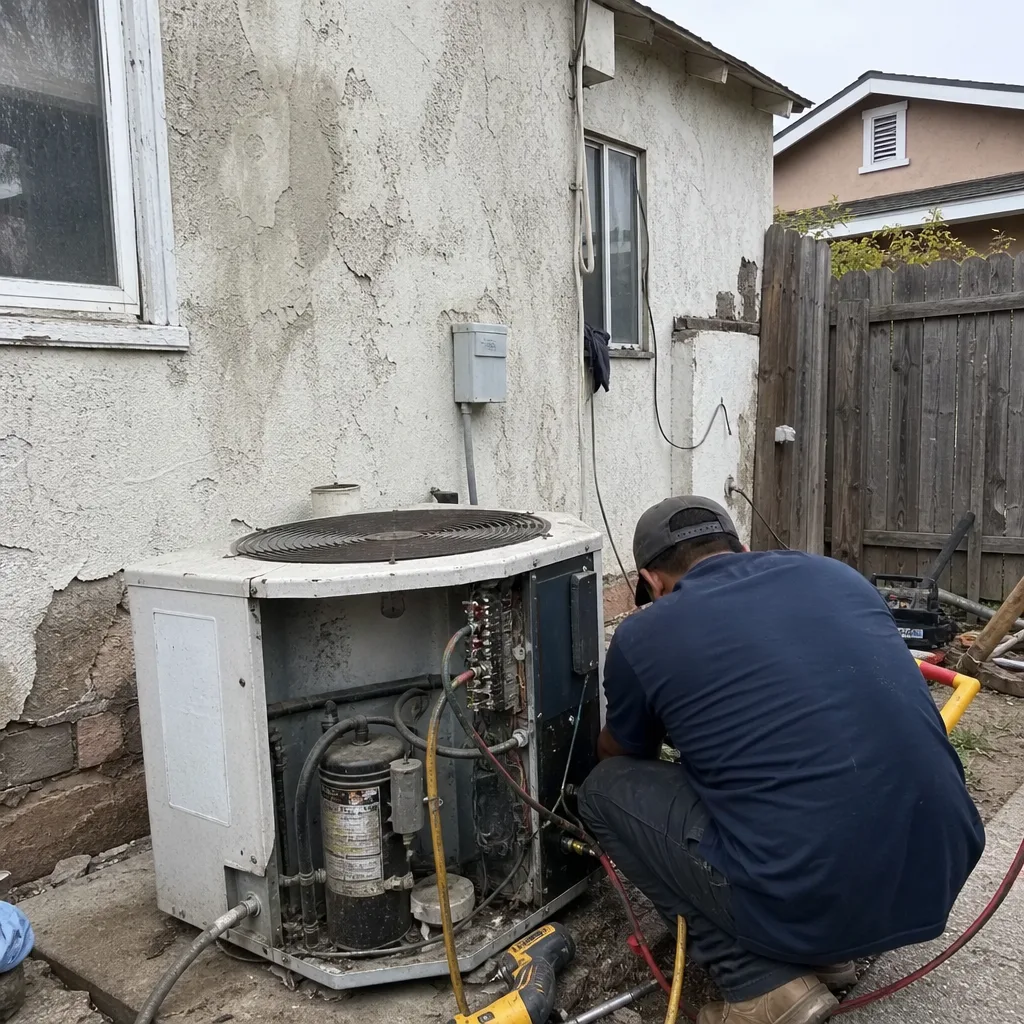 Before
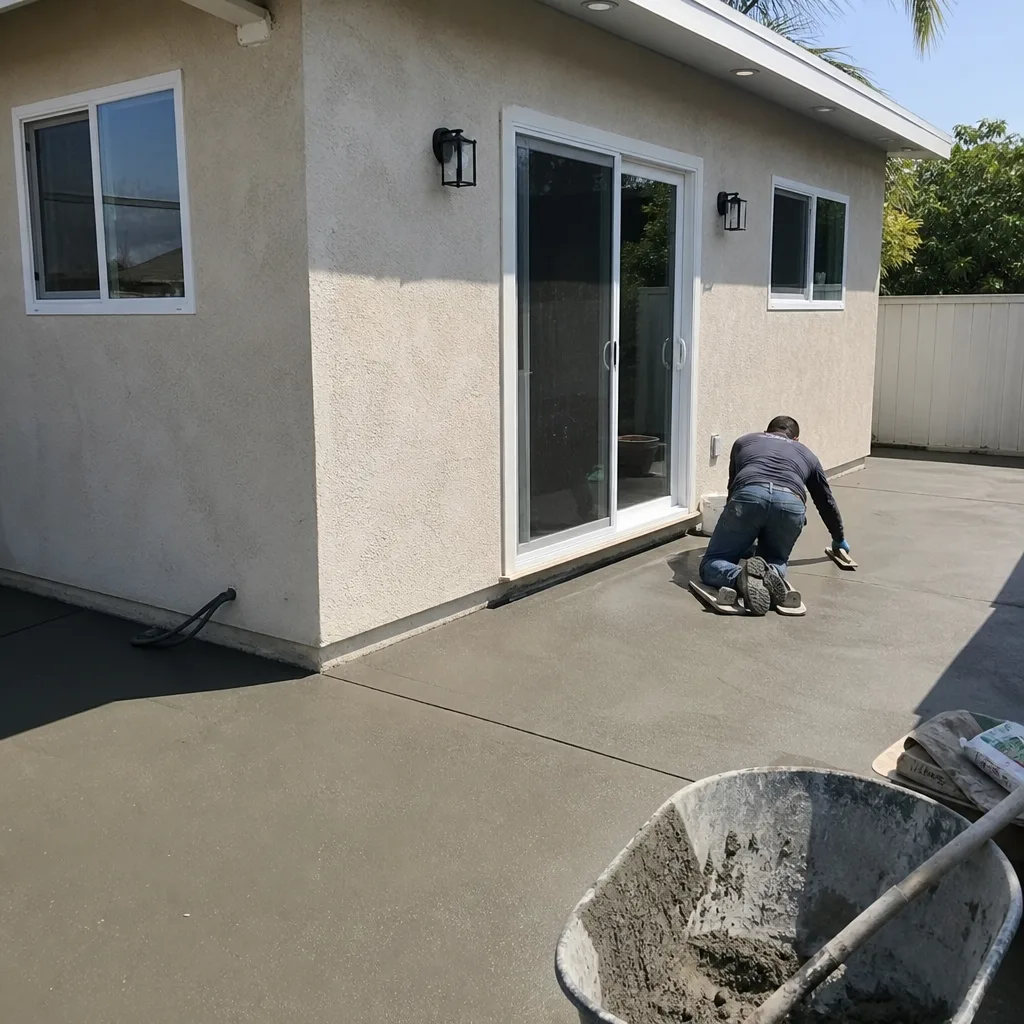 After
AfterReplacement Cost & What’s Included
James Hardie site prep and utilities in Fontana break into three cost bands based on what we find during our documented site assessment. A straightforward utility connection to existing adequate service, with proper Hardie-compatible boxing and flashing, typically runs $8,500-$12,000. Projects requiring electrical service upgrade from 100 to 200 amps, new gas line from the meter, or extensive grading for drainage compliance land in the $12,000-$18,000 range. The upper band includes trenching through Fontana’s caliche layers, which we’ve hit as shallow as 18 inches in the Southridge corridor and as deep as 42 inches near Summit Avenue.
Every quote itemizes: permit and inspection fees (Fontana charges separately for plan check and field inspection), parts with manufacturer warranty registration, labor with our 365-Day Done Right Promise, and a documented photo record of existing conditions and completed work. Under Haven Standard Clause 1, the written price is locked before any work begins. The number on the page is the number we defend, or we explain in writing exactly why it moved.
DIY or Call Us?
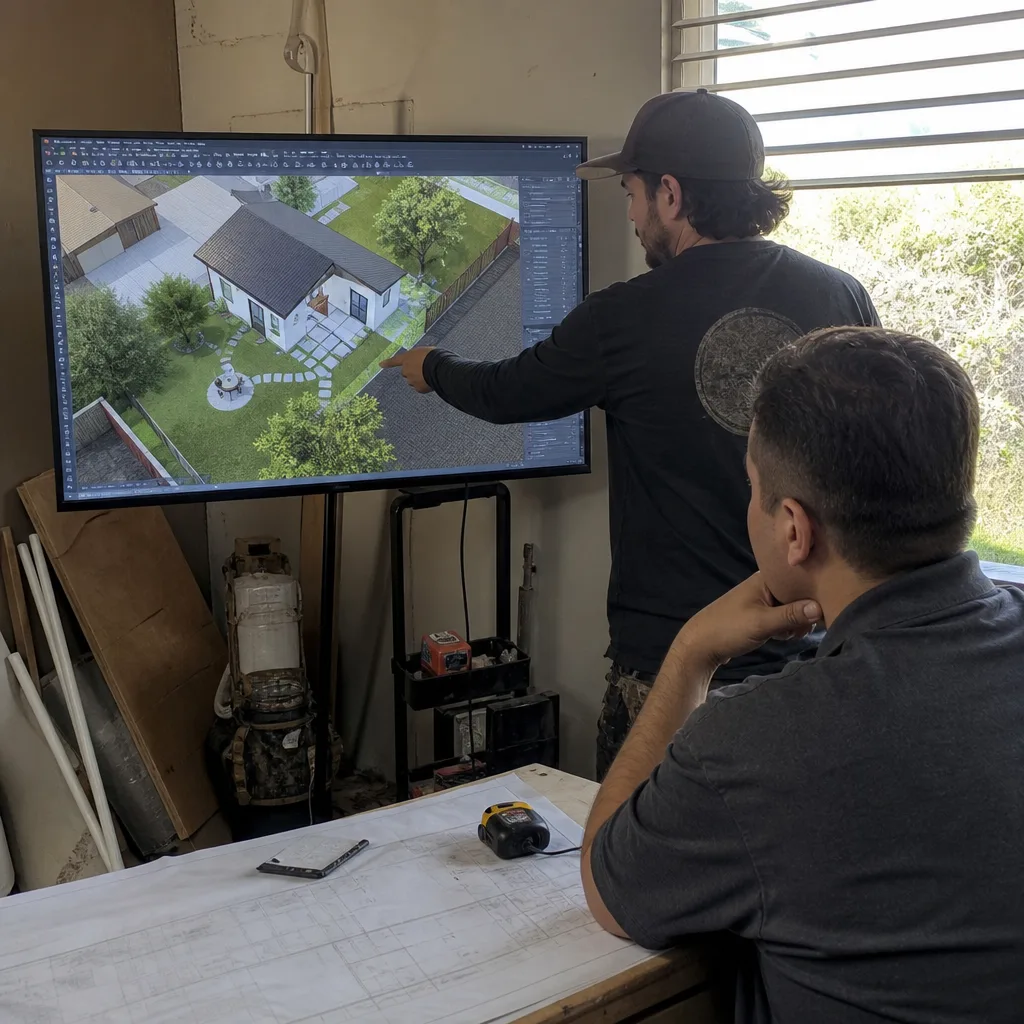
What you can safely check yourself: confirm your main panel amp rating (printed on the label inside the door), verify gas meter location and pipe size, and photograph existing utility penetrations through your James Hardie siding for reference. These three items save us time and you money during our site assessment.
Where DIY goes wrong: trenching depth and bedding material are where most Fontana owners fail inspection, not from malice but from not knowing the caliche was 36 inches down. Electrical service upgrades require SoCal Edison coordination and a city permit; gas work requires a C-36 license and pressure-test documentation. Both trigger our safety duty to recommend a licensed professional, not because we’re protective of the work, but because an unpermitted utility connection voids your James Hardie warranty and your homeowner’s insurance. Call (909) 637-3715 and we’ll schedule a free site assessment with a written scope and price before you decide.
FAQs
HardieTrim boards and compatible utility boxing, when installed with proper drainage and 6-inch ground clearance, typically last 25-30 years in Fontana’s dry, hot inland climate. The failure point we see first is not the James Hardie material but the sealant at the utility penetration, which UV-degrades in 7-10 years and requires inspection. Call (909) 637-3715 to schedule an assessment and we’ll document the condition of every penetration point.
Partial repair is possible for isolated issues: re-bedding a settled gas sleeve, replacing a cracked sealant joint, or upgrading a single undersized circuit. We do not recommend repair when the electrical service is below 100 amps, the gas line is original galvanized steel, or the drainage slope directs water toward the foundation, as these conditions violate current Fontana code and will fail inspection on any future ADU project. Call (909) 637-3715 for a free second opinion on any written estimate you already have in hand.
A straightforward utility connection with James Hardie-compatible boxing takes 2-3 working days after permit approval. Service upgrades requiring SoCal Edison meter relocation add 4-6 weeks for utility scheduling. We coordinate all utility appointments as part of our single-contract design-build model, so the delay doesn’t become your phone-call burden. Every visit produces a documented photo record, shared the same day.
We stock HardieTrim 4/4 and 5/4 boards, HardieZone 10 housewrap, and galvanized utility-penetration flashings on our Fontana trucks. Electrical panels, conduit, and gas pipe are sourced per-project from Ferguson or HD Supply to match your specific service size and city requirements. We do not stock discontinued James Hardie profiles; if your existing siding uses a pre-2017 trim dimension, we fabricate compatible from marine-grade material with documented equivalency for the inspector.
Ellery ADU Studio Fontana is an independent design-build studio, not affiliated with James Hardie. We specify and coordinate James Hardie, Abodu, Cover, and Dvele systems under a single contract with one written price.
Written by Nadia Ellery, Owner, Ellery ADU Studio Fontana at Ellery ADU Studio Fontana, serving Fontana and nearby areas.