
Last updated September 25, 2026
How to Hire a ADU Contractor in Fontana: A Step-by-Step Guide
California’s Contractors State License Board logged more than 1,400 ADU-related complaints in 2023. The largest share wasn’t about unlicensed operators or outright fraud. It was about licensed designers and licensed contractors pointing at each other’s drawings when costs ballooned past the original bid. Neither party was wrong. The contract simply let them do it. In Fontana, where San Bernardino County’s ADU ordinance layers onto state law and where school fees, fire setbacks, and utility trenching costs vary block by block, that blame gap destroys more projects than permit delays ever will. This guide shows you how to audit any bid for that structural flaw before you sign anything.
Quick Answer
To hire an ADU contractor in Fontana, verify their CSLB license class and active status, demand a single written contract that covers both design and construction, and confirm the bid includes every line item required for permit approval: soils report, Title 24 energy calculations, school fees, and utility connection costs. The designer-versus-builder blame gap causes more cost overruns in Fontana ADU projects than any other single factor.
Table of Contents
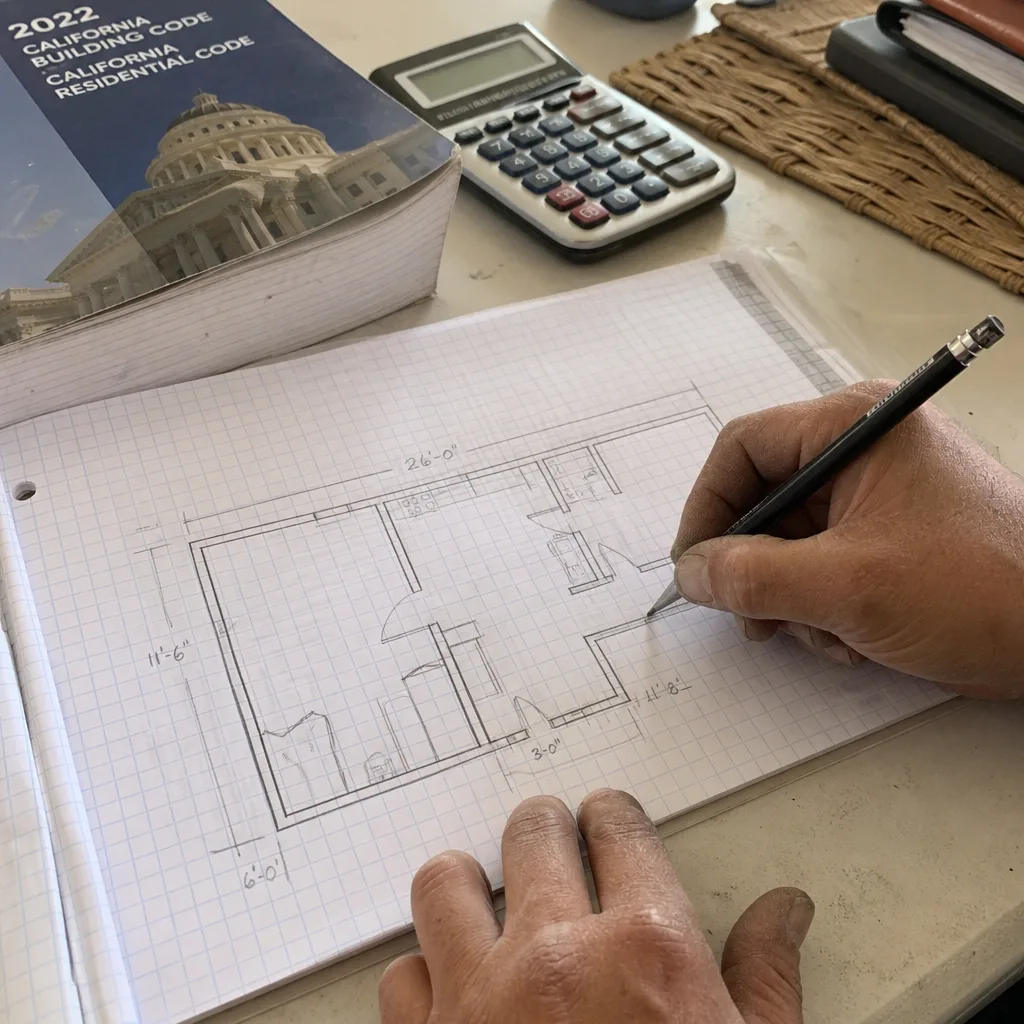
- The Three Contract Structures and Where the Blame Gap Hides
- License Verification: What the CSLB Lookup Actually Tells You
- Seven Questions to Ask Any Fontana ADU Bidder
- How to Compare Bids That Quote Different Scope
- Red Flags Specific to the Fontana ADU Market
- The Fontana Permit Process: What Your Contractor Must Navigate
- What Fontana ADU Projects Actually Cost
- Common Mistakes to Avoid
- When to Call a Professional
- Frequently Asked Questions
- The Bottom Line
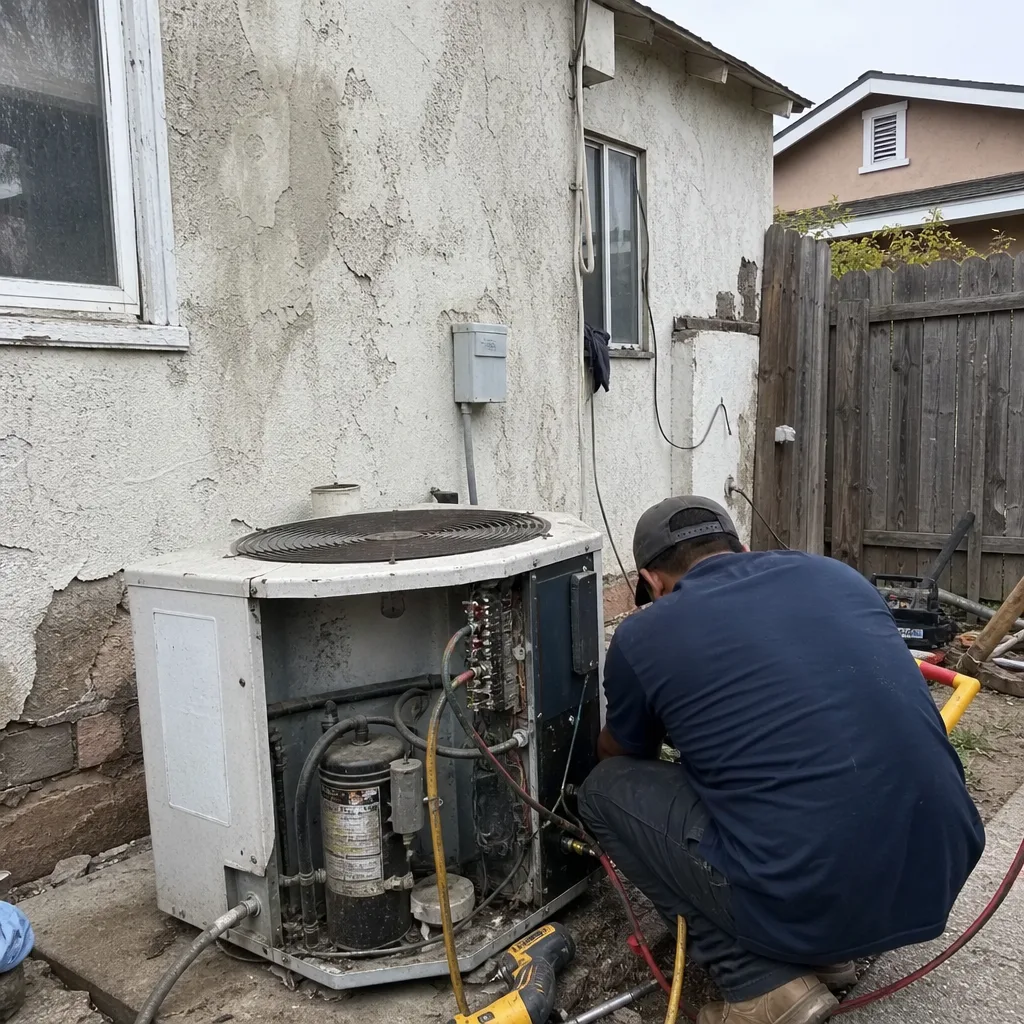 Before
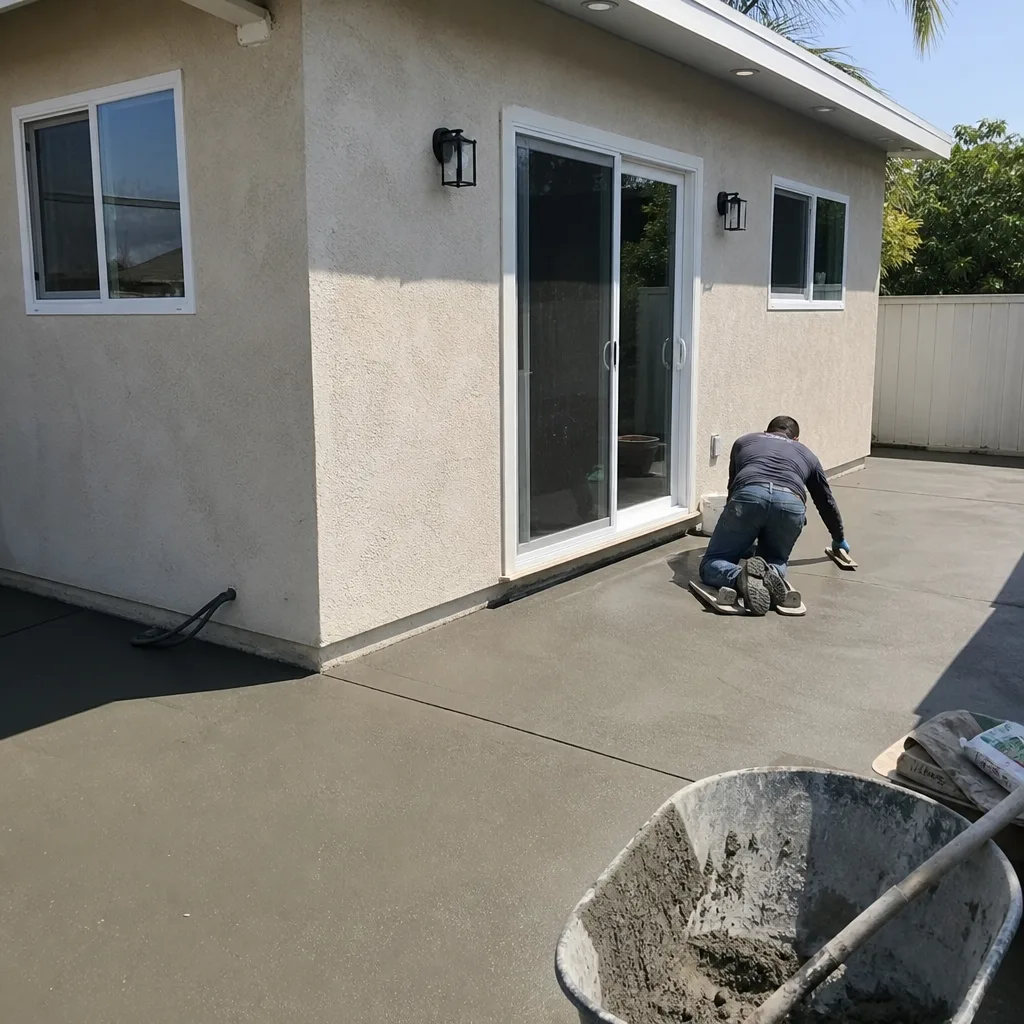 After
AfterThe Three Contract Structures and Where the Blame Gap Hides
Every Fontana ADU bid you’ll receive falls into one of three contract structures. Two of them contain a built-in blame gap. One doesn’t. Understanding the difference is the single most important step in this guide.
Design-Bid-Build
You hire an architect or designer to produce drawings. Then you put those drawings out to bid among general contractors. The designer’s contract ends at permit approval. The contractor’s contract begins at groundbreaking.
This is where the blame gap lives. When the contractor discovers the slab won’t support the load the drawings assumed, or when the city inspector rejects a detail that looked fine on paper, the designer says “the contractor should have caught that in pre-construction.” The contractor says “the drawings were incomplete.” You’re in the middle, paying for change orders that neither party will own.
In Fontana’s older neighborhoods - think the homes north of the 210 between Citrus and Sierra, built in the 1950s and 1960s - we’ve seen this repeatedly. Original garage slabs are often 3.5 inches, not the 4-inch minimum for residential conversion. A designer working from satellite imagery won’t catch that. A contractor bidding from drawings won’t include the slab upgrade. The homeowner learns about the $8,000-$14,000 foundation line item after demolition starts.
GC-with-Designer-Allowance
The general contractor gives you a “turnkey” price that includes a $3,000-$5,000 allowance for “design and permits.” They subcontract the permit set to a drafter or expediter you’ve never met. The contract language separates “design services” from “construction services” with a single sentence.
This structure is worse than design-bid-build because it looks like one contract. It isn’t. The GC has no professional liability for the permit set’s accuracy. The drafter has no contractual relationship with you. When the city of Fontana’s planning department requests a correction - common on first submittal - the GC treats it as your problem, not theirs.
Single-Contract Design-Build
One entity holds both the design obligation and the construction obligation in a single written contract at a single written price. The permit set is the core product, not an allowance line item. If the slab is undersized, the same contract that produced the drawings absorbs the correction cost. If the inspector flags a detail, the same entity revises the drawing and executes the fix.
This is the structure Ellery ADU Studio Fontana operates under. Our ADU Design & Permitting in Fontana service and construction phase are one contract, one price, one accountable party. The Haven Standard, Clause 5 (No Surprises), locks the scope at signing. No door-side upsells. No scope creep.
License Verification: What the CSLB Lookup Actually Tells You
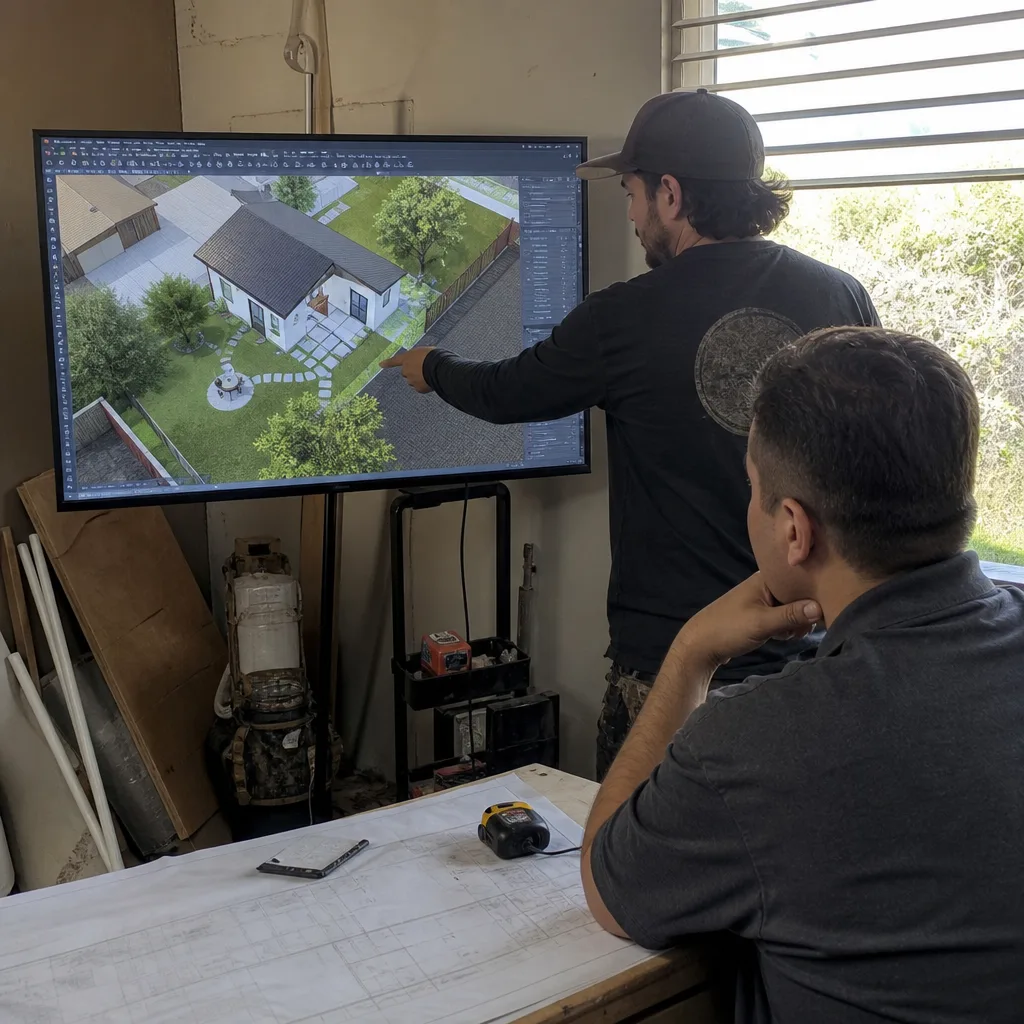
Every Fontana homeowner knows to check a contractor’s license on the CSLB website. Few know what they’re looking at. Here’s the step-by-step audit.
- Confirm active status. The license must show “Active,” not “Suspended,” “Cancelled,” or “Expired.” Check the expiration date. A license expiring in 90 days is a yellow flag - the contractor may not renew, and your project warranty becomes unenforceable.
- Check the license class. For ADU construction, you want a B-General Building contractor. This class authorizes construction of structures “requiring in its construction the use of at least two unrelated building trades or crafts.” An ADU triggers framing, electrical, plumbing, and HVAC - well past that threshold.
- Verify the license covers permit-set competency. Here’s what most Fontana homeowners miss: a Class B license confirms the holder can build. It does not confirm they can produce a permit-ready drawing set. That requires either an in-house architect or a contractual relationship with a licensed design professional whose work the contractor stands behind. Ask directly: “Who stamps the structural drawings, and is their fee included in your price?” If the answer is “we’ll figure that out during permitting,” you have a blame gap.
- Check the bond and workers’ compensation. The CSLB shows bond status and whether workers’ comp is required for this license. If the contractor uses subcontractors (most do), verify each trade’s license and insurance independently. An uninsured electrician on your Fontana ADU project creates liability that flows to you as the property owner.
- Review disciplinary history. Click “Detail” on the CSLB record. Look for suspensions, citations, or arbitration awards in the last five years. A single complaint resolved in the contractor’s favor is different from a pattern of consumer disputes.
In our experience across 900+ ADU projects since 2015, the contractors who cause the most grief in Fontana aren’t unlicensed. They’re licensed Class B operators who treat the permit set as someone else’s problem. The CSLB lookup won’t catch that. Your question about structural drawing responsibility will.
Seven Questions to Ask Any Fontana ADU Bidder
These questions are designed to expose the blame gap and reveal whether a bidder has actually built ADUs in Fontana, not just read about them.
- “Walk me through your last Fontana ADU project from contract signing to final inspection. What went wrong, and who fixed it?”
Competent answer: Specific address or neighborhood, specific problem (soils issue, utility delay, inspector interpretation), and “we handled it under the original contract.”
Deflection: “Every project is different” or “we’ve done hundreds in the Inland Empire” with no Fontana specificity. - “Show me the permit set for a project similar to mine. Who stamped the structural calcs?”
Competent answer: They produce or describe a permit set with a structural engineer’s stamp, and they name the engineer.
Deflection: “We don’t share other clients’ drawings” or “the city doesn’t always require engineering.” (Fontana does on anything over 120 square feet with non-standard foundation.) - “What happens if the city rejects the first submittal?”
Competent answer: “We revise and resubmit at our cost” or “revisions are covered through permit approval.”
Deflection: “The city is backed up, so it’s hard to say” or “you’d pay for additional plan check hours.” - “List every fee not included in your base price.”
Competent answer: A written list including school fees, utility connection deposits, and potential soils or survey costs.
Deflection: “We can’t know until we start” or “those are owner responsibilities.” - “What does your warranty cover, and what triggers it?”
Competent answer: Specific duration, specific coverage (workmanship, materials, systems), and a written document you receive at closeout.
Deflection: “We stand behind our work” with no written terms. - “Who pulls the permits, and who attends inspections?”
Competent answer: “We pull all permits and attend all inspections” with the contractor’s license number on every permit.
Deflection: “We use an expediter” or “you’ll need to be available for some inspections.” - “Give me three Fontana-area references from the last 18 months for ADUs you completed under this same contract structure.”
Competent answer: Names, addresses, and project types with permission to contact.
Deflection: “We protect our clients’ privacy” or references only from other cities.
The deflection patterns are remarkably consistent. We’ve heard them in competitor bids our Garage Conversion ADU in Fontana clients brought us for second opinions. Under Haven Standard Clause 1, our written price arrives before any work starts. No “call for pricing.” No allowance placeholders.
How to Compare Bids That Quote Different Scope
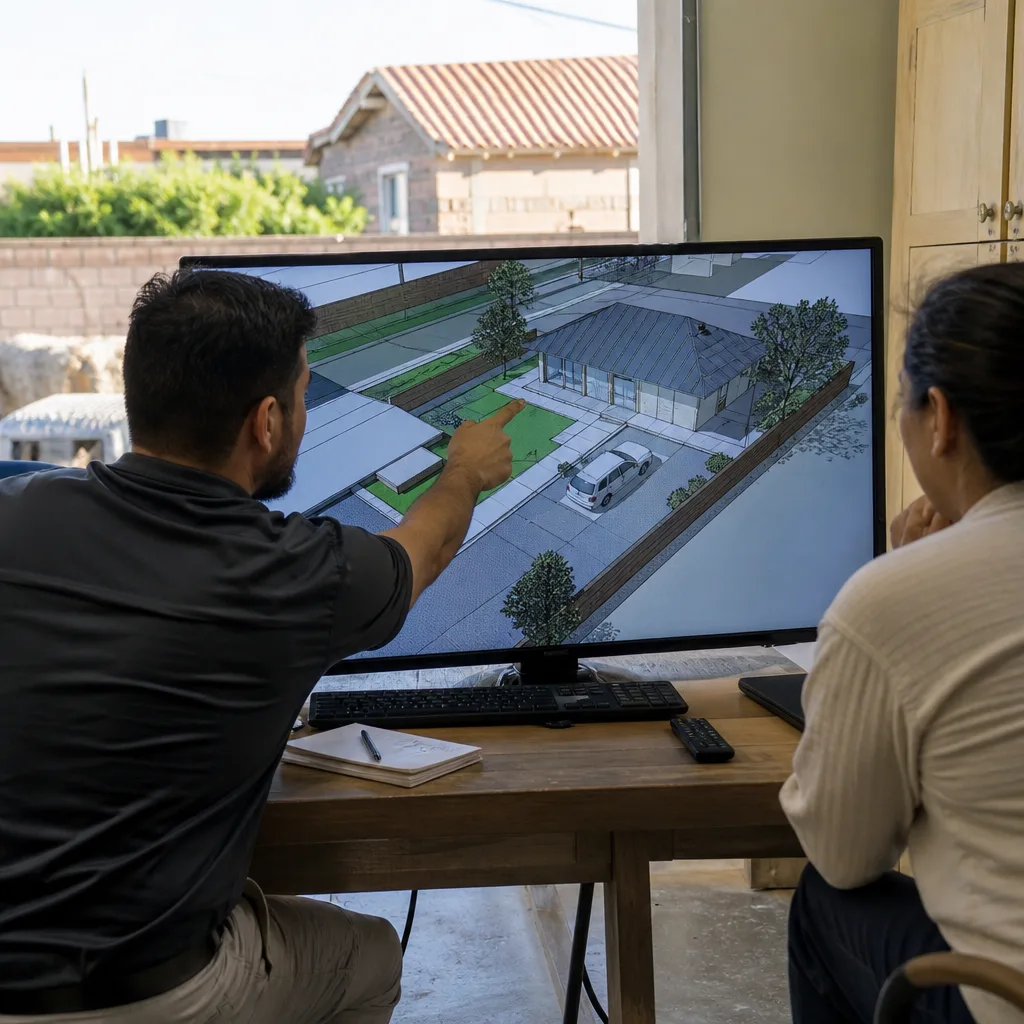
Fontana ADU bids are rarely apples-to-apples. One bidder includes the full permit set. Another lists “design: TBD.” One includes trenching to the sewer main. Another assumes you’ll “handle utilities separately.” Here’s how to normalize them.
The Line Items Every Comparable Fontana ADU Bid Must Include
- Soils report or geotechnical evaluation: Required in Fontana’s hillside zones and recommended anywhere with expansive clay soils. The north Fontana area toward the San Gabriel Mountains foothills has highly expansive soils. A bid without soils investigation is guessing at foundation cost.
- Title 24 energy calculations: California’s energy code compliance documentation. Must be produced by a certified energy analyst and submitted with the permit set. Costs $800-$1,800 depending on project complexity.
- School fees: San Bernardino County charges these at building permit issuance, not final. For a detached ADU in Fontana, expect $3.50-$4.50 per square foot. A bid that omits this is underpriced by $2,000-$4,500 on a typical 1,000-square-foot unit.
- Utility connection fees: Fontana Water Company and Southern California Gas charge separate connection fees. Electric service upgrades through SCE run $3,000-$8,000 if the existing panel can’t support the ADU load. The bid must specify who pays these and whether they’re included or listed as owner responsibilities.
- Fire department access and setback compliance: Fontana Fire Department requires 20-foot clear access for structures over certain sizes. If your lot configuration requires a variance, the bid must include variance application costs and timeline.
- Foundation and slab work with structural engineering: Not “concrete per plans.” Specific thickness, reinforcement, and engineering stamp.
- Demolition and disposal: For garage conversions, this includes hazardous material testing for older structures. Pre-1978 garages in Fontana often contain lead paint or asbestos siding.
- Permit fees and plan check deposits: Fontana’s plan check fee is roughly 65% of the building permit fee, paid upfront. Total permit costs for a 600-square-foot ADU typically run $4,000-$7,000.
Creating Your Comparison Spreadsheet
We recommend a simple three-column format: Line Item, Bidder A, Bidder B. Mark each item “Included,” “Excluded,” or “Allowance (amount).” Add a fourth column for your research on actual Fontana costs. When Bidder A’s “utility connection” line says “TBD” and Bidder B says “$6,500 included,” you’re not comparing $85,000 to $92,000. You’re comparing incomplete to complete.
Our New Detached ADU in Fontana quotes include every line item above in the written price. Clients receive the full scope in writing before signing. No allowance placeholders. No “TBD” on critical path items.
Red Flags Specific to the Fontana ADU Market
Some warning signs are universal. Others are particular to Fontana’s regulatory environment, soil conditions, and contractor pool.
Bids That Exclude San Bernardino County School Fees
This is the most common underbid tactic we see in Fontana competitor quotes. The contractor knows the fee exists. They omit it to hit a lower price point. The homeowner learns about it at permit issuance, when the city won’t issue without payment. By then, you’re committed. The “low” bid just became the middle bid, or worse.
Contractors Who Subcontract Permit Filing to Unsupervised Third Parties
Fontana’s planning department, like most in San Bernardino County, allows third-party expediters. Some contractors treat this as a cost-saving measure, handing your permit set to an expediter they don’t employ and don’t supervise. When the expediter misses a correction notice or submits incomplete responses, your project stalls. The contractor blames the expediter. The expediter blames the drawings. You’re paying carrying costs on a vacant construction loan.
We file all permits directly. Our in-house permit specialists attend Fontana plan check meetings. The same person who produced your drawing set sits across from the city planner who reviews it.
“We Don’t Need a Soils Report for This”
Fontana’s municipal code references CBC Chapter 18 for foundation design. In practice, that means engineered foundations for anything non-standard. A contractor who dismisses soils investigation on a sloped lot in north Fontana, or on any lot with visible cracking in existing hardscape, is gambling with your foundation warranty. The gamble usually fails within the first wet season.
Prefab or Modular Quotes Without Brand-Specific Coordination
Fontana allows prefab and modular ADUs under state law, but the city still requires California Building Code compliance, Foundation Plan approval, and utility connection permits. We’ve specified and coordinated systems from Boxabl, Plant Prefab, Tuff Shed, and James Hardie within our single-contract model. A contractor who says “we’ll figure out the modular connection details on site” is describing a change order. Those details - crane access, foundation anchor patterns, utility chase routing - must be resolved in the permit set, not improvised.
Vague Timeline Promises
“Permits in 30 days” is not a promise. It’s a hope. Fontana’s current plan check timeline for ADUs runs 6-10 weeks for a complete submittal, longer if corrections are required. Any contractor promising faster is either inexperienced or planning to blame the city for “delays” they knew were standard.
The Fontana Permit Process: What Your Contractor Must Navigate
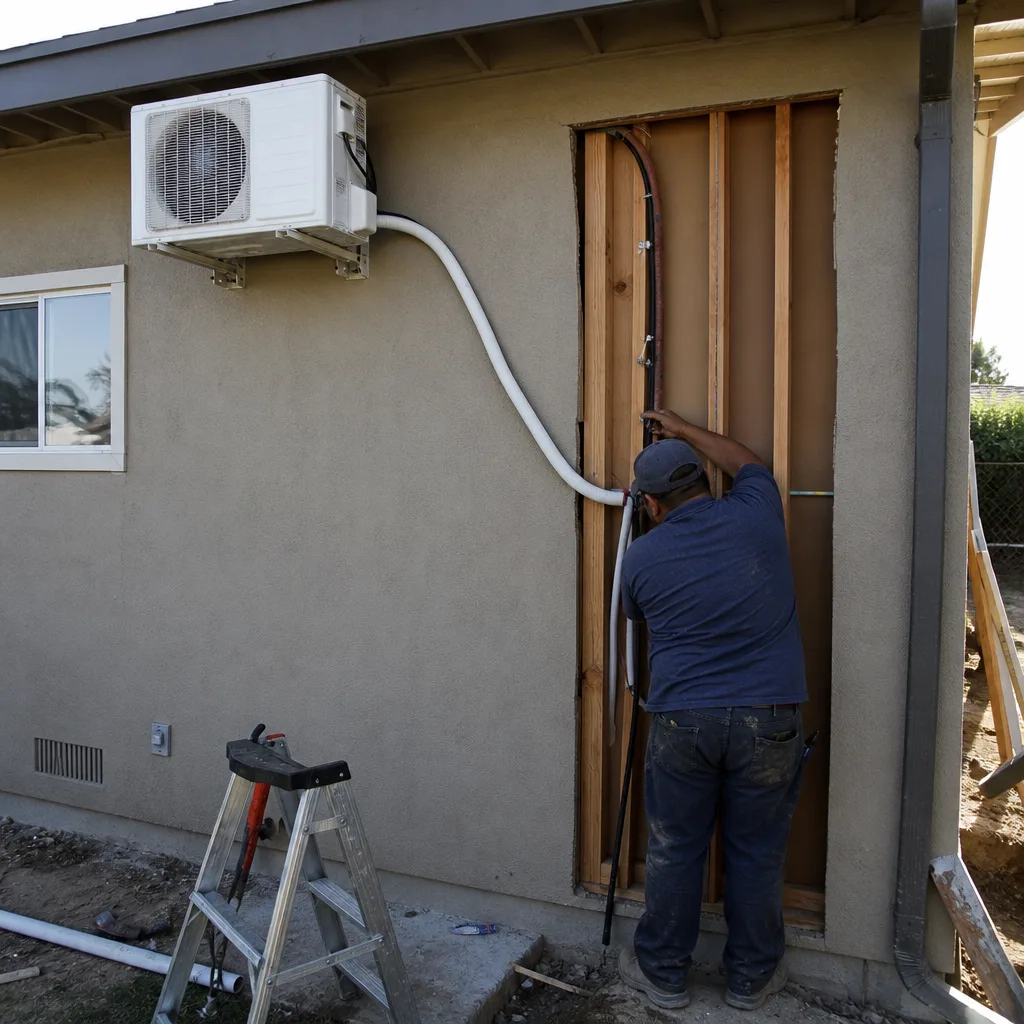
Understanding the permit sequence helps you evaluate whether a bidder actually knows Fontana’s process or is reciting generic California ADU talking points.
- Pre-application meeting (optional but recommended): Fontana offers pre-application conferences for complex projects. We attend these for any project with hillside constraints, utility challenges, or non-conforming setbacks. The $200-$400 fee prevents $5,000 surprises later.
- Complete submittal: The city requires a full permit set including site plan, floor plans, elevations, sections, structural calculations, Title 24 energy compliance, and water conservation compliance (Fontana is a Stage 2 Water Alert area as of 2024 - conservation documentation is scrutinized).
- Plan check: 6-10 weeks for ADUs. The city may request corrections on drainage, fire access, or energy compliance. Your contractor must respond with revised drawings, not phone calls.
- Permit issuance: Payment of all fees including school fees, plan check balance, and building permit deposit.
- Inspection sequence: Foundation/underfloor, framing, plumbing rough, electrical rough, insulation, drywall, final. Fontana requires 48-hour notice for inspections. Missed inspections without 24-hour cancellation incur re-inspection fees.
- Certificate of Occupancy: Final approval after all corrections are cleared and utility services are confirmed active.
A contractor who can’t describe this sequence in Fontana-specific terms - who says “the city handles all that” or “permits usually take a couple weeks” - hasn’t built enough ADUs here to price yours accurately.
What Fontana ADU Projects Actually Cost
These ranges reflect all-in pricing in Fontana’s current market: drawings, permit fees, construction, and final inspection. They’re based on our project history and current subcontractor pricing. Every project receives a written price before work starts, per Haven Standard Clause 1.
| ADU Type | Size Range | Typical All-In Cost in Fontana | Notes |
|---|---|---|---|
| Garage Conversion ADU | 400-600 sq ft | $95,000-$155,000 | Existing slab condition is the largest variable. Pre-1978 structures may need hazardous material abatement. |
| Junior ADU (interior conversion) | 150-500 sq ft | $65,000-$110,000 | Requires separate exterior entrance and kitchen facilities. Often limited by existing utility capacity. |
| New Detached ADU (stick-built) | 600-1,200 sq ft | $185,000-$340,000 | Foundation, utility trenching, and fire setback compliance drive cost. Hillside lots add 15-25%. |
| New Detached ADU (prefab/modular) | 400-800 sq ft | $165,000-$280,000 | Includes crane access, foundation anchor system, and utility connection. Brand selection affects finish quality and timeline. |
| ADU Site Prep & Utilities | Varies | $15,000-$45,000 | Separate scope for properties needing sewer extension, electrical service upgrade, or significant grading before ADU construction. |
These ranges include the line items competitors often omit: soils evaluation when indicated, school fees, Title 24 compliance, and utility connection deposits. A bid 20% below these ranges is almost certainly missing something critical. We’ve reviewed competitor estimates for Fontana homeowners that excluded $12,000-$18,000 in necessary scope. Our Free Second Opinion service exists specifically for this scenario. Bring us any written estimate; we’ll identify what’s missing.
Common Mistakes to Avoid
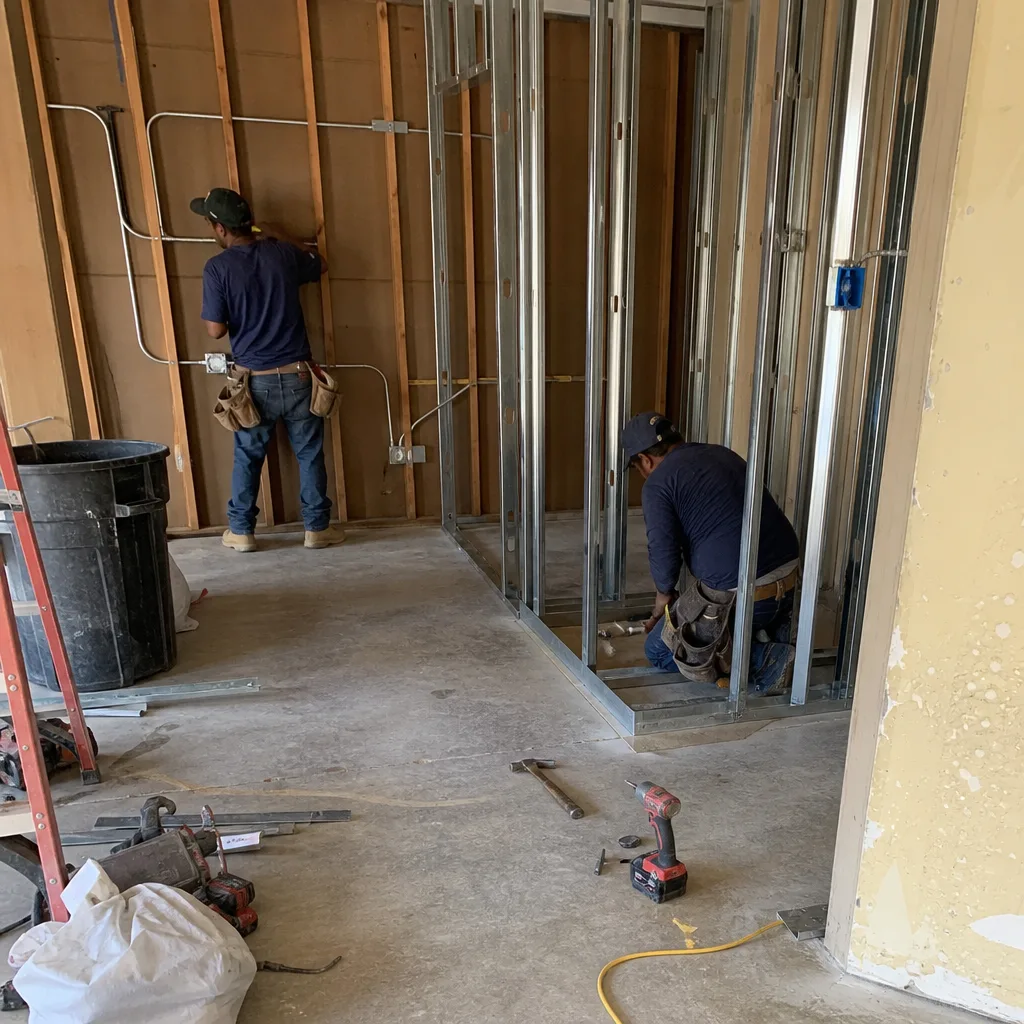
- Choosing the lowest bid without scope normalization. A $78,000 garage conversion bid that excludes slab replacement, school fees, and permit costs will cost $115,000 before final inspection. The “low” bidder knows this. You shouldn’t learn it mid-project.
- Assuming a Class B license means permit-set competency. It doesn’t. Verify who produces the drawings, who stamps the structural calculations, and whether that professional’s fee is included in your written price.
- Ignoring Fontana’s water conservation requirements. The city’s Stage 2 Water Alert status means landscape plans and irrigation efficiency are reviewed closely. A contractor who treats landscaping as “owner’s choice” may deliver an ADU you can’t landscape legally.
- Accepting verbal promises about timeline. “Should be done by summer” is not a schedule. Demand a written critical path with permit submittal, plan check, construction start, and substantial completion dates. Understand that Fontana’s inspection availability, not just construction speed, drives the calendar.
- Not verifying fire department access early. In Fontana’s older neighborhoods with narrow lots and mature trees, 20-foot fire access can require tree removal or variance application. This should be identified in pre-application, not discovered at framing inspection.
- Treating prefab as “simpler” without verifying local coordination. Modular and prefab systems from Boxabl, Plant Prefab, or Tuff Shed require the same foundation engineering, utility connection permits, and inspection sequence as stick-built. The factory doesn’t handle Fontana’s crane permit or SCE service upgrade.
- Signing a contract with change-order language that favors the contractor. “Unforeseen conditions” clauses are standard. “Unforeseen conditions at owner’s sole cost” with no definition of “unforeseen” is a blank check. The Haven Standard defines unforeseen conditions narrowly and caps owner exposure.
When to Call a Professional
Call a design-build professional when you’re serious about an ADU as a long-term asset, not a speculative project. Specific triggers: you’ve confirmed your lot meets Fontana’s zoning requirements, you’ve reviewed your existing utility capacity, and you’re evaluating bids that differ by more than 20% in total price. That spread almost always signals missing scope, not competitive pricing.
Ellery ADU Studio Fontana offers free estimates throughout Fontana and the surrounding San Bernardino County area. Every estimate is a written price covering design, permitting, and construction under a single contract. Call (909) 637-3715 to schedule yours. We also provide Free Second Opinions on any written estimate already in hand - no obligation, no pressure, just a documented review of what’s included and what’s not.
Frequently Asked Questions
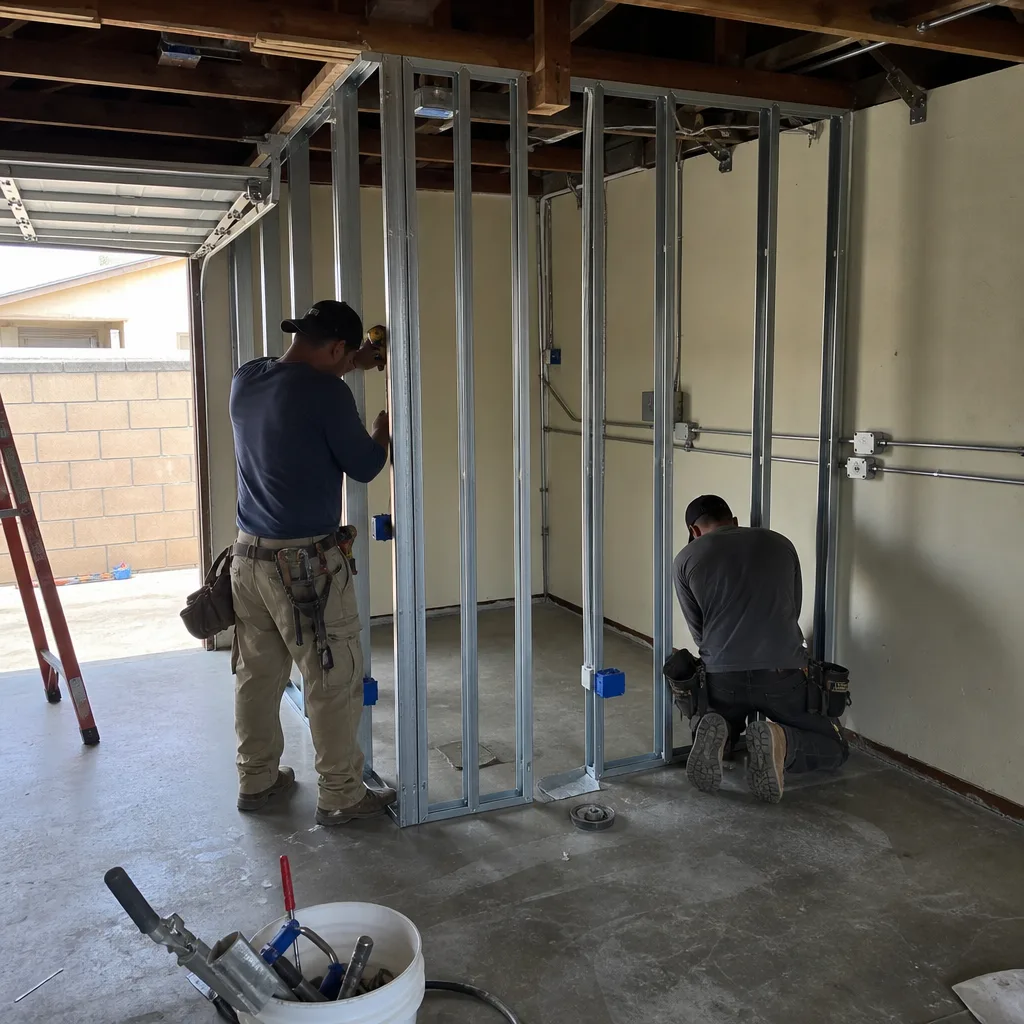
Garage conversion ADUs in Fontana typically run $95,000-$155,000 all-in, while new detached ADUs range from $185,000-$340,000 depending on size, foundation requirements, and utility work. Every Ellery ADU Studio project receives a written price before any work begins. Call (909) 637-3715 for a specific estimate on your property.
Yes. All ADUs in Fontana require building permits through the city’s Community Development Department, plus electrical, plumbing, and mechanical permits as applicable. California state law streamlines the approval process, but permits are mandatory and inspections are required at foundation, framing, rough utilities, insulation, and final. A contractor who suggests “permit-free” construction is proposing illegal work that voids insurance and creates resale liability.
From contract signing to certificate of occupancy, a typical Fontana ADU takes 8-14 months. Design and permitting consume 3-5 months; construction adds 5-9 months depending on complexity and inspection scheduling. Prefab and modular systems can compress the construction phase by 30-60 days but don’t accelerate permitting. Any contractor promising total project delivery in under 6 months is either inexperienced or planning to blame “city delays” for their own optimistic bid.
Yes, if the garage meets zoning setbacks, ceiling height minimums (7’6″ for habitable space), and foundation requirements. Fontana follows California’s statewide ADU standards, which prohibit local governments from banning garage conversions outright. However, the existing slab must support residential loading, and pre-1978 structures require hazardous material evaluation. Our Garage Conversion ADU in Fontana service includes structural assessment and abatement coordination in the written price.
Under a properly structured single-contract design-build agreement, the price should not change for defined scope. The Haven Standard, Clause 5, locks scope at signing with no door-side upsells. Change orders should only occur for owner-requested modifications or conditions that meet the contract’s narrow definition of “unforeseen” - typically subsurface conditions that no reasonable investigation could have revealed. If your contract allows the contractor to claim “unforeseen conditions” for anything they didn’t price correctly, you have a blame gap, not a fixed price.
Ellery ADU Studio pulls all permits and attends all inspections as part of our single-contract service. The contractor’s license number appears on every permit application. We do not subcontract permit filing to third-party expediters we don’t supervise. This is standard for competent design-build operations; it should be non-negotiable in your contractor selection.
A Junior ADU (JADU) is created within the walls of an existing single-family residence, requires a separate exterior entrance, and is limited to 500 square feet. An ADU is a separate structure or conversion (garage, detached new build) and can reach 1,000-1,200 square feet depending on lot size. Fontana applies state standards for both, but JADUs have additional owner-occupancy requirements and utility connection limitations. Our ADU Design & Permitting in Fontana service evaluates which structure fits your property and goals.
The Bottom Line
The designer-versus-builder blame gap destroys more Fontana ADU budgets than permit delays, material costs, or labor shortages combined. The only structural fix is a single contract that holds one entity accountable for both the permit set and the finished structure. Audit every bid for that accountability. Verify licenses for what they actually authorize, not what they imply. Normalize competing bids against the line items Fontana specifically requires. And never sign a contract that lets either party point at the other when something goes wrong.
Ellery ADU Studio Fontana has operated under this single-contract model since 2015. Every one of our 900+ projects has shipped with a written price before work started, a documented photo record on every visit, and the 365-Day Done Right Promise backed in writing. If you’re evaluating ADU contractors in Fontana, start with the questions in this guide. Then call us for a Free Second Opinion on any estimate you’ve received, or for a written price of your own.
Written by Nadia Ellery, Owner at Ellery ADU Studio Fontana, serving Fontana since 2015.