
Last updated September 25, 2026
Seasonal ADU Care for Fontana: Year-Round Homeowner’s Guide
The Inland Empire’s July through September wet-bulb temperatures now regularly exceed the design assumptions baked into pre-2022 HVAC equipment. That means an ADU mini-split sized to 2019 load calculations may run at reduced capacity on the hottest days your tenant actually occupies the unit. In Fontana, where summer highs push past 100°F and Santa Ana winds tear through at 60 mph, seasonal maintenance is not a checklist for perfectionists. It is the difference between a cash-flowing asset and an emergency repair at 11 p.m. This guide maps what to do, when to do it, and what Fontana’s specific climate demands.
Quick Answer
Fontana ADU owners should follow a four-season maintenance schedule tuned to the Inland Valley’s high-desert-adjacent climate: summer HVAC and UV-exposed sealant checks, fall Santa Ana wind damage inspections, winter freeze protection for exposed plumbing, and spring drainage and efflorescence reviews. Proactive seasonal care costs roughly $400-$800 annually in materials and minor labor; one reactive HVAC failure or slab leak runs $2,500-$6,000.
Table of Contents
- Summer (June-September): HVAC Strain and Envelope Stress
- Santa Ana Season (October-December): Wind, Fire Risk, and Exterior Integrity
- Winter (December-February): Freeze Nights and Mechanical Systems
- Spring (March-May): Drainage, Efflorescence, and Detector Maintenance
- Year-Round Landlord Obligations Under California Law
- What Seasonal ADU Maintenance Costs in Fontana
- Prefab and Modular ADU-Specific Care
- Common Mistakes to Avoid
- When to Call a Professional
- Frequently Asked Questions
 Before
 After
AfterSummer (June-September): HVAC Strain and Envelope Stress
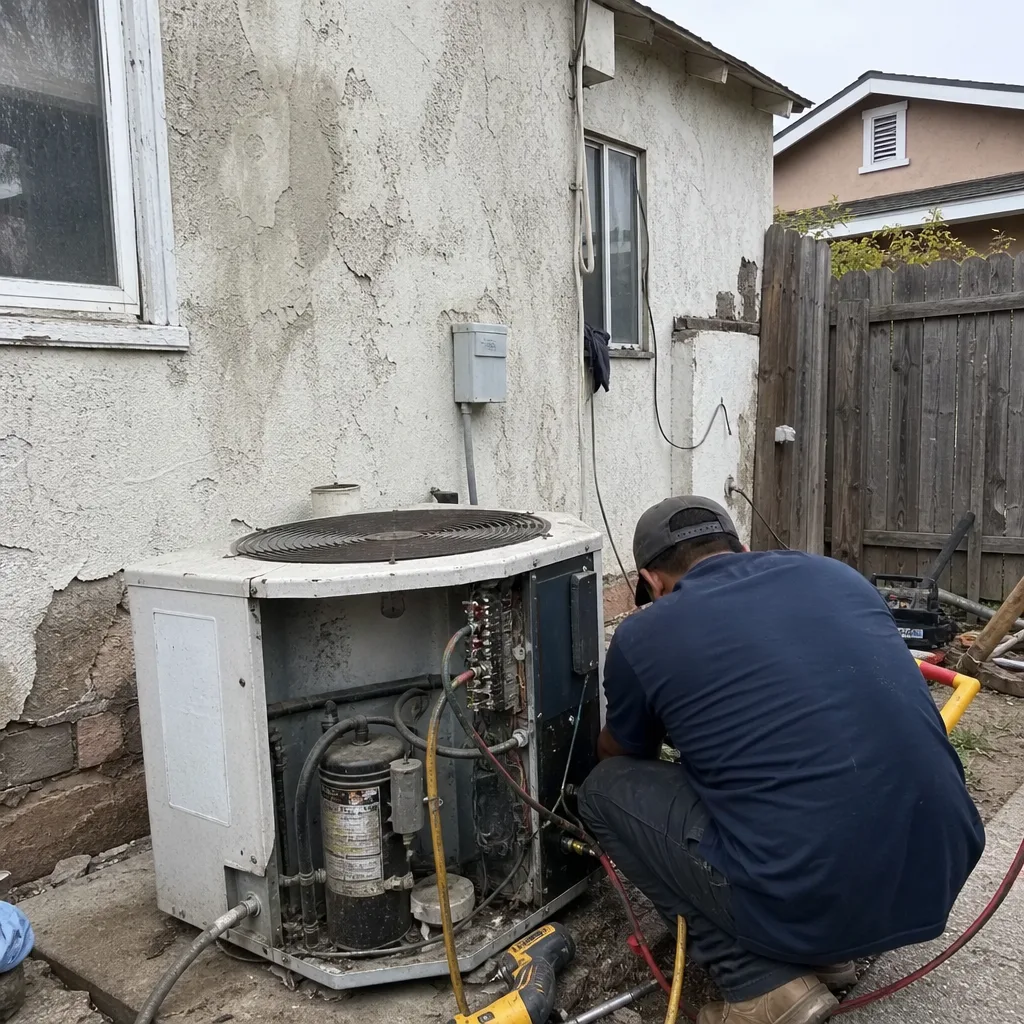
Fontana’s summer design temperature sits at 99°F dry bulb, but the past three years have pushed actual peaks to 104°F-107°F. Wet-bulb temperatures, which measure how effectively sweat cools the body, have crossed 75°F during sustained heat events. For your ADU tenant, that translates to discomfort. For your mini-split or packaged terminal air conditioner, it means the compressor works harder, longer, and closer to thermal shutdown.
We have documented this on projects across Fontana’s Southridge, Summit Heights, and Hunter’s Ridge neighborhoods: units installed before 2022 with standard 1-ton-per-400-square-foot sizing struggle after 3 p.m. on triple-digit days. The equipment is not broken. It is undersized for the new normal.
HVAC Filter Replacement Cadence for Fontana’s PM2.5 Season
The San Bernardino Valley’s particulate load spikes in summer from wildfire smoke, agricultural dust, and the I-10/I-15 corridor. Standard fiberglass filters clog in 30 days here, not 90.
- Replace 1-inch pleated filters every 30 days from June through September. Mark the date on the filter frame with a Sharpie.
- Upgrade to MERV 11 or 13 if your tenant reports allergy symptoms or if the ADU sits within a quarter-mile of a major arterial.
- Check the condensate drain line monthly. Algae growth in Fontana’s hard water (18-22 grains per gallon) blocks 3/4-inch PVC drains by mid-August.
- Flush the line with a cup of white vinegar, followed by a quart of warm water. If the drain terminates at grade, verify the outlet is not buried by landscape mulch or tenant belongings.
Exterior Caulk Inspection Before Peak UV Exposure
Fontana’s UV index reaches 10+ for four months straight. Acrylic latex caulk degrades in 12-18 months here; polyurethane or silicone-polyether hybrids last 3-5 years but cost 40% more upfront.
- Inspect window perimeters, door thresholds, and penetrations (hose bibs, electrical conduit, gas lines) by mid-June.
- Look for chalking, cracking, or gaps wider than 1/8 inch. Re-caulk before July; new caulk needs 72 hours to skin over before sustained 100°F heat.
- Pay special attention to south- and west-facing walls. In our work on garage conversion ADUs in Fontana, these walls often bear the brunt of thermal expansion.
Document the condition with dated photos. Under The Haven Standard, our clients receive a photo record at project closeout; continuing that practice annually creates a defensible timeline if water intrusion claims arise.
Santa Ana Season (October-December): Wind, Fire Risk, and Exterior Integrity
Fontana’s Santa Ana events peak in October and November, with sustained winds of 25-35 mph and gusts to 60+ mph. The relative humidity drops to single digits. Embers travel miles. For ADU owners, this season demands a specific inspection protocol that generic California maintenance guides miss entirely.
Exterior Vent Screen Inspection
Every vent on your ADU - dryer, bathroom exhaust, kitchen range hood, combustion air intake - needs 1/4-inch or finer mesh to block embers. Standard louvered vents without mesh are a code violation in California’s Wildland-Urban Interface and a liability in Fontana’s Zone 2 and Zone 3 fire hazard severity areas.
- Remove each vent cover. Clean lint and debris from dryer vents; blockage here is the leading cause of ADU dryer fires.
- Verify mesh is intact, not torn, and not painted over. Replace with corrosion-resistant stainless steel or copper mesh in Fontana’s alkaline air.
- Confirm bathroom and kitchen exhaust vents have backdraft dampers that close fully. Santa Ana winds can force unconditioned air backward through the ductwork, spiking heating loads.
Dryer Exhaust Clearance
The termination must be at least 3 feet from any opening into the ADU and 10 feet from property lines where combustible construction is present. In Fontana’s dense infill areas - the lots north of Valley Boulevard, for example - this spacing is often tight. We have seen new detached ADUs in Fontana where the dryer vent was routed through an attached pergola to gain clearance; the pergola then became a maintenance point.
Stucco Crack Logging Protocol After High-Wind Events
Santa Ana winds flex building envelopes. Hairline stucco cracks are normal; patterned cracking at corners, windows, or foundation lines is not.
- After each major wind event (sustained 40 mph+ or gusts 60 mph+), walk the exterior with a camera.
- Photograph every crack wider than a credit card edge (roughly 1/32 inch). Note location with a permanent marker reference: “north wall, 18 inches left of bedroom window.”
- Compare to photos from the prior year. New cracks or widening cracks indicate structural movement, not cosmetic aging.
- Horizontal cracks at foundation level, or stair-step cracks in CMU walls, require structural evaluation within 30 days.
James Hardie fiber-cement siding, which we specify on many Fontana projects, resists wind-driven impact better than stucco but still requires annual inspection of butt-joint sealant and fastener heads.
Winter (December-February): Freeze Nights and Mechanical Systems
Fontana’s design overnight low is 28°F. Actual lows hit 25°F-27°F every few winters, typically in late December or January. One night of freezing can split an exposed copper supply line, flood the ADU, and trigger a habitability claim under California Civil Code §1941.1.
Freeze-Protection Wrap for Exposed Supply Lines
ADUs on slab foundations with hose bibs or outdoor kitchen plumbing are most vulnerable. In ADU design and permitting work across Fontana, we now specify frost-proof hose bibs with 12-inch stems as standard; older conversions may lack this.
- Identify all exposed copper or PEX lines outside the thermal envelope: hose bibs, irrigation backflow preventers, pool equipment feeds if the ADU serves a pool house function.
- Install pre-slit foam pipe insulation, minimum 3/4-inch wall thickness, with UV-resistant jacketing if the line sees sun.
- For hose bibs without frost-proof stems, drain the line at the interior shutoff and leave the bib open slightly. The expansion of freezing water needs somewhere to go.
- On nights forecast below 30°F, run a pencil-thin stream of water from the ADU’s farthest fixture. Moving water resists freezing.
Water Heater Anode Rod Check
Fontana’s water hardness accelerates tank corrosion. The sacrificial anode rod, typically magnesium or aluminum, draws corrosive elements away from the tank wall.
- Inspect the anode rod every 24 months in Fontana; annual inspection if the unit serves a tenant with high hot-water use.
- Replacement is indicated when the rod diameter has reduced by more than 50% or when six inches of core wire is exposed.
- Aluminum-zinc alloy rods reduce sulfur odor (rotten-egg smell) that some tenants report with standard magnesium rods.
Tankless water heaters, common in compact garage conversion ADUs, require annual descaling in Fontana’s hard water. The procedure involves a pump, white vinegar, and isolation valves - or a plumber’s service call at $200-$300.
Roof Drainage Clearing
Fontana’s winter rainfall is modest (12-16 inches annually) but arrives in concentrated events. Clogged gutters overflow, saturate foundation perimeters, and in ADUs with daylight or walkout conditions, push water against below-grade walls.
- Clear gutters and downspouts after the last Santa Ana event and before the first forecast rain.
- Verify downspout extensions discharge at least 6 feet from the foundation or tie into a functional French drain.
- Flat-roofed ADUs, including some Tuff Shed and modular installations, require drain strainer cleaning and membrane inspection for ponding.
Spring (March-May): Drainage, Efflorescence, and Detector Maintenance
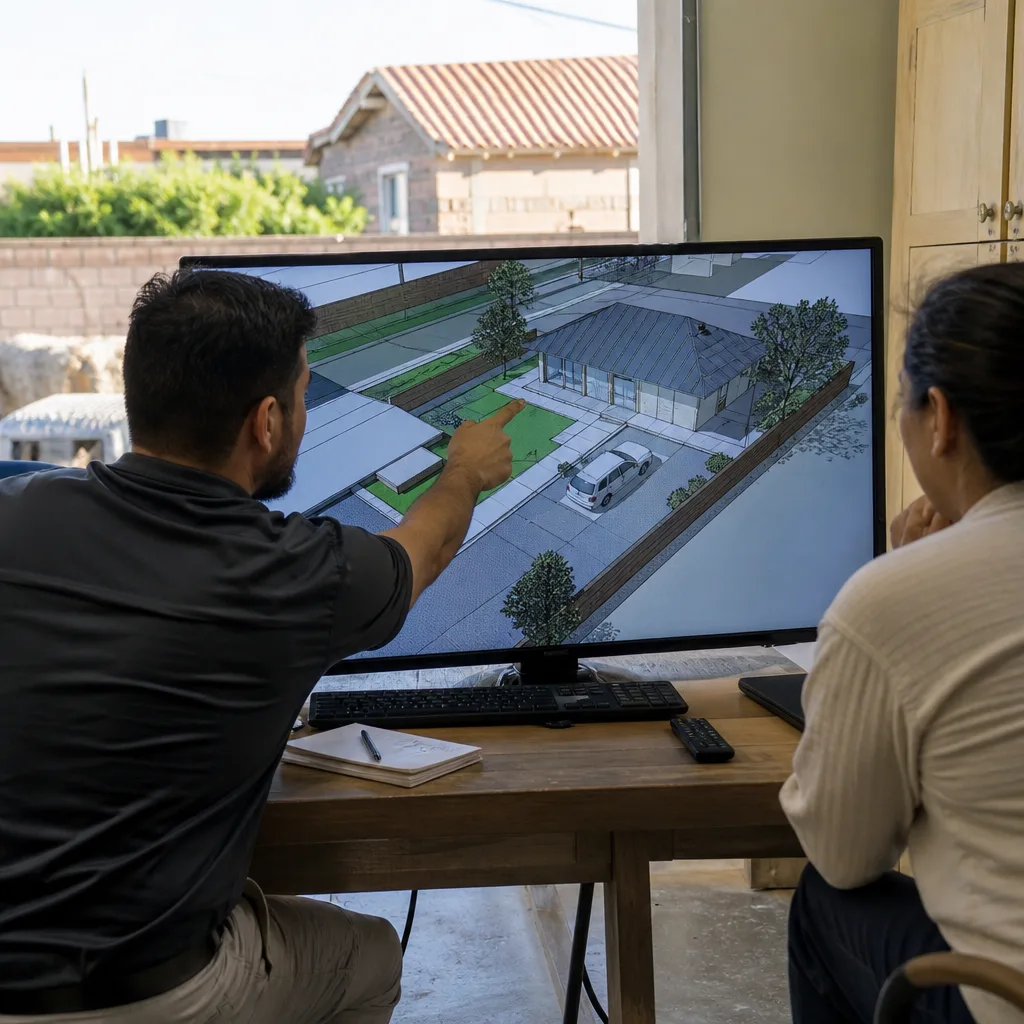
Spring in Fontana is brief and unpredictable. March can bring 2-inch rain events; May can hit 90°F. The maintenance window is narrow, and the tasks are specific to what winter left behind.
Post-Rain Efflorescence Inspection on CMU or Stucco Walls
Efflorescence is the white, powdery deposit of soluble salts left when water moves through masonry and evaporates at the surface. It is not structural damage, but it signals moisture migration that will eventually degrade paint, stucco, or mortar.
- After the final spring rain, inspect all below-grade and at-grade walls. Southridge and Summit Heights ADUs on sloped lots are particularly prone to this.
- Photograph efflorescence patches. Measure and record dimensions.
- Brush off loose material with a dry stiff brush. Do not power-wash; water drives salts deeper.
- If efflorescence returns within 60 days, the source is active moisture. This requires grading correction, drainage improvement, or foundation waterproofing - not another brushing.
On Plant Prefab units with rainscreen cladding, verify that the drainage plane at the base of the wall is unobstructed. The air gap behind the siding is the system’s lungs; mulch or landscape fabric against the wall suffocates it.
Pressure-Reducer Valve Test
Fontana’s municipal water pressure ranges from 65 to 85 psi at the meter. ADU plumbing fixtures are rated for 80 psi maximum. The pressure-reducer valve (PRV) at the ADU’s main entry protects fixtures and extends water heater life.
- Test static pressure with a gauge on a hose bib or laundry faucet. Pressure above 80 psi indicates PRV failure.
- Listen for water hammer when fixtures close; this often accompanies high pressure.
- PRV replacement is a $250-$400 plumber call in Fontana. Ignoring it risks fixture warranty voids and tenant complaints.
Smoke/CO Detector Battery Replacement Tied to Daylight Saving Time
California law requires operational smoke and carbon monoxide detectors in all rental units. The “change your clock, change your battery” rule is practical discipline.
- Replace 9V or AA batteries in hardwired units with battery backup.
- Test all detectors with the test button. Replace any unit that fails to sound within 10 seconds.
- Smoke detectors older than 10 years and CO detectors older than 7 years require full replacement, not just battery swap.
- Document the test with dated photos for your habitability file.
Year-Round Landlord Obligations Under California Law
Seasonal maintenance is not merely prudent. California Civil Code §1941.1 creates a minimum standard of habitability with specific timelines and legal consequences. An ADU owner who treats maintenance as optional invites rent withholding claims, repair-and-deduct actions, and habitability litigation.
The statute mandates effective waterproofing and weather protection; plumbing in good working order; heating facilities; electrical lighting; clean grounds and common areas; garbage disposal; floors, stairways, and railings in good repair. The “reasonable time” standard for repairs shrinks dramatically when the issue affects health or safety: a failed heater in January, a gas leak any time, or a sewage backup.
Key implications for Fontana ADU owners:
- Heating failure: Must be addressed within 24 hours if outside temperatures fall below the local standard (28°F design low for Fontana). A portable space heater is not adequate repair.
- Water supply interruption: 24-72 hours depending on cause and season. A burst pipe in January is not a “next business day” item.
- Electrical hazard: Immediate. De-energize the affected circuit and call an electrician.
- Structural compromise: Reasonable time based on severity. A Santa Ana-damaged roof with active water intrusion is immediate; a hairline stucco crack is not.
Document every maintenance action with dated photos and written summaries. Under The Haven Standard, our clients receive this documentation as standard practice; extending it to ongoing maintenance creates a defensible record if a tenant dispute arises.
What Seasonal ADU Maintenance Costs in Fontana
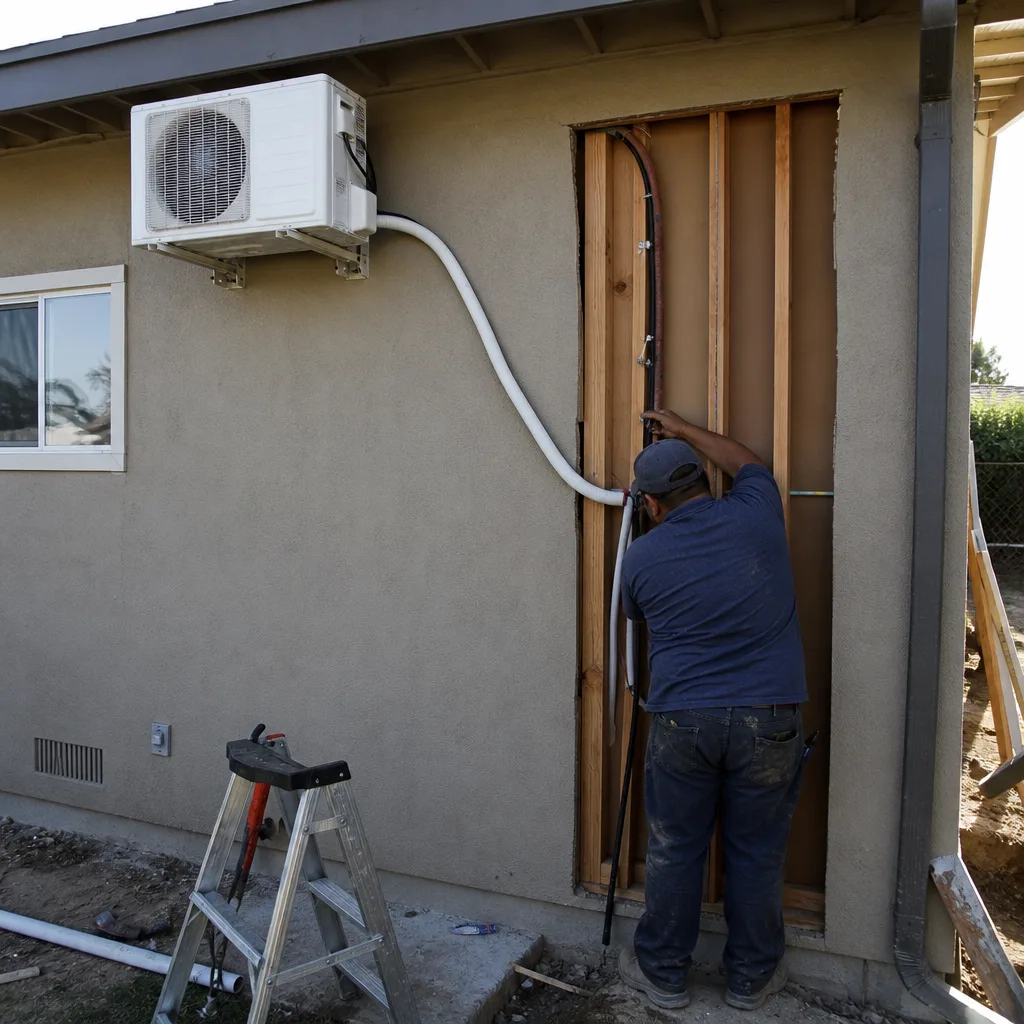
The following ranges assume a 400-800 square foot ADU, owner-performed work where noted, and Fontana labor rates. All figures include materials; labor is additional where a trade is required.
| Season | Task | Owner Cost | Pro Cost |
|---|---|---|---|
| Summer | HVAC filter replacement (4x) | $40-$80 | $120-$200 |
| Summer | Condensate drain flush | $15 | $150-$250 |
| Summer | Exterior caulk, materials only | $60-$120 | $300-$600 |
| Fall | Dryer vent cleaning | $30 | $150-$250 |
| Fall | Vent screen replacement | $25-$50 | $200-$350 |
| Winter | Pipe insulation, exposed lines | $40-$80 | $200-$400 |
| Winter | Water heater anode rod | $30-$60 | $250-$400 |
| Winter | Tankless descaling | $50 | $200-$300 |
| Spring | Gutter cleaning | $0 | $150-$250 |
| Spring | Smoke/CO detector batteries | $20 | $100-$150 |
| Annual total | All tasks, owner + pro mix | $400-$800 | $1,500-$2,800 |
Reactive repair costs for context:
- HVAC compressor replacement: $2,500-$4,500
- Slab leak repair with concrete restoration: $3,500-$6,000
- Stucco remediation after prolonged water intrusion: $4,000-$8,000
- Tenant habitability claim settlement: $2,000-$15,000 plus legal fees
The maintenance premium is 10-15% of one major reactive repair. Under Haven Standard Clause 1, our projects are quoted with a written price before work starts; we apply the same discipline to maintenance planning.
Prefab and Modular ADU-Specific Care
Abodu, Plant Prefab, and Tuff Shed units delivered to Fontana sites have factory-built envelopes that differ from stick-built construction in maintenance needs. The warranty terms vary by manufacturer; the maintenance discipline does not.
Abodu units: The proprietary wall panel system uses a rainscreen with integrated drainage. Annual inspection focuses on the base flashing where the panel meets the foundation. Debris accumulation here blocks weep holes and traps moisture. The factory warranty requires documented annual maintenance for full coverage.
Plant Prefab: The steel moment frame and panelized envelope perform well in Santa Ana winds but require inspection of structural bolt connections at the foundation level every two years. Torque specifications are in the owner’s manual; a structural technician should verify.
Tuff Shed conversions: The original structure was designed for storage, not habitation. Our garage conversion ADU work in Fontana often starts with Tuff Shed shells that need upgraded insulation, vapor barriers, and mechanical systems. Maintenance priority is the roof-to-wall connection, which was not designed for thermal cycling. Check fasteners for backing out annually.
James Hardie siding, specified across multiple system types, requires repainting every 10-15 years in Fontana’s UV exposure. The factory finish carries a 15-year limited warranty; field-applied paint over cut edges needs touch-up at installation and monitoring thereafter.
Common Mistakes to Avoid
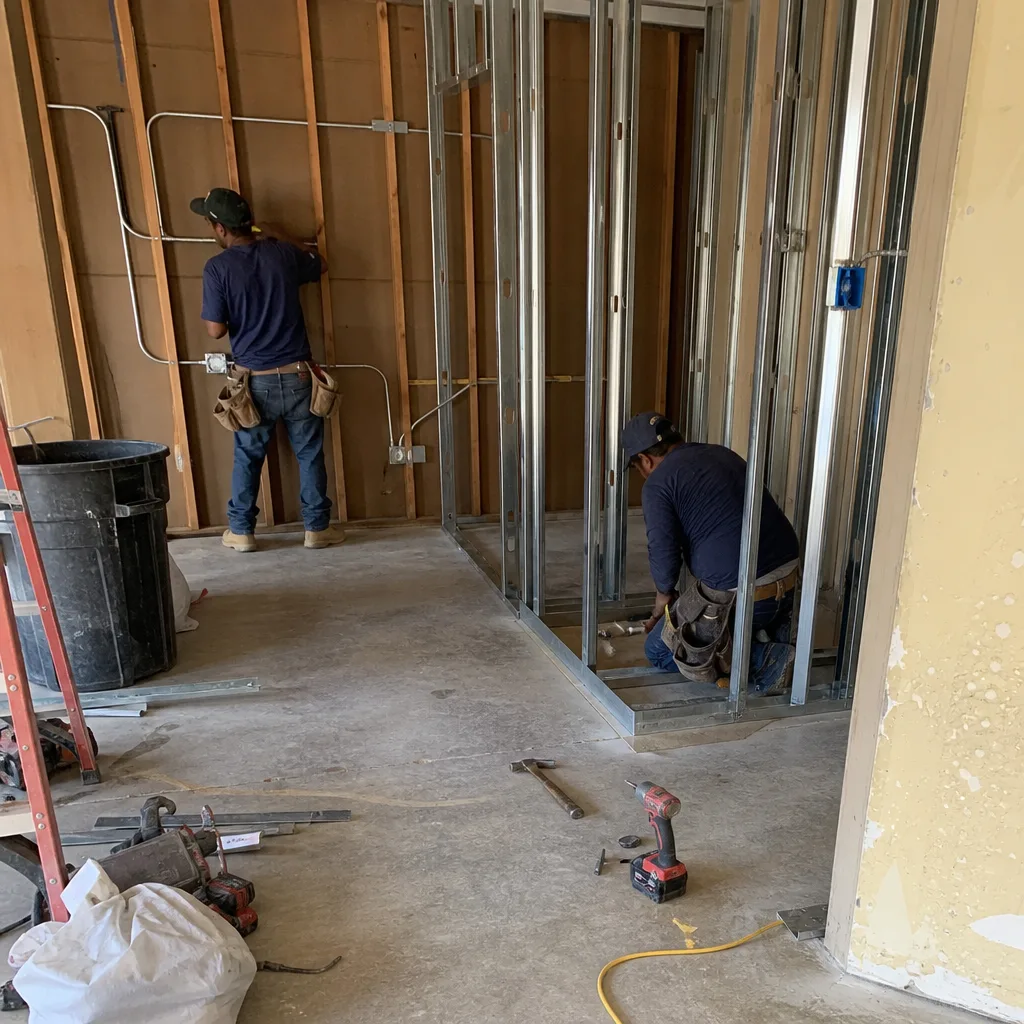
- Using a single national maintenance calendar. A checklist written for San Diego or San Francisco misses Fontana’s Santa Ana wind season entirely and understates summer HVAC load. Calendar your tasks to local weather patterns, not a generic template.
- Ignoring wet-bulb temperature. Your tenant’s comfort and your equipment’s survival depend on humidity-adjusted heat, not the dry-bulb number on the weather app. Pre-2022 HVAC equipment is increasingly marginal.
- Skipping documentation. A photo of a crack, a dated filter change, a test button video - these are evidence if a tenant claims you neglected maintenance. Our Haven Standard photo record practice exists for this reason.
- Deferring stucco crack evaluation. “It’s just settling” is a guess, not a diagnosis. Patterned cracking after Santa Ana events indicates structural movement that worsens with water intrusion. Log it, photograph it, and call a structural technician if it progresses.
- Neglecting hard-water scale. Fontana’s water destroys tankless water heaters faster than almost any other California metro. Annual descaling is not optional; it is the warranty condition.
- Assuming prefab means maintenance-free. Factory precision reduces some failure modes and introduces others. Rainscreen systems, proprietary flashing, and structural connections all need manufacturer-specific inspection protocols.
- Treating tenant complaints as annoyances rather than legal notices. A text about “the heater’s not working great” is a habitability report. Respond in writing, act within statutory timelines, and document everything.
When to Call a Professional
Some seasonal tasks are owner-manageable. Others require licensed trades, and attempting them yourself risks warranty voids, code violations, or injury.
Call a licensed HVAC technician for refrigerant handling, compressor diagnosis, or ductwork modification. Call a plumber for gas line work, sewer line access, or any repair inside a slab. Call an electrician for panel work, GFCI troubleshooting beyond reset, or aluminum wiring evaluation. Call a structural engineer or qualified contractor for foundation cracks, wall movement, or roof sag after wind events.
Ellery ADU Studio Fontana offers free estimates for ADU owners evaluating maintenance needs, system upgrades, or habitability concerns. Our design-build team can assess whether a seasonal issue indicates a design or construction deficiency that falls under our 365-Day Done Right Promise. Call (909) 637-3715 to schedule your free estimate.
Frequently Asked Questions
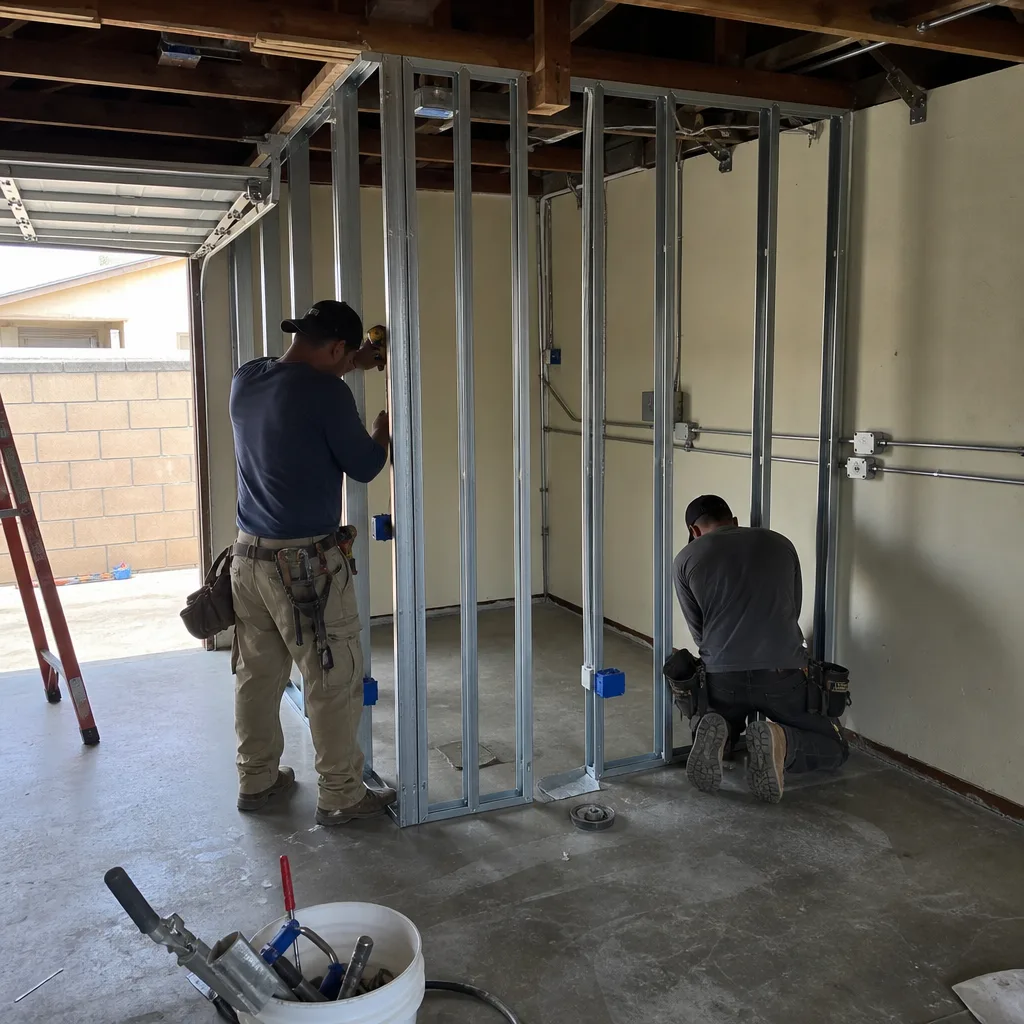
Owner-performed seasonal maintenance for a typical Fontana ADU runs $400-$800 annually, including filters, caulk, pipe insulation, and detector batteries. Professional service for the full task list runs $1,500-$2,800. One reactive HVAC or plumbing repair typically costs $2,500-$6,000. Call (909) 637-3715 for an exact quote on your ADU - estimates are free.
No. Under The Haven Standard, Clause 1, every project is quoted with a written price before any work begins. The scope is locked at signing. No door-side upsells, no scope creep. This applies to maintenance assessments and repairs we undertake, not to owner-performed tasks.
Routine maintenance - filter changes, caulking, gutter cleaning, detector battery replacement - does not require permits. Work affecting structural, electrical, plumbing, or mechanical systems may require permits depending on scope. In Fontana, water heater replacement, electrical panel upgrades, and roof membrane replacement all trigger permit requirements. We pull permits and pass inspections as standard on all work we perform.
Every 30 days from June through September due to PM2.5 load from wildfire smoke, agricultural dust, and freeway particulates. Every 60 days October through May. Upgrade to MERV 11-13 if the ADU is near I-10, I-15, or the BNSF rail corridor.
Take action when overnight lows are forecast below 30°F. Fontana’s design low is 28°F, but microclimates vary. North Fontana and hillside lots in Summit Heights run 2-3 degrees colder than the valley floor. Exposed hose bibs and irrigation lines are highest risk; wrap them or drain them before the first freeze warning.
Yes, in specific ways. Abodu, Plant Prefab, and Tuff Shed units have proprietary envelope systems, structural connections, and warranty conditions that require manufacturer-aware inspection. The fundamentals - HVAC filters, caulk, drainage - are identical. The details of rainscreen drainage, panel flashing, and frame bolt torque are not. We specify and coordinate these systems and can advise on factory-specific maintenance protocols.
An owner performing the full seasonal checklist needs 4-6 hours per year, split across four visits. A professional service visit for HVAC, plumbing, and exterior inspection runs 2-3 hours per quarter. The time investment is modest compared to the 8-40 hours a reactive repair demands, plus tenant disruption and potential habitability claims.
The Bottom Line
Fontana’s climate is not forgiving to neglected buildings. The Inland Valley’s heat, wind, and freeze cycles each exploit specific weaknesses in ADU construction: undersized HVAC, unprotected plumbing, wind-penetrated envelopes, and moisture-trapped masonry. A seasonal maintenance schedule tuned to these realities costs less than one reactive repair and protects both your cash flow and your legal position under California habitability law. Document everything. Act before the weather forces your hand. And when a task exceeds your skill or a symptom exceeds your diagnosis, call a professional who will put the scope and price in writing before work starts.
Written by Nadia Ellery, Owner at Ellery ADU Studio Fontana, serving Fontana since 2015.