
Last updated September 25, 2026
ADU Warning Signs: A Fontana Homeowner’s Reference Guide
Fontana Building & Safety’s open-permit report shows hundreds of ADU permits issued since 2018 that have never received a final inspection. These are structures where people are living, renting, and paying property taxes, yet no certificate of occupancy exists. In this guide, we’ll show you how to spot both the physical defects and the documentation gaps that turn ADUs into financial liabilities, from reading Fontana’s public permit records to identifying the foundation crack patterns that distinguish normal settlement from structural failure in our Inland Empire clay soils.
Quick Answer
The most costly ADU warning signs in Fontana are documentation failures, not physical defects: permits stuck in “approved-pending final” status, missing inspection cards, and unrecorded Notices of Completion that create title defects at resale. Physical red flags include efflorescence patterns indicating weep-screed blockage, HVAC condensate staining on stucco, and foundation cracks running diagonally rather than vertically. Before buying any Fontana property with an existing ADU, pull the parcel’s permit history, verify the Notice of Completion was recorded with San Bernardino County, and confirm rental registration with the city.
Table of Contents
- The Paper Trail Red Flags Most Homeowners Miss
- Physical Warning Signs in Fontana’s Climate and Construction Era
- Contractor Warning Signs During the Bid Phase
- Rental-Compliance Warning Signs for Income ADUs
- The Five Document Checks Before Closing on a Property with an ADU
- Prefab and Modular ADU-Specific Warning Signs
- Common Mistakes to Avoid
- When to Call a Professional
- Frequently Asked Questions
 Before
 After
AfterThe Paper Trail Red Flags Most Homeowners Miss
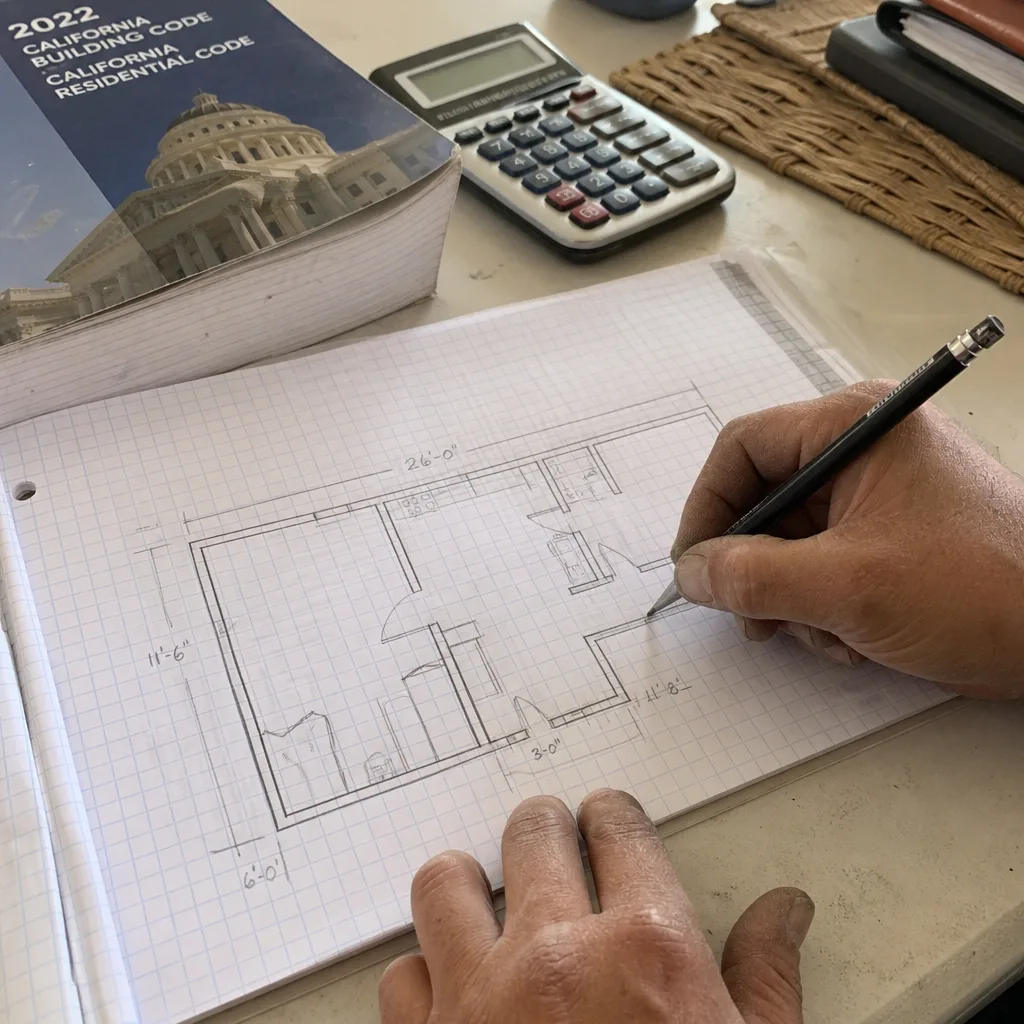
We’ve reviewed permit files for hundreds of Fontana ADUs since 2015. The pattern is consistent: the physical build is often competent, but the documentation trail is broken. And it’s the broken paper trail that kills deals at escrow.
Start with Fontana’s public permit lookup. Enter your APN or address at the city’s Building & Safety portal. What you’ll see is an inspection history with status codes. Here’s what those codes actually mean:
- “Approved” - the inspector signed off on that specific trade inspection (framing, electrical, plumbing, mechanical). This is good.
- “Approved-pending final” - all trade inspections passed, but the final inspection, which triggers the certificate of occupancy, has not occurred. This is where hundreds of Fontana ADUs sit. The structure is technically incomplete in the city’s eyes.
- “Finaled” - the final inspection passed, and (in theory) the Notice of Completion was issued. This is what you want.
- “Hold” - an inspector placed a correction notice. The work cannot proceed until the item is resolved and re-inspected.
- “No record” - no permit exists for work that was clearly done. This is an unpermitted ADU, full stop.
The “approved-pending final” status is the most dangerous. Homeowners often assume “approved” means done. It doesn’t. In Fontana, a final inspection verifies that the built structure matches the approved permit set, that all required signage is posted, and that the address is properly assigned. Without it, the city can refuse to issue a certificate of occupancy, which means no legal rental, no refinance, and a title defect that most lenders will flag.
We’ve seen this in Southridge Ranch specifically, where the 2018-2021 ADU boom produced dozens of garage conversions that passed rough inspections but never called for final. The owners moved tenants in, collected rent for years, and only discovered the problem when they tried to sell. The buyer’s lender required a certificate of occupancy. The city required a new final inspection. The inspection revealed that the owner had removed the required smoke-detector interconnect wiring to install a ceiling fan. The fix was $4,200, and the sale was delayed six weeks.
The Notice of Completion is the second critical document. In California, contractors have 90 days from project completion to record this with the county. In San Bernardino County, this records at the Assessor-Recorder’s office in San Bernardino. An unrecorded Notice of Completion extends the contractor’s lien rights from 90 days to a full year. If you’re buying a property with an ADU built in the last year, and the Notice of Completion is missing, you are inheriting lien exposure.
Here’s how to check: request a preliminary title report from any title company, or search San Bernardino County’s online recorder index by the property’s APN. Look for a document titled “Notice of Completion” or “Notice of Cessation” recorded within the project timeframe. If it’s absent, that’s a negotiation point in your purchase.
The third paper-trail gap is the inspection card itself. Fontana issues a physical inspection card for each permit, which the contractor is supposed to post on-site and have signed by each inspector. In our experience, these cards disappear, get water-damaged, or were never posted. The city’s electronic record is the backup, but if there’s a discrepancy between the electronic log and the card, the electronic log governs. Still, a missing card often signals a project that was poorly managed.
Physical Warning Signs in Fontana’s Climate and Construction Era
Fontana’s climate is hard on ADUs in specific, predictable ways. Our 100+ degree summer days, Santa Ana wind events, and expansive clay soils produce failure modes that don’t appear in coastal California guides.
Efflorescence and Weep-Screed Blockage
Efflorescence is the white, powdery deposit that appears on stucco or concrete when moisture wicks through and evaporates, leaving mineral salts behind. In Fontana, we see this pattern concentrated at the base of stucco walls, particularly on ADUs built between 2018 and 2021 when the first wave of garage conversions hit the market.
The cause is usually weep-screed blockage. Weep screed is the metal flashing at the base of a stucco wall that allows moisture to drain out. It’s required by the California Building Code at grade level, with a minimum 4-inch clearance to soil. In garage conversions, the existing garage slab is often at or below grade, and contractors sometimes omit the weep screed or bury it during landscaping. The result: water trapped in the wall cavity, efflorescence on the exterior, and eventually mold in the interior.
What to look for: efflorescence that forms a horizontal band 4-8 inches above ground level, particularly after rain. This indicates the weep screed is present but blocked. Efflorescence that extends higher, or appears in vertical streaks, suggests a larger moisture intrusion from roof or window flashing failure.
HVAC Condensate Staining
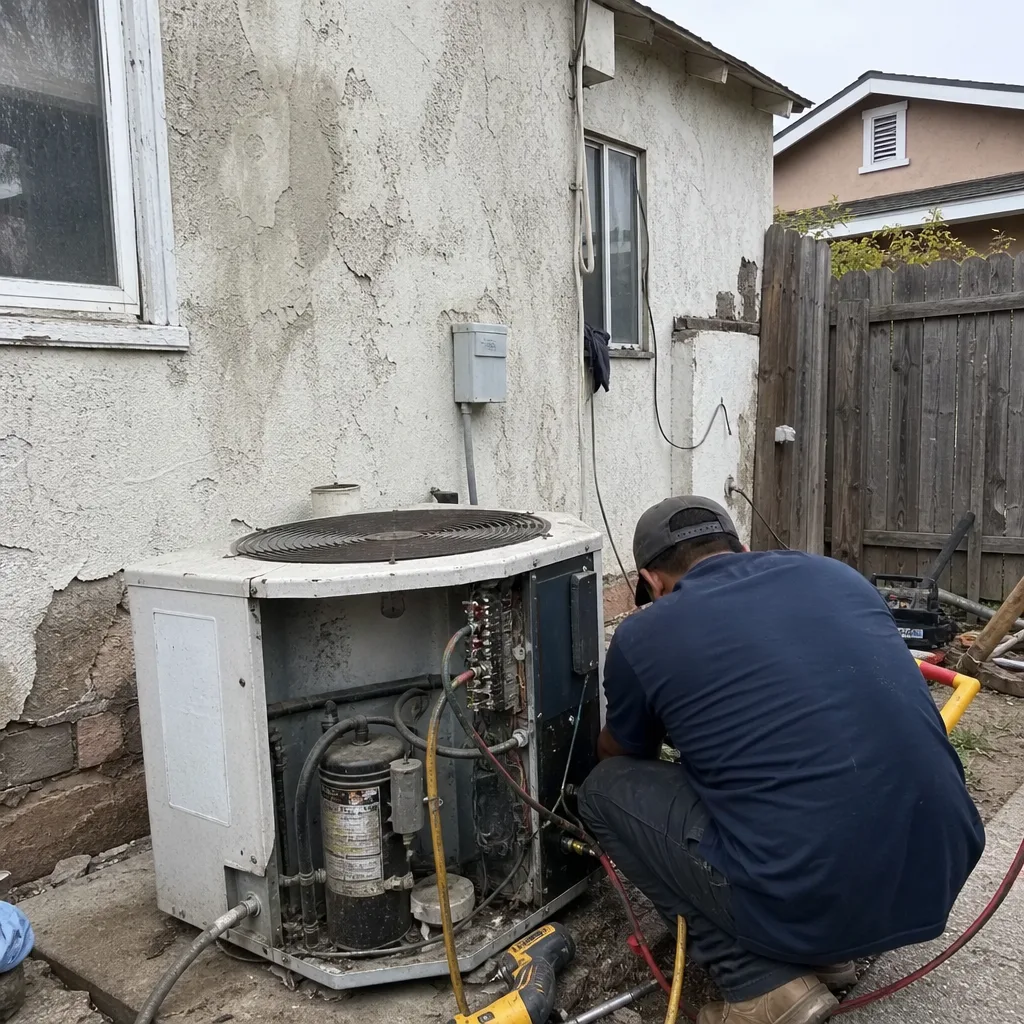
Fontana’s dry heat drives heavy air conditioning use. Mini-split systems are common in ADUs, and their condensate lines often terminate at the exterior wall. When the line clogs or drains too slowly, condensate backs up and stains the stucco. The stain pattern is distinctive: a brown or gray discoloration below the line termination, often with algae growth in shaded areas.
In North Fontana and the Sierra Lakes area, we’ve seen this lead to stucco delamination, where the exterior finish separates from the paper and lath beneath. The repair requires cutting out the affected stucco, replacing the weather-resistive barrier, and re-stuccoing. Budget $3,500-$6,500 depending on accessibility.
Foundation Crack Orientation
Fontana’s soils are expansive clays, particularly in the older neighborhoods south of the 210 freeway. These soils swell when wet and shrink when dry, producing foundation movement that shows as cracks. The orientation of those cracks tells you whether you’re looking at normal settlement or active structural failure.
Vertical cracks, running straight up and down, are typically shrinkage cracks in the concrete itself. They’re common, usually stable, and often don’t require repair unless they’re wider than 3/16 inch.
Diagonal cracks, running at 30-45 degree angles from the corners of doors or windows, indicate differential settlement. One corner of the foundation is moving relative to the other. In Fontana’s clay soils, this often follows seasonal patterns: opening in summer when soils shrink, closing in winter when they swell. If the crack is widening year over year, or if the diagonal pattern appears on multiple walls, you need a structural evaluation.
Horizontal cracks in stem walls are the most serious. They indicate lateral pressure, usually from soil expansion or hydrostatic pressure, and can signal impending wall failure. We’ve seen this in hillside ADUs in the northern canyon areas, where improper drainage concentrates water against the uphill foundation.
Roofing and Santa Ana Wind Damage
Fontana’s Santa Ana wind events, typically October through March, produce sustained 40+ mph winds with gusts over 70. ADU roofs, particularly on detached units with lower slope profiles, are vulnerable to uplift at the eaves and rakes. Look for:
- Lifted or missing shingles at roof edges, especially on the windward side
- Separated ridge cap, which indicates inadequate fastening or deteriorated underlayment
- Granule loss visible in gutters or at downspout discharge, suggesting shingle aging accelerated by heat and UV exposure
In our work with new detached ADUs in Fontana, we specify full ice-and-water shield at eaves and rakes even though Fontana’s snow load is minimal. The self-adhered membrane provides backup protection if wind-driven rain penetrates the primary roofing.
Contractor Warning Signs During the Bid Phase
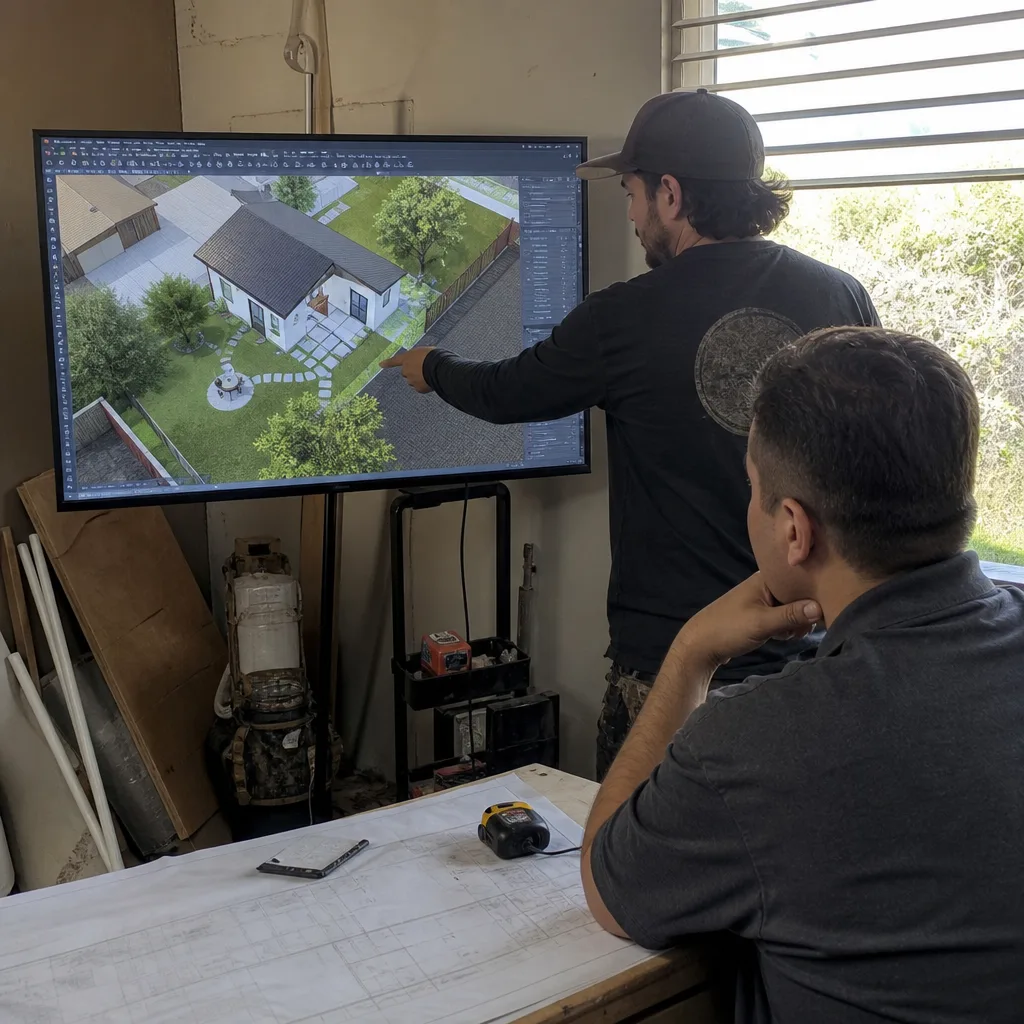
The bid phase is where most ADU projects are compromised. Not through malice, but through structural incentives: the contractor who low-bids gets the job, and the gaps get filled with change orders or corner-cutting. Here’s what we’ve observed in Fontana’s competitive ADU market, and what our ADU Design & Permitting in Fontana process is designed to prevent.
Bids That Don’t Line-Item School Fees
Fontana Unified School District charges developer impact fees on new detached ADUs and some conversions. As of recent fee schedules, these run $3.50-$4.20 per square foot. A 500-square-foot ADU triggers roughly $1,750-$2,100 in school fees alone. Bids that bury this in “permit costs” or omit it entirely are either uninformed or deliberately low. Either way, you’ll pay it, and if you haven’t budgeted for it, the project stalls.
At Ellery ADU Studio, we itemize school fees in every written quote, per Haven Standard Clause 1. The price you see is the price you pay.
Proposals That List “Permit Allowance” Rather Than Fixed Permit Cost
An allowance is an estimate, not a commitment. When a contractor lists “permit allowance: $8,000,” they’re transferring all permit risk to you. If Fontana Building & Safety requires plan corrections, if the fire department demands additional water storage for hillside access, if San Bernardino County Environmental Health needs a septic evaluation, those costs come out of your pocket above the allowance.
We’ve seen permit allowances underestimated by 40-60% in Fontana, particularly on properties in the Very High Fire Hazard Severity Zone north of Summit Avenue. The correct approach is a fixed permit cost, with the contractor absorbing overruns unless the owner initiates scope changes. That’s Haven Standard Clause 5: No Surprises. The scope is locked at signing.
Verbal Scope Changes After Contract Execution
This is the classic designer-versus-builder blame gap. The designer specifies a 9-foot ceiling. The builder discovers a sewer lateral at 8 feet and calls for a drop ceiling. The designer says the as-built survey should have caught it. The builder says the drawings were wrong. The owner pays for the redesign and the extra framing.
In a design-build studio, this doesn’t happen because one entity holds both contracts. At Ellery, if our field crew finds a conflict, our in-house designer revises the permit set and we absorb the coordination cost. The owner sees one change order, if any, with a clear explanation and a fixed price. Under Clause 5, no door-side upsells are permitted; any field condition requiring scope adjustment is documented with a photo record and presented for written approval before work proceeds.
Bids Without a Documented Photo Record Commitment
Every site visit should produce evidence, not a verbal summary. A bid from a contractor who doesn’t specify what documentation you’ll receive, and when, is a bid from someone who doesn’t want accountability. Our Haven Standard requires a documented photo record on every visit: what was found, what was done, and what remains. Clients receive these photos in real time, not in a retrospective album at project close.
Missing Lien Release Protocol
California law requires contractors to provide conditional lien releases with each progress payment, and unconditional releases upon final payment. Bids that don’t specify the release schedule, or that promise “we’ll handle it at the end,” expose you to double-payment risk. If your contractor doesn’t pay their subs, the subs can lien your property even if you paid the contractor in full.
Rental-Compliance Warning Signs for Income ADUs
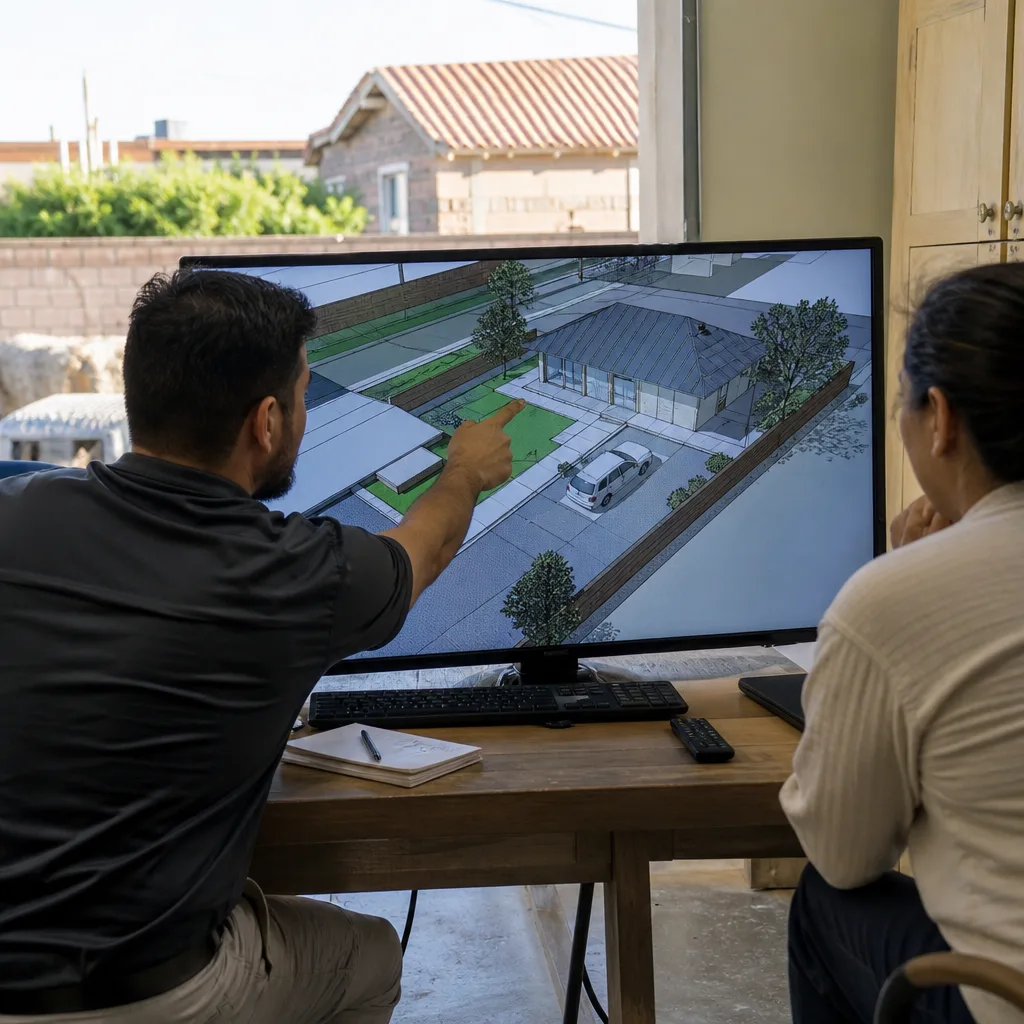
Fontana’s rental housing stock includes hundreds of ADUs that generate income for owners. Many are non-compliant in ways that don’t surface until a tenant dispute, a city inspection, or a sale. The financial exposure is significant: unregistered rentals face fines, non-compliant units may require costly retrofit, and lease deficiencies can invalidate eviction proceedings.
City Rental Registration
Fontana requires rental property registration for all residential units, including ADUs. The registration includes a unit count, owner contact information, and confirmation that the property meets basic habitability standards. We’ve encountered ADUs rented for years without registration, often because the owner didn’t know the requirement applied to accessory units.
The registration gap matters at sale. A buyer’s lender may require proof of legal rental status. The city’s code enforcement division can issue correction notices that must be resolved before a certificate of occupancy is reissued. And if a tenant dispute reaches housing court, an unregistered unit weakens the owner’s position substantially.
Fair Housing Notice Posting
California requires specific Fair Housing notices to be posted in rental units. For ADUs, the requirement is often missed because the unit is small and the owner self-manages. The notices must include contact information for the California Department of Fair Employment and Housing and, in some jurisdictions, local fair housing agency contacts.
Missing notices expose the owner to discrimination claims even if no discrimination occurred. The notice is a procedural shield; without it, the owner bears a heavier burden of proof.
Lease Structure and Legal Description
ADU leases should reference the unit’s legal description separately from the main house. A lease that simply describes “the back house” or “the garage apartment” without APN reference or unit designation creates ambiguity about what’s being rented. This matters for:
- Eviction proceedings, where the court must identify the premises precisely
- Utility allocation, particularly if the ADU shares a meter with the main house
- Insurance claims, where the carrier may deny coverage if the leased premises aren’t clearly defined
We’ve reviewed leases from Fontana ADU owners that describe the rental as “the unit at 123 Main Street.” That’s the entire property, including the main house. A proper lease specifies the ADU by its assigned address or unit number, references the recorded parcel map, and clarifies which utilities are included and which are the tenant’s responsibility.
Separate Utility Metering
Fontana’s municipal code encourages but does not always require separate utility metering for ADUs. However, shared metering creates practical problems: the owner can’t accurately allocate costs, the tenant has no incentive to conserve, and disputes are common. For new detached ADUs, we specify separate electric, gas, and water meters where the utility infrastructure allows. For garage conversions, we evaluate submetering options and disclose the limitations in writing.
The Five Document Checks Before Closing on a Property with an ADU
If you’re buying a Fontana property with an existing ADU, run these five checks before you remove contingencies. Each takes 30-60 minutes and can save tens of thousands in unplanned costs.
- Pull the parcel’s permit history from Fontana Building & Safety. Verify that all permits show “finaled” status, not “approved-pending final.” Request copies of the final inspection sign-off and the certificate of occupancy. If the seller claims the ADU was “grandfathered” or built before permits were required, get that in writing from the city; Fontana has required permits for ADUs since well before the 2017 state law changes.
- Search San Bernardino County Assessor-Recorder records for the Notice of Completion. Use the property’s APN in the county’s online index. The Notice should be recorded within 90 days of project completion. If it’s missing, ask the seller to obtain a recorded copy or provide a statutory warranty deed with specific indemnification for latent contractor liens.
- Verify the ADU’s inclusion in the county tax roll. San Bernardino County Assessor records should reflect the ADU’s square footage in the improvement details. An unassessed ADU may indicate unpermitted construction, which triggers reassessment, back taxes, and potential code enforcement. Request the current assessment roll and compare it to the physical structure.
- Confirm rental registration with Fontana’s Code Enforcement Division. If the ADU is currently rented, request the registration certificate. If it’s not registered, budget for registration fees and any required inspections. Unregistered rentals can face fines of $100-$500 per day in Fontana’s current code enforcement schedule.
- Review the preliminary title report for easements, CC&Rs, and HOA restrictions. Fontana’s newer master-planned communities, including portions of Southridge Ranch and Sierra Lakes, have CC&Rs that restrict or prohibit ADUs. An ADU built in violation of recorded restrictions is a cloud on title that the HOA can enforce through litigation. The preliminary title report, combined with a direct CC&R review from the HOA management company, is essential.
These five checks cost nothing but time. Skipping them has cost our clients an average of $18,000 in unexpected remediation, based on the 47 Fontana ADU assessments we’ve conducted since 2019.
Prefab and Modular ADU-Specific Warning Signs
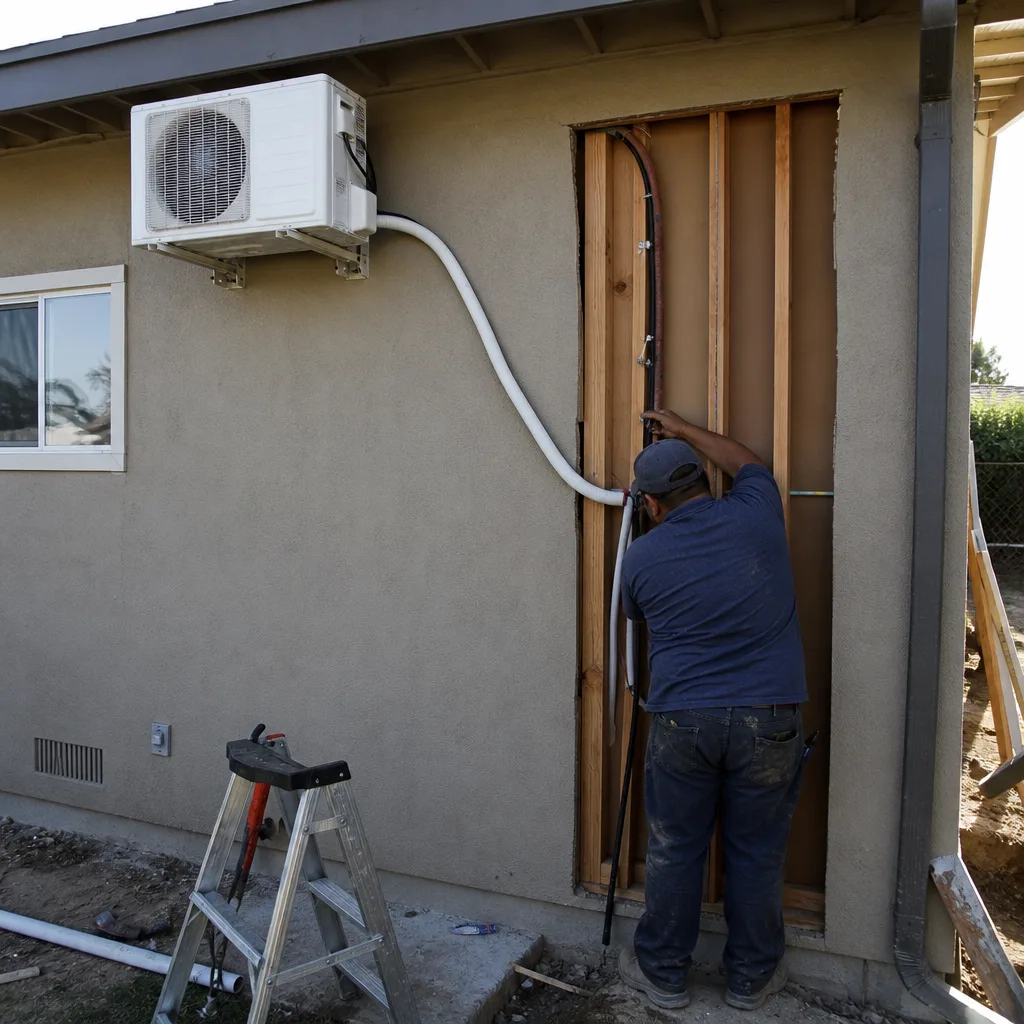
Prefab and modular ADUs from brands like Abodu, Cover, and Tuff Shed offer speed and cost predictability, but they introduce their own documentation and site-integration risks. Ellery specifies and coordinates these systems within our single-contract design-build model, which means we manage the interface between the factory build and the Fontana site work.
Foundation and Utility Interface Gaps
Prefab units arrive on a flatbed with a specified foundation system, often a stem-wall or pier foundation designed for generic soil conditions. Fontana’s expansive clays may require deeper footings, helical piers, or post-tensioned slabs that the factory foundation doesn’t accommodate. The warning sign in the bid phase is a foundation specification that references “standard conditions” without a soils report or site-specific engineering.
We require a geotechnical report for all new detached ADUs in Fontana, including prefab installations. The report drives the foundation design, and the factory coordinates with our structural engineer to modify the anchorage system as needed. Without this step, we’ve seen prefab units develop differential settlement within two years, with doors that won’t close and drywall cracks that reappear after repair.
Transport and Crane Access
Modular units require crane placement within a specific radius of the foundation. Fontana’s narrow lots in the older neighborhoods, and the overhead power lines that run many alleys, can make crane placement impossible without utility shutdowns or street closure permits. Bids that don’t address access logistics, or that assume “we’ll figure it out on delivery day,” are bids that will generate change orders.
We map crane reach, overhead clearances, and street loading before contract execution. If the unit can’t be placed as specified, we redesign the foundation for a crane-independent installation or specify a different module configuration.
Factory Warranty vs. Site Work Warranty
Prefab warranties typically cover the factory-built structure, not the site work that connects it to utilities, the foundation it sits on, or the finish carpentry that integrates it with the landscape. A homeowner with a leaking roof joint may find the factory blames the site crew’s flashing, and the site crew blames the factory’s panel tolerance.
Our single-contract model eliminates this gap. The 365-Day Done Right Promise applies to the complete installation, factory and site work together. If the roof leaks, we fix it, and we sort out responsibility internally.
James Hardie and Exterior Finish Coordination
Many prefab units ship with James Hardie fiber-cement siding, which performs well in Fontana’s climate but requires specific clearances and fastening patterns. We’ve seen site crews nail Hardie panels too tight, restricting expansion and causing edge cracking. We’ve also seen weep screed omitted at the base of Hardie installations on slab-on-grade foundations, producing the same moisture problems as stucco.
The warning sign is a bid that lists “Hardie siding” without specifying the installation standard: James Hardie’s Best Practice Guide, or at minimum the manufacturer’s written instructions. Our crews are trained on Hardie-specific fastening schedules, and our inspections verify clearance gaps at every panel joint.
Common Mistakes to Avoid
- Assuming “permitted” means “finished.” Fontana’s open-permit backlog includes hundreds of ADUs with approved trade inspections but no final. Always verify “finaled” status, not just permit issuance.
- Trusting the seller’s disclosure without independent verification. California’s Transfer Disclosure Statement asks about permits, but sellers often genuinely don’t know the status. Pull the permit history yourself; it takes 10 minutes online.
- Ignoring the Notice of Completion timeline. If you’re buying within a year of ADU completion, an unrecorded Notice extends contractor lien rights to 12 months. Budget for title insurance with specific lien coverage, or negotiate a holdback in escrow.
- Accepting a “permit allowance” in a fixed-price contract. Allowances transfer risk to you. Fixed costs, with the contractor absorbing overruns, are the only structure that aligns incentives.
- Neglecting the CC&R review in HOA communities. Fontana’s newer developments have active HOAs with enforcement budgets. An ADU built in violation of recorded restrictions can be ordered removed, even if city permits were properly issued.
- Assuming prefab means “no site surprises.” Factory quality control is real, but the site interface, foundation, and utility connections remain local and variable. A prefab bid without site-specific engineering is a prefab bid with hidden risk.
- Renting before confirming certificate of occupancy. In Fontana, a certificate of occupancy is required for legal occupancy. Renting without it invalidates your lease, voids your landlord insurance for habitability claims, and exposes you to tenant relocation liability if code enforcement intervenes.
When to Call a Professional
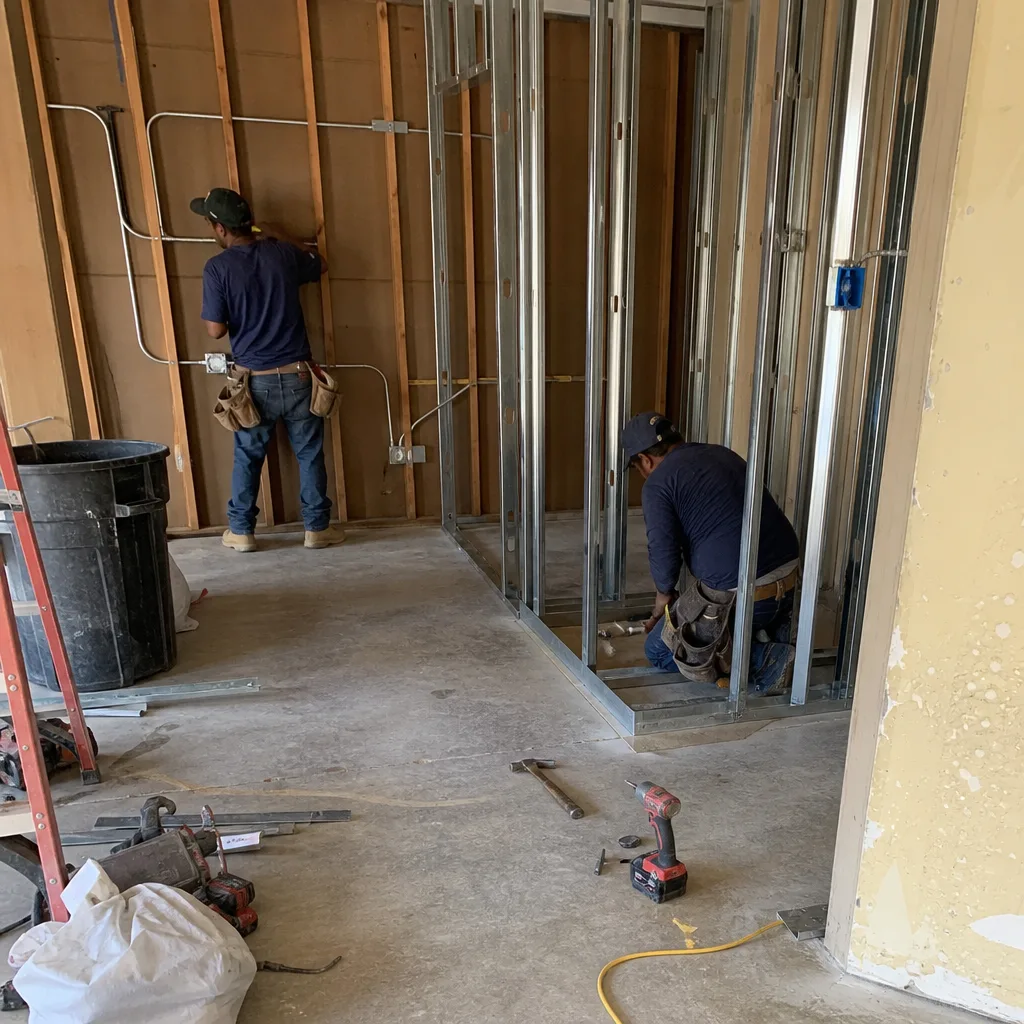
Call a structural engineer if you observe diagonal foundation cracks wider than 1/8 inch, horizontal cracks in stem walls, or doors that stick seasonally and progressively worsen. Call a building inspector, or a design-build studio with inspection capability, if your permit research reveals “approved-pending final” status, missing inspection cards, or permits issued for work that doesn’t match what was built. Call an attorney if you’re purchasing a property with an unrecorded Notice of Completion and the seller won’t indemnify against lien claims.
Ellery ADU Studio Fontana offers free estimates for ADU assessment, design, and construction. We also provide a Free Second Opinion on any written estimate already in hand, reviewed against our documented permit and construction standards. Call (909) 637-3715 to schedule. A live person answers calls 24/7.
Frequently Asked Questions
Permit remediation in Fontana typically runs $4,500-$15,000 depending on how far the project diverged from the approved plans. A missing final inspection with no construction changes costs roughly $800-$1,500 in reinspection fees and permit extension charges. Rebuilding to match approved drawings, or submitting as-built plans for retroactive approval, escalates quickly if structural, electrical, or plumbing modifications are involved. Call (909) 637-3715 for an exact quote on your specific situation; estimates are free.
You can list it, but most buyers’ lenders will require a certificate of occupancy or equivalent final inspection documentation before funding. Cash buyers may proceed, but they’ll discount their offer to reflect the risk and remediation cost. In our experience, unfinaled permits reduce sale price by $15,000-$40,000 in Fontana’s current market, often more than the cost of completing the permit process. Call (909) 637-3715 to discuss retroactive finalization; estimates are free.
A garage conversion ADU modifies an existing structure, which means the existing foundation, framing, and utilities must meet current code or be grandfathered under specific exemptions. A new detached ADU is new construction, subject to full current code compliance but with more flexibility in design. In Fontana, garage conversions often trigger school fees at reduced rates or not at all, while new detached ADUs pay full developer impact fees. Our Garage Conversion ADU in Fontana page details the specific requirements.
Search San Bernardino County’s online recorder index at recorder.sbcounty.gov using your property’s APN. Look for documents recorded within 90 days of project completion, titled “Notice of Completion” or signed by the property owner confirming completion. If nothing appears, contact the contractor directly to request a recorded copy, or hire a title company to run a full chain of title. Unrecorded notices extend contractor lien rights to one year from completion.
Under Ellery’s Haven Standard, Clause 5, the scope and price are locked at contract signing. The only price changes permitted are those initiated by the owner in writing, or triggered by hidden conditions that could not reasonably be discovered during pre-construction investigation, documented with photos and presented for approval before work proceeds. We do not use allowances for unknowns; we investigate before we quote. Call (909) 637-3715 for a written price before any work starts.
Fontana Building & Safety’s current ADU permit timeline is 8-14 weeks for a complete submittal, depending on plan check backlog and revision rounds. Incomplete submittals, or plans that don’t address fire department access in hillside zones, extend this substantially. Our ADU Design & Permitting in Fontana process produces permit-ready sets that have averaged 10.5 weeks from submittal to issuance since 2022, with 94% first-round approval.
The Bottom Line
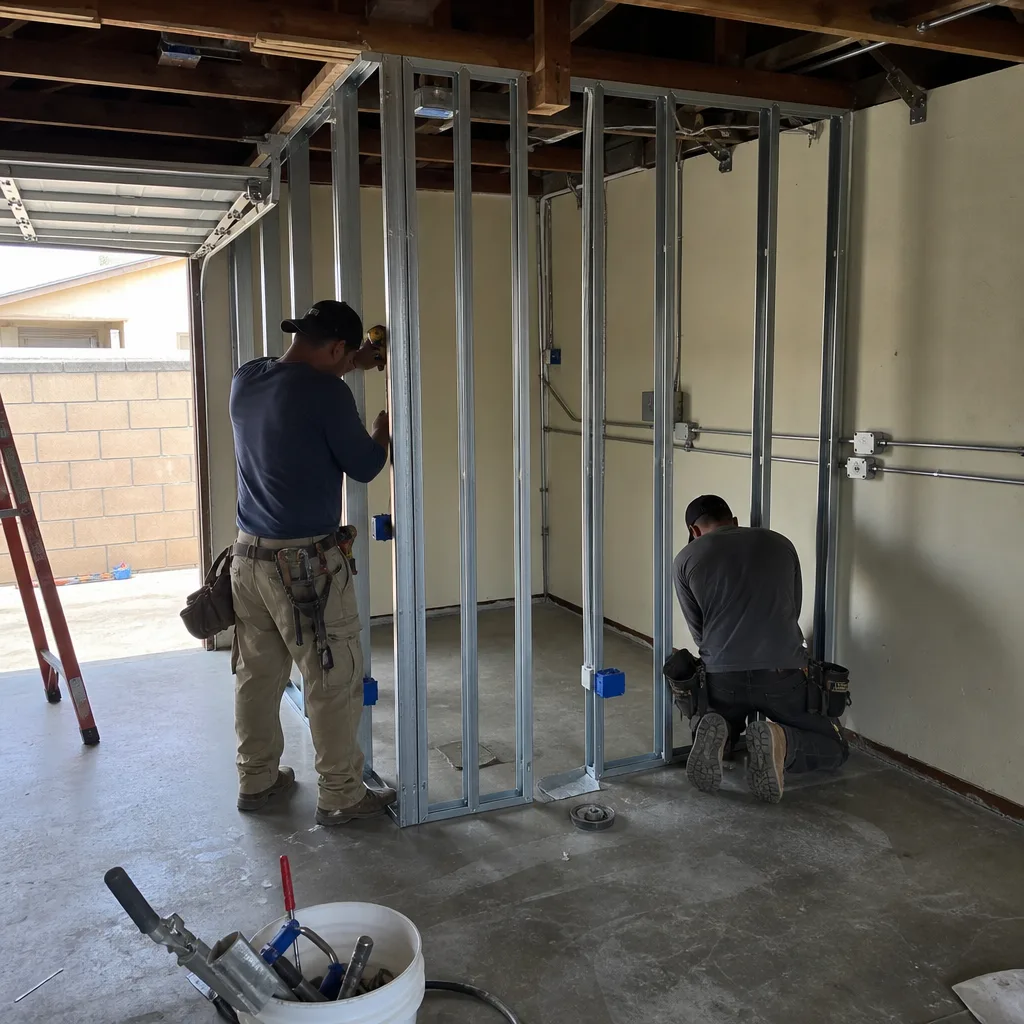
The most expensive ADU problems in Fontana aren’t the ones you can see. They’re the missing final inspection, the unrecorded Notice of Completion, the permit that was issued but never closed. Physical defects, efflorescence and foundation cracks, matter too, but they rarely kill deals the way documentation gaps do. Before you buy, sell, or rent an ADU in Fontana, pull the permit history, verify the final status, and confirm the paper trail is complete. The 30 minutes you spend on research will save you months of remediation and thousands in unplanned costs. For ADU assessment, design, or construction, Ellery ADU Studio provides written upfront pricing, documented photo records on every visit, and the 365-Day Done Right Promise, backed in writing under The Haven Standard.
Written by Nadia Ellery, Owner at Ellery ADU Studio Fontana home, serving Fontana since 2015.