
Last updated September 25, 2026
DIY vs Professional ADU: The Fontana Homeowner’s Decision Guide
Most Fontana homeowners frame the ADU decision as a cost question: how much can I save by doing it myself? But the real risk sits in the fine print of California Business & Professions Code §7044. The owner-builder affidavit you’ll sign to pull your own permit contains a one-year sale prohibition and a permanent disclosure obligation that follows your property deed. We’ve reviewed hundreds of ADU files since 2015, and the owners who regret going DIY rarely regret the work itself. They regret what happens when they try to refinance or sell. This guide walks through what the affidavit actually says, which parts of an ADU you can legally self-build in Fontana, what the insurance gap costs, and when a hybrid model makes sense - or you can explore how to hire an ADU contractor in Fontana for a step-by-step alternative.
Quick Answer
Building an ADU yourself in Fontana is legally possible under California’s owner-builder exemption, but the affidavit you sign creates a resale disclosure obligation and title insurance exception that persists for the life of your ownership. For most homeowners, the real comparison is not labor savings versus contractor markup - it’s whether a clean permit set and documented build history will return more value at sale than the 15-25% you might save on labor by self-building. Professional design-build delivery in Fontana typically runs $220-$420 per square foot all-in, with the permit set and warranty carrying value that outlasts the construction period.
Table of Contents
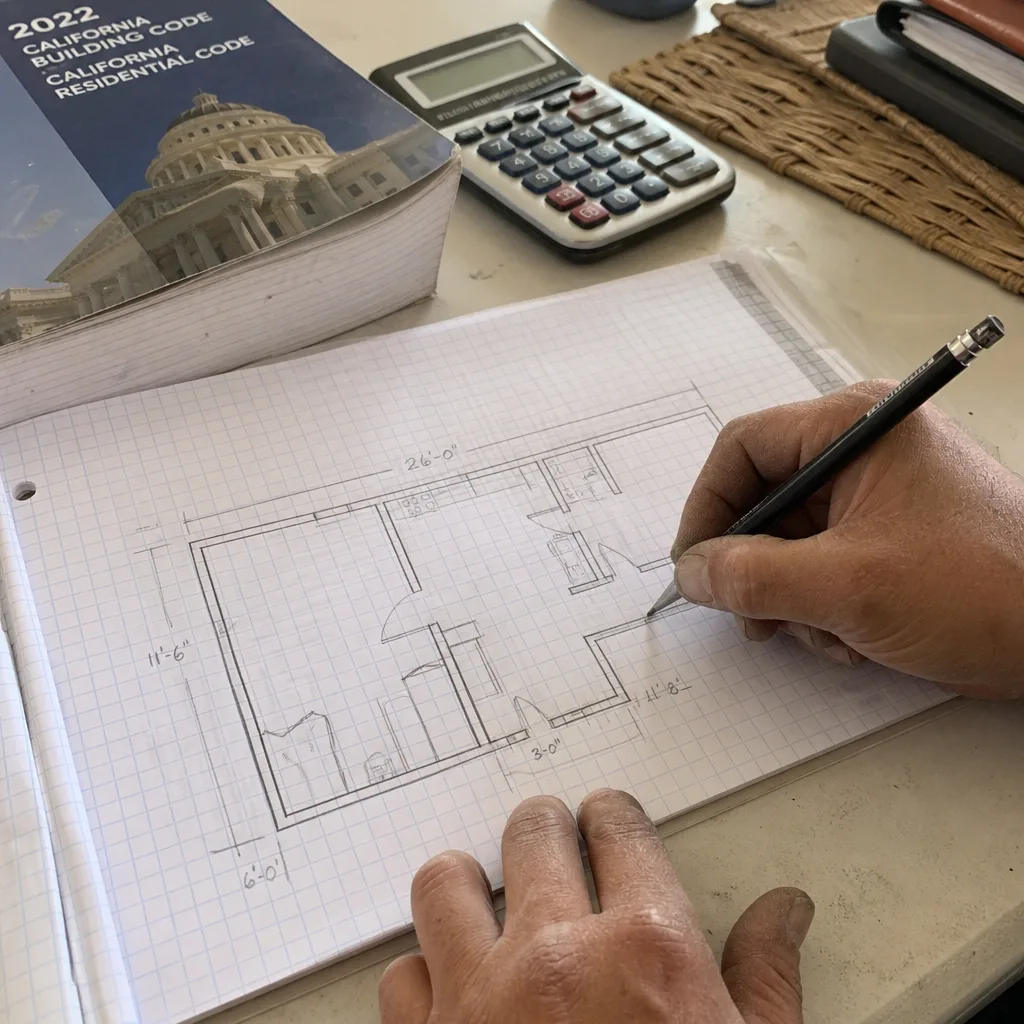
- The Owner-Builder Affidavit: What You’re Actually Signing
- What You Can Legally Self-Build in Fontana vs. What Requires a License
- The Real Cost Comparison: Labor Savings vs. Hidden Costs
- Hybrid Models That Actually Work
- The Insurance Gap: What Your Homeowner’s Policy Excludes
- Why the Permit Set Commands Value at Plan Check and Resale
- Prefab and Modular: Where DIY Meets Professional Coordination
- Common Mistakes to Avoid
- When to Call a Professional
- Frequently Asked Questions
- The Bottom Line
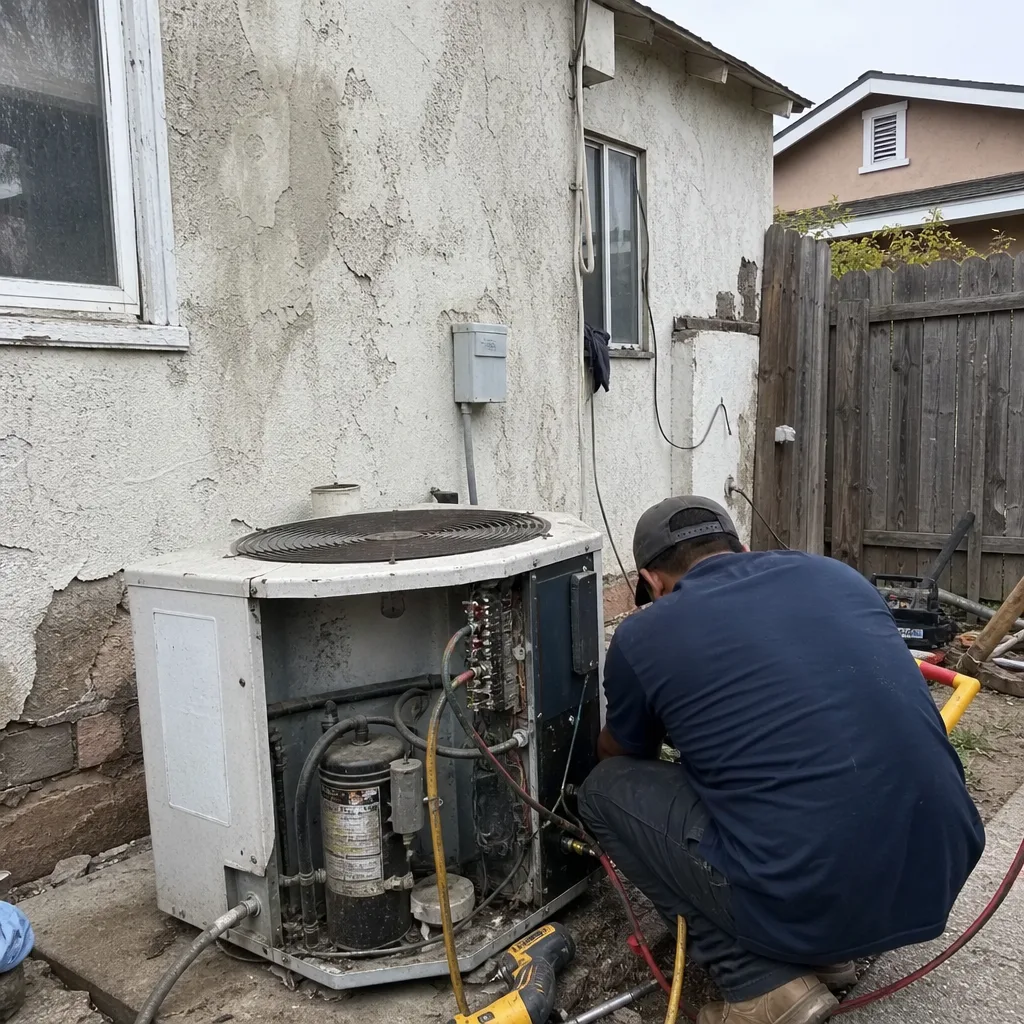 Before
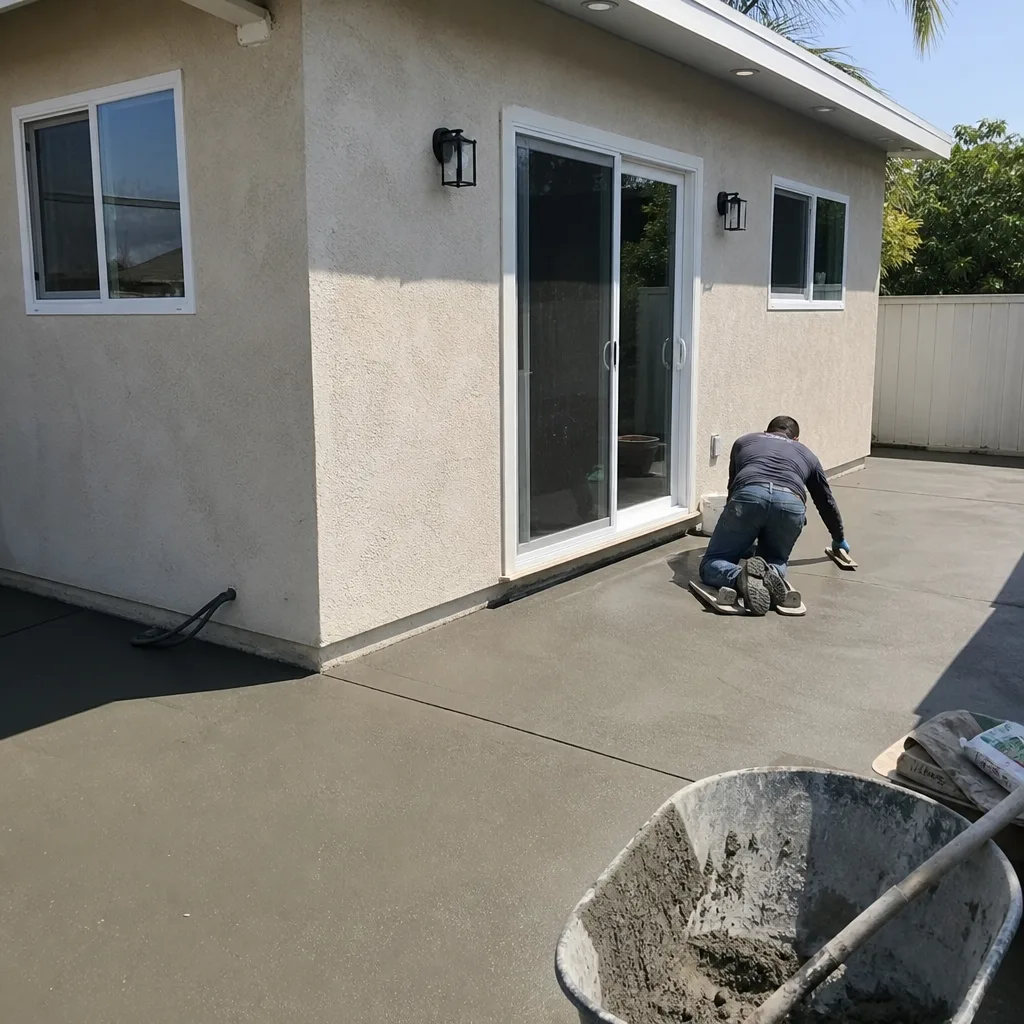 After
AfterThe Owner-Builder Affidavit: What You’re Actually Signing
California Business & Professions Code §7044 allows homeowners to act as their own general contractor on residential projects, including ADUs. The mechanism is the owner-builder affidavit, filed with your permit application at Fontana’s Building & Safety Division. Most homeowners skim it. The language is specific, and it binds you in ways that outlast the construction period.
The affidavit contains this clause, quoted directly from the standard California form:
“I am aware of the limitations of the exemptions from licensure and that if I sell the property within one year of completion of the work, I may be required to prove that the work was performed in a workmanlike manner.”
This is not merely a waiting period. It is a rebuttable presumption that the work was not performed in a workmanlike manner if you sell within twelve months. You can rebut it, but the burden is on you. More critically, the affidavit is recorded or referenced in your permit file, which is public record and discoverable by title insurers.
We’ve seen this play out in Fontana’s North Fontana and Sierra Lakes areas. A homeowner completes a garage conversion ADU in 2022, decides to relocate for work in 2024, and discovers their title insurer requires a contractor’s affidavit of completion or imposes a coverage exception for the ADU structure. The exception means the ADU is not covered for defect claims, and the lender may require a structural inspection at the buyer’s expense. The owner-builder savings, typically 15-25% on labor, evaporate into closing delays, renegotiated sale prices, or lost buyers.
The one-year sale prohibition is the headline. The permanent disclosure obligation is the deeper risk. In California’s standardized residential purchase agreement (CAR Form RPA), sellers must disclose material facts affecting value. A recorded owner-builder affidavit is arguably material. We’ve consulted with real estate attorneys in San Bernardino County who advise disclosure as a conservative practice, which means the fact of self-build enters your property’s narrative indefinitely.
For homeowners who intend to hold the property long-term, this risk is attenuated. For the 32-50 demographic that bought in Fontana between 2015 and 2025, job mobility is not theoretical. The average tenure in a California home is now under eight years. The affidavit you sign today may be a problem you sell in 2032.
What You Can Legally Self-Build in Fontana vs. What Requires a License
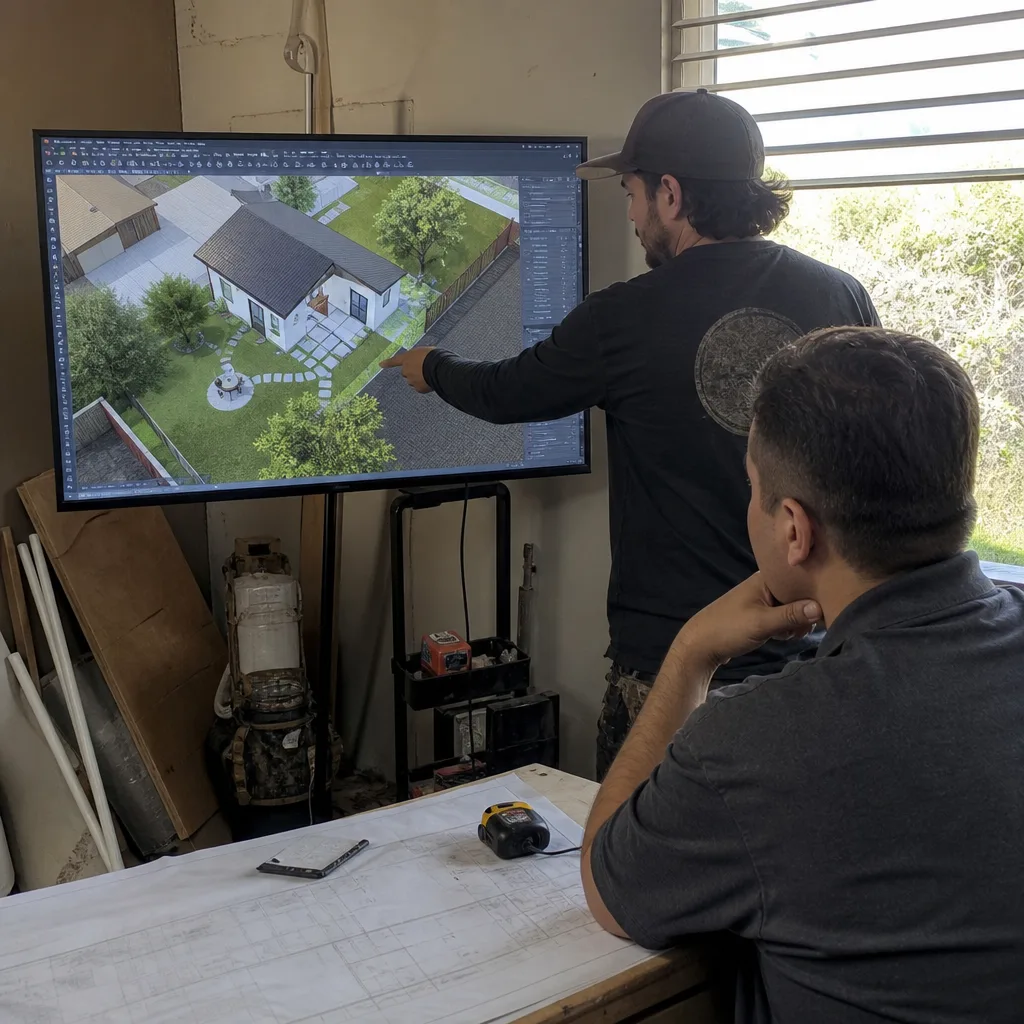
California draws a sharp line between work an owner-builder can perform and work that requires a licensed specialty contractor regardless of who holds the permit. Understanding this line is essential because performing the latter without the proper license is a misdemeanor, and using an unlicensed subcontractor exposes you to liability that your homeowner’s insurance likely excludes.
Work you can perform as owner-builder:
- Rough and finish carpentry (framing, sheathing, trim, cabinetry)
- Drywall installation and finishing
- Paint and stain application
- Finish flooring installation (tile, LVP, engineered wood - not structural subfloor)
- Landscape and hardscape not requiring structural engineering
- Window and door installation in non-structural openings
Work that requires a licensed contractor even on an owner-builder permit:
- Electrical panel upgrades or new service: C-10 license required. Most Fontana ADUs trigger a 200-amp service upgrade, which SCE requires to be performed by a C-10 contractor and inspected by the city and the utility.
- Gas line work: C-36 license required. Fontana’s 2022 adoption of the California Plumbing Code with local amendments requires pressure testing documentation signed by a licensed plumber.
- Structural connections to existing dwelling: For attached ADUs and garage conversions, the connection of new framing to existing shear walls or foundation requires a C-5 or B license, and the engineer of record typically specifies licensed installation.
- Roofing on detached structures over 120 square feet: C-39 license required.
- HVAC refrigerant line work: C-20 or C-38 license required for mini-split installation in most configurations.
The practical effect: even an ambitious owner-builder in Fontana must hire licensed trades for roughly 40-50% of the project value. The savings concentrate in finish work, where labor is less skilled and material markup is lower. The structural, mechanical, and utility work - where errors are most expensive - remains contracted.
Fontana’s Building & Safety Division enforces this strictly. In 2023, the city began requiring license verification at rough inspection for electrical and plumbing trades, cross-referencing CSLB records. Owner-builders who used unlicensed subs have had inspections failed and been required to remove and replace work. The cost of that do-over typically exceeds what a licensed contractor would have charged initially.
The Real Cost Comparison: Labor Savings vs. Hidden Costs
The internet abounds with claims that owner-building saves 30-50%. These figures are inflated. They assume you value your time at zero, that you make no errors requiring rework, and that you already own the tools and vehicle fleet of a working contractor. Here is how the numbers actually break down for a typical Fontana ADU in 2026.
Owner-builder cost structure: 800 sq. ft. detached ADU, Fontana
| Category | Owner-Builder | Professional Design-Build |
|---|---|---|
| Permit fees (Fontana base + SB County school fees) | $8,500-$12,000 | $8,500-$12,000 |
| Design and permit set | $4,000-$8,000 (freelance drafter or self-drawn with engineer review) | Included in contract |
| Site prep and utilities (excavation, sewer lateral, water, gas, electric trenching) | $35,000-$55,000 (contracted - owner cannot self-perform) | $35,000-$55,000 |
| Foundation and framing (contracted or self-built) | $45,000-$70,000 | $50,000-$75,000 |
| MEP rough (contracted) | $28,000-$42,000 | $30,000-$45,000 |
| Finish work (self-performed potential savings) | $18,000-$28,000 | $25,000-$38,000 |
| Builder’s risk insurance (see below) | $2,800-$4,500 | Included in overhead |
| Tool rental/purchase, vehicle, dump fees, contingency | $5,000-$10,000 | N/A |
| Total all-in | $146,300-$229,500 | $176,000-$275,000 |
| Cost per square foot | $183-$287 | $220-$344 |
The owner-builder savings range is 12-20% in practice, not 30-50%. And this assumes no major errors. A foundation pour that goes wrong costs $15,000-$30,000 to remove and replace. A failed electrical inspection that requires rewiring can add $8,000-$15,000. We’ve seen both in Fontana’s Southridge and Hunter’s Ridge neighborhoods, where expansive clay soils and older utility infrastructure create conditions that experienced crews anticipate but first-timers miss.
The professional premium buys more than labor. It buys a permit set that passes plan check faster (see next section), insurance coverage that transfers liability, and documentation that supports resale value. Under Haven Standard Clause 1, every Ellery project is quoted with a written price before work begins - no allowance games, no “we’ll figure it out in the field” pricing. The owner-builder model cannot offer this because the owner is discovering costs in real time.
For garage conversion ADUs in Fontana, the math shifts. The existing slab and roof reduce structural risk, and the MEP scope is smaller. Owner-builder savings here might reach 20-25%, but the resale disclosure obligation is identical. The question becomes whether $25,000-$40,000 in labor savings today outweighs a title exception or sale friction in seven to ten years.
Hybrid Models That Actually Work
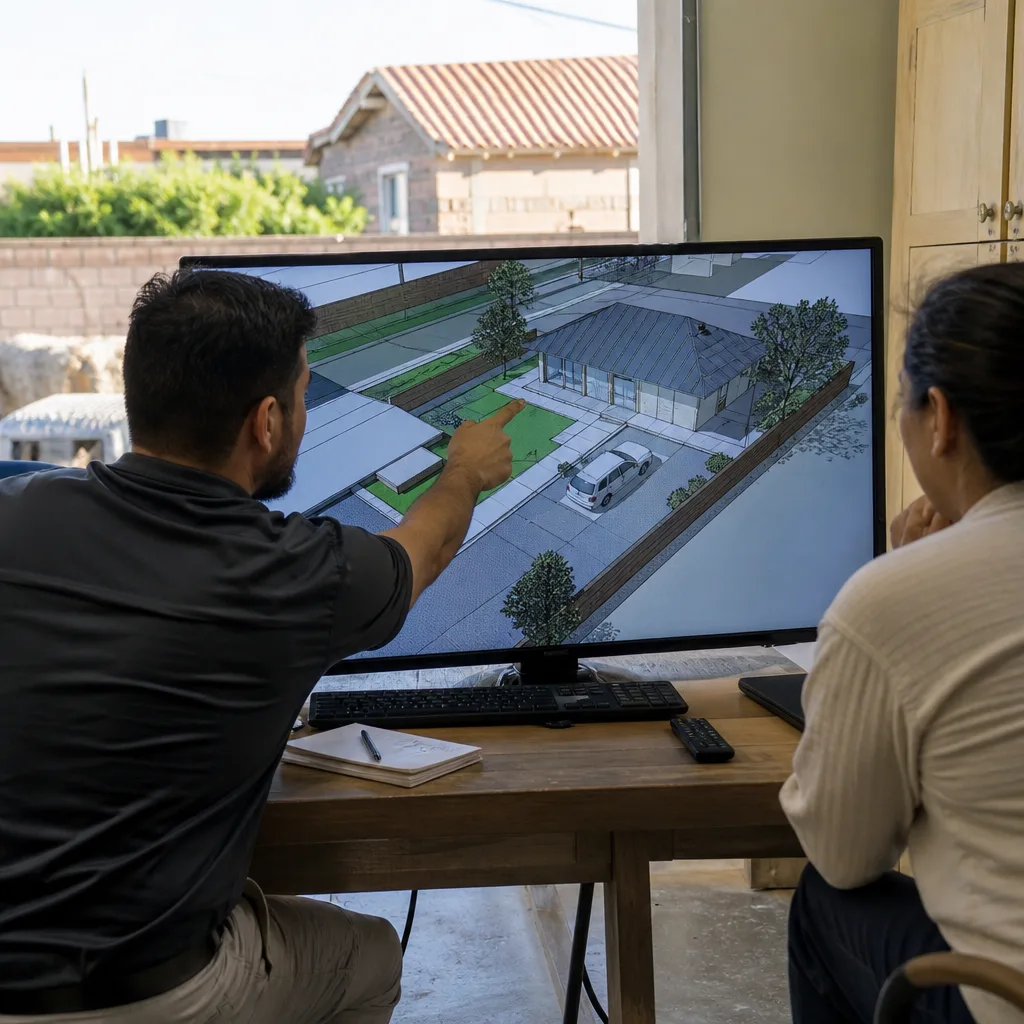
There is a middle path that preserves most owner-builder savings while eliminating the worst risks: the licensed GC permit with owner-builder finish work model. This is legally distinct from pure owner-builder delivery and, done correctly, avoids the affidavit’s sale prohibition entirely.
How it works:
- The licensed general contractor holds the building permit. This means no owner-builder affidavit is filed. The GC is the permit holder of record, with statutory responsibility for code compliance.
- The contract explicitly scopes owner-performed work. Typically this is finish carpentry, paint, flooring, and fixtures. The contract must specify that this work is performed by the owner as a volunteer, not as an employee or subcontractor, to avoid workers’ compensation and payroll tax issues.
- The GC performs or directly subcontracts all licensed trades. Electrical, plumbing, HVAC, and structural work remain under the GC’s license and insurance.
- The GC inspects owner-performed work before it is covered. This protects both parties. The GC cannot sign off on code violations, and the owner receives quality verification.
- Final inspection is requested by the GC, with the owner present. The certificate of occupancy issues in the GC’s name, with no owner-builder recordation.
The contract language that makes this clean is specific. It should state: “Owner shall perform [enumerated finish tasks] as volunteer labor without compensation. Owner acknowledges that [GC] is responsible for code compliance of all permitted work and retains authority to require removal and replacement of owner-performed work that does not meet code or approved plans.” Without this clause, the arrangement blurs into de facto owner-builder status, and the affidavit may be required.
We’ve coordinated hybrid models for Fontana clients in the Summit Heights and Shady Hills areas. The typical savings are 10-15% of total project cost, concentrated in finish labor. The owner works evenings and weekends for three to six months. The trade-off is time, not risk elimination: the GC’s schedule still drives the critical path, and owner availability for finish work must align with inspection sequencing.
Not all GCs will permit this. Some insurers prohibit it. At Ellery ADU Studio Fontana, we evaluate hybrid requests case by case, with the scope boundary written into the contract and the Haven Standard clauses applying to GC-performed work only. The 365-Day Done Right Promise covers our scope; owner-performed finish is the owner’s maintenance responsibility.
The Insurance Gap: What Your Homeowner’s Policy Excludes
Standard homeowner’s insurance policies contain a specific exclusion for new construction performed by the insured. This is not a gray area. The ISO HO-3 form, which most California insurers use, excludes “bodily injury or property damage arising out of … the construction, alteration, or repair of any property by or on behalf of the insured.” If you are the owner-builder, you are the insured performing construction. The exclusion applies.
What this means in practice:
- Injury to workers: If a friend helping you frame falls and is injured, your homeowner’s liability coverage likely denies the claim. You are personally exposed.
- Theft of materials: Lumber and appliance packages staged on site are not covered under most policies during active construction. Professional builders carry inland marine or installation floater coverage.
- Weather damage during construction: An open-framed structure damaged by Fontana’s Santa Ana wind events or winter rain is your loss.
- Defect claims after completion: If your self-built ADU develops a leak that damages the main house, your insurer may deny both claims as arising from your own construction work.
Builder’s risk insurance closes this gap. For a Fontana ADU project in 2026, expect:
- $2,800-$4,500 for a 12-month policy on an 800 sq. ft. detached unit
- $1,800-$3,200 for a garage conversion with shorter duration
- Named-peril vs. all-risk pricing varies; all-risk is essential for owner-builders
Most builder’s risk policies require the insured to be a licensed contractor or the property owner with a licensed GC of record. Pure owner-builders may need to purchase through a surplus lines broker, at higher premium and with more exclusions. We’ve referred Fontana clients to brokers who specialize in this market; the process takes two to three weeks and requires detailed construction schedules and material valuations.
Professional design-build delivery includes this coverage in overhead. At Ellery ADU Studio Fontana, our general liability and builder’s risk policies name the project and the owner as additional insured during construction. After certificate of occupancy, the ADU is covered under a standard dwelling policy with no construction exclusion. The owner-builder must actively solve this transition; many do not, discovering the gap only at claim time.
Why the Permit Set Commands Value at Plan Check and Resale
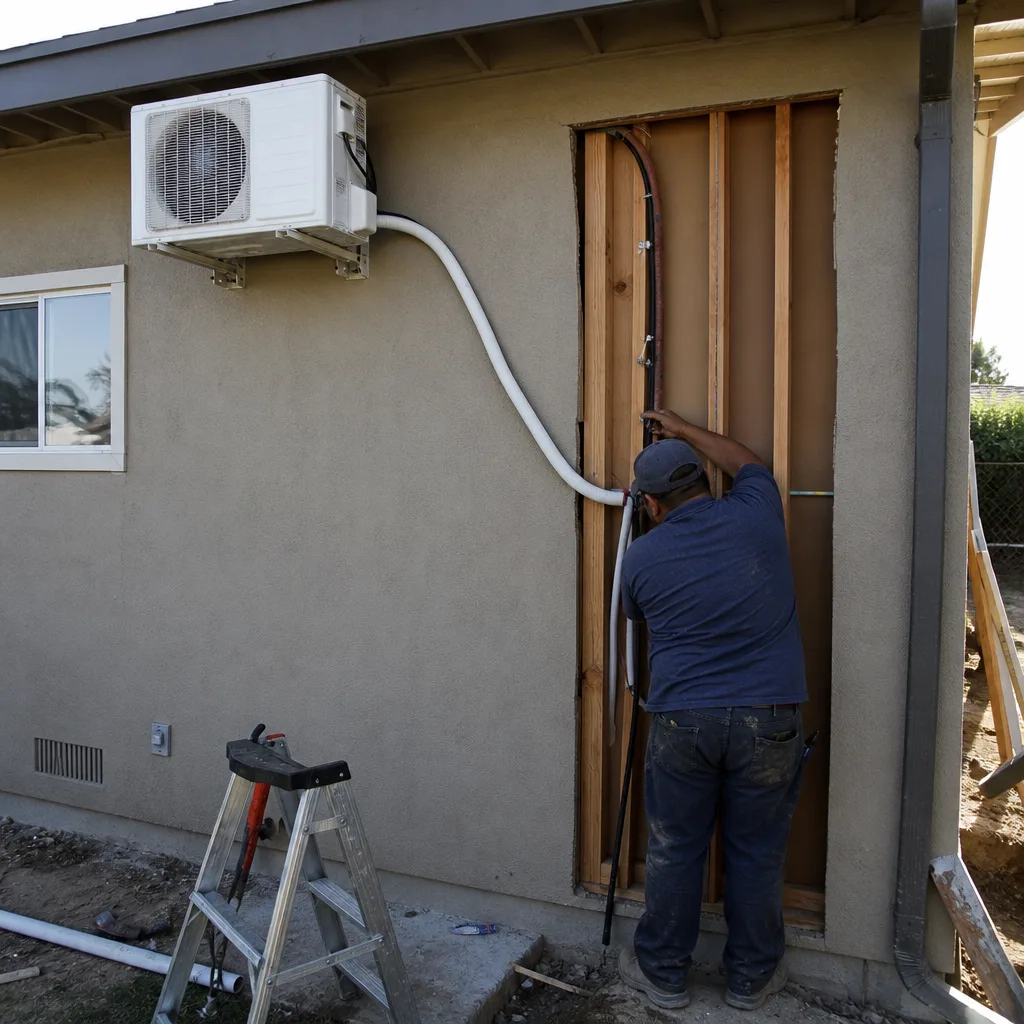
The permit set - the drawings, calculations, and specifications submitted to Fontana Building & Safety - is the most undervalued component in owner-builder planning. Most owner-builders minimize this cost, hiring a freelance drafter or using online plan services. The result is predictable: multiple correction rounds at plan check, each adding two to four weeks to the schedule, and a set of approved plans that may not fully reflect field conditions.
Fontana’s plan check process in 2026 is rigorous. The city contracts with third-party engineering review for structural and energy compliance. Common corrections we see on owner-builder submittals include:
- Title 24 energy calculations that don’t match the proposed envelope assembly
- Structural details missing for Fontana’s seismic design category (D2, high seismicity)
- Fire separation requirements between ADU and primary dwelling, especially for garage conversions with shared attic space
- SB 9 and SB 10 compliance documentation for lot-split scenarios
- Water meter sizing and fire flow calculations for detached units over 800 sq. ft.
Each correction cycle costs time and money. Fontana’s current plan check fee structure charges re-review fees after the second correction round. We’ve seen owner-builders spend $3,000-$6,000 in additional fees and four to six months in schedule delay because the initial permit set was incomplete.
The professional permit set, prepared by a design-build studio with Fontana-specific experience, typically passes in one round. The drawings anticipate the city’s review criteria. The structural calculations use Fontana’s specific soil conditions. The energy model reflects the inland Empire climate zone, not a generic California template.
At resale, the permit set has documentary value. A complete, as-built permit set with inspection sign-offs is evidence of code compliance. An owner-builder file with minimal documentation - common when the owner self-performed much of the work without photo records - requires the buyer to take more on faith. Title insurers notice this. Appraisers notice this. In a market where Fontana ADUs are increasingly financed as income-producing units, documentation quality affects loan terms and long-term value - something covered in our seasonal ADU care guide for year-round Fontana homeowners.
Our ADU Design & Permitting in Fontana service includes a full permit set, engineering, and plan check coordination. Every client receives the approved set in digital and bound hard copy, with inspection records appended through final. This is the documentation that transfers with the property, supporting value long after we’re gone.
Prefab and Modular: Where DIY Meets Professional Coordination
Prefab and modular ADU systems complicate the DIY-vs-professional framing. Brands like Abodu, Cover, Dvele, and Mighty Buildings manufacture units in factory conditions with precision that site-built construction rarely matches. But the coordination challenge - site prep, utility connections, foundation, crane set, and final tie-ins - remains significant. This is not IKEA furniture.
What prefab manufacturers actually deliver:
- The module, typically 80-95% complete at factory exit
- Engineering stamped for California seismic and wind loads
- Installation guidelines, not step-by-step field manuals
- Warranty coverage contingent on licensed contractor installation
What they do not deliver:
- Site excavation, grading, or foundation work
- Utility trenching and connection to city mains
- Crane rental and lift planning (typically $8,000-$15,000 in Fontana)
- Permit expediting or inspection scheduling
- Coordination with Fontana’s specific setback, height, and fire separation requirements
The owner-builder who purchases a prefab module directly faces a coordination problem that rivals site-built construction. The manufacturer’s installation guidelines assume a licensed GC. Crane operations require a C-61/D21 licensed operator in California. Utility connections require licensed trades. The warranty may be voided by owner-builder installation.
At Ellery ADU Studio Fontana, we specify and coordinate prefab systems within our single-contract design-build model. This means the Abodu or Cover module is one line item in a written total price, with site prep, foundation, utilities, and final finishes under the same contract and the same 365-Day Done Right Promise. The homeowner receives factory precision plus local accountability. Attempting this as an owner-builder fragments responsibility in ways that the manufacturer’s warranty and the city’s inspection process are not designed to accommodate.
For new detached ADUs in Fontana, prefab can reduce construction duration from eight months to twelve weeks on site. But the front-end coordination is more complex, not less. The decision is not whether you can assemble the module - you likely cannot, legally or practically - but whether you can manage the site and utility interface. Most Fontana homeowners cannot, and the manufacturers know this.
Common Mistakes to Avoid
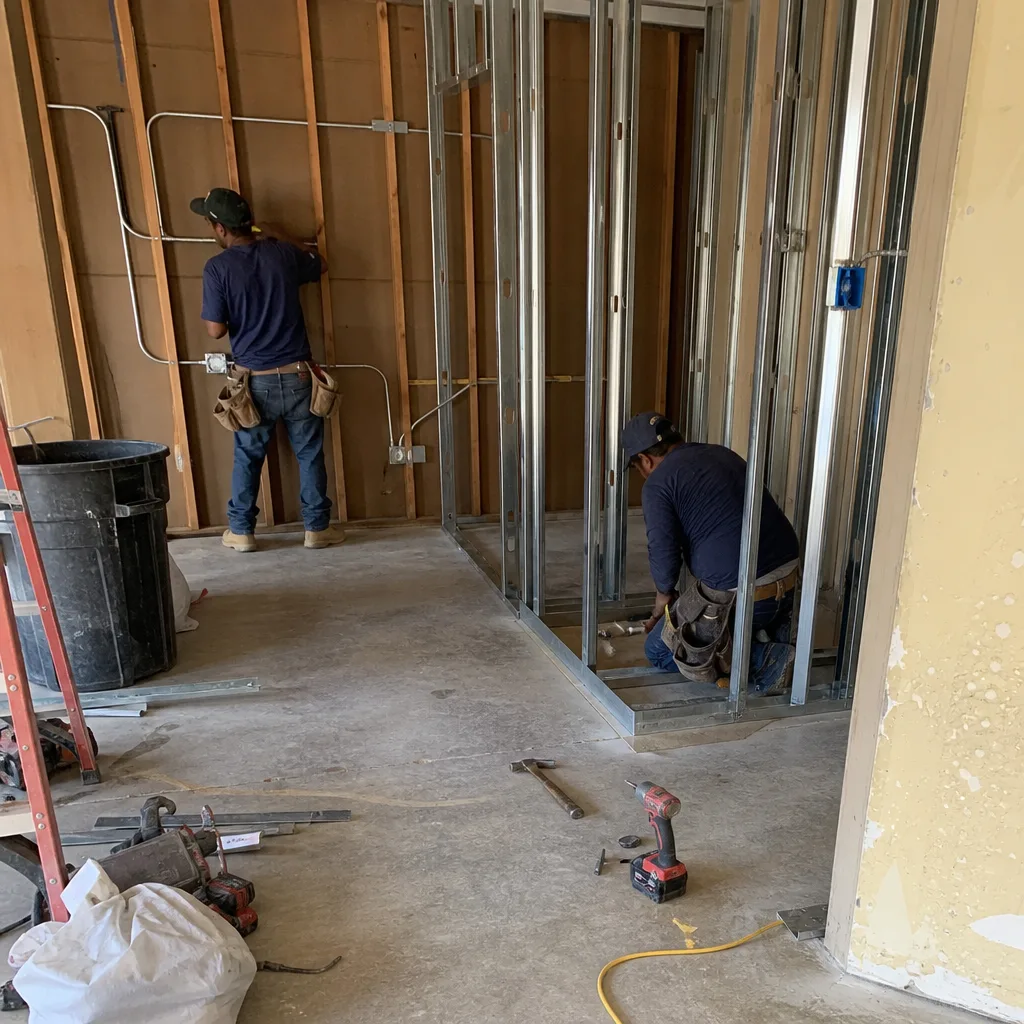
- Signing the owner-builder affidavit without reading the sale prohibition clause. The one-year restriction is explicit; the permanent disclosure obligation is implied. Both affect your property’s marketability.
- Assuming your homeowner’s policy covers construction activity. It does not. The exclusion is standard, not optional. Purchasing builder’s risk insurance is not a luxury - it’s a necessity that most owner-builders discover too late.
- Hiring unlicensed subcontractors for electrical, plumbing, or gas work. Fontana’s cross-check with CSLB records at rough inspection has caught dozens of owners. Failed inspections trigger removal, replacement, and re-inspection fees that erase labor savings.
- Using a generic online permit set without Fontana-specific engineering. The city’s seismic category, wind exposure, and soil conditions differ from coastal California templates. Generic sets generate correction rounds that cost months.
- Underestimating the time value of project management. An 800 sq. ft. ADU requires 200-300 hours of active management for an owner-builder. At any reasonable hourly valuation, this cost is rarely included in DIY savings calculations.
- Failing to document construction with dated photos and inspection records. At resale, your memory is not evidence. A documented photo record, like the one we provide on every Ellery visit, supports value and resolves disputes.
- Ignoring the prefab manufacturer’s installation requirements. Warranty coverage for Dvele or Mighty Buildings units typically requires licensed contractor installation. Owner-builder set voids protection you’ve paid for.
When to Call a Professional
Call a professional when the cost of being wrong exceeds the cost of being right. For most Fontana homeowners, this threshold is reached when: the project requires electrical or gas work; the foundation involves expansive clay soils or slope; the ADU will be financed or sold within ten years; or your time is valued above $50 per hour.
Ellery ADU Studio Fontana offers free estimates with written pricing before any work begins, per Haven Standard Clause 1. We also provide a Free Second Opinion on any written estimate already in hand - whether from another contractor or your own owner-builder spreadsheet. The comparison is often revealing: hidden costs in the DIY column, or scope gaps in a competitor’s quote.
We’ve completed 900+ ADUs since 2015, every one with a written price, a documented photo record, and the 365-Day Done Right Promise in writing. If you’re weighing the DIY path, call us first. The estimate is free, and the documentation you’ll receive - even if you choose to self-build - will improve your permit set and your resale position. You can also browse more guides & resources on ADU planning and construction.
Call (909) 637-3715 to schedule your free estimate.
Frequently Asked Questions
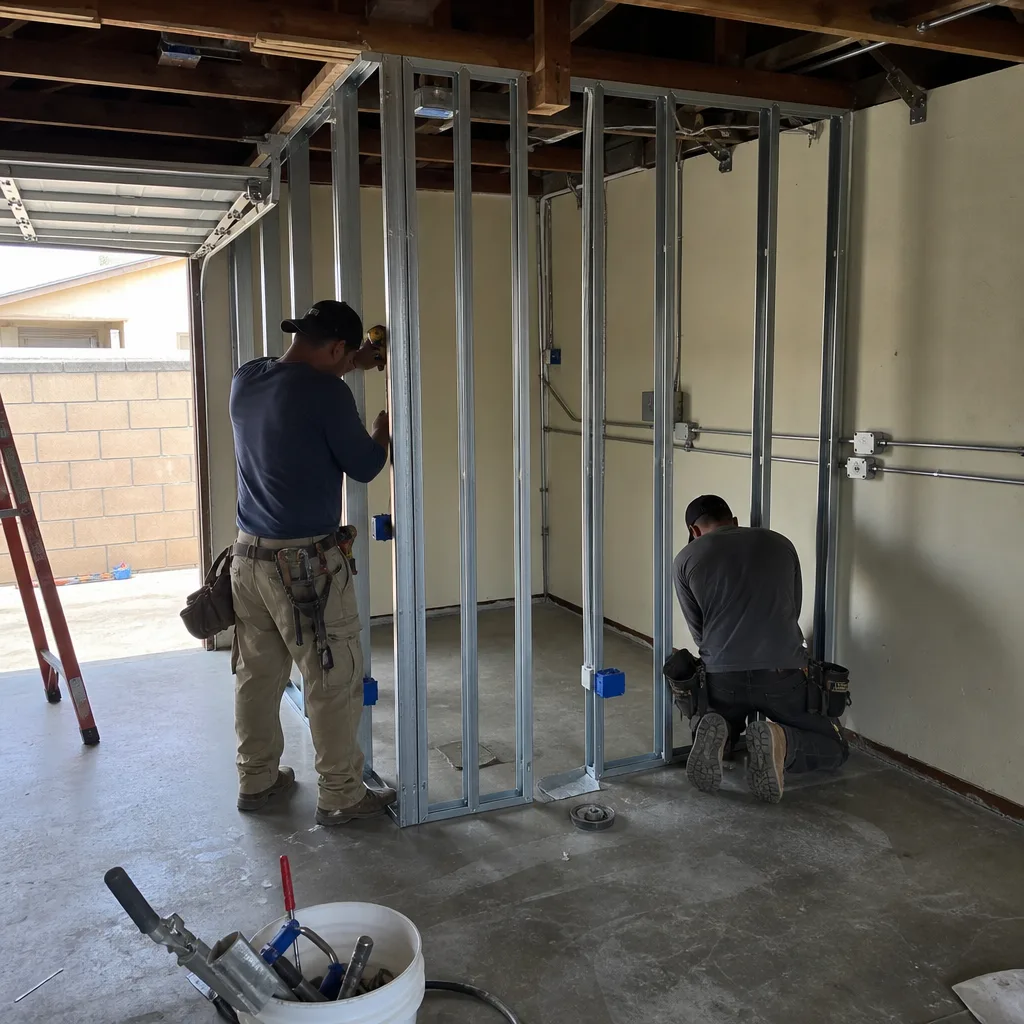
Professional design-build ADUs in Fontana typically range from $220-$420 per square foot all-in, depending on type and site conditions. Owner-builder projects average 12-20% less in direct costs but rarely account for insurance, tool acquisition, time value, or the 15-25% of work that must still be contracted to licensed trades. Call (909) 637-3715 for a written estimate on your specific project - estimates are free, with no obligation.
Yes, but with complications. The California owner-builder affidavit creates a one-year sale prohibition from completion date and a permanent disclosure obligation. Most title insurers treat owner-built ADUs as underwriting exceptions, requiring additional inspections or coverage limitations. These frictions can delay closing or reduce sale price. A professionally built ADU with clean permit records transfers without these encumbrances.
As an owner-builder, you can perform finish carpentry, drywall, paint, flooring, and general labor. Electrical panel work, gas line installation, structural connections to existing buildings, roofing over 120 square feet, and HVAC refrigerant work all require licensed California contractors regardless of who holds the permit. Fontana Building & Safety verifies licenses at rough inspection.
No. Standard policies exclude bodily injury and property damage arising from construction performed by the insured. You need builder’s risk insurance, which costs $2,800-$4,500 for a typical Fontana ADU project and may require surplus lines placement for pure owner-builders. Professional builders carry this coverage as part of standard operations.
Yes, if the contract is structured correctly. The licensed GC must hold the permit, with owner-performed finish work explicitly scoped as volunteer labor. This avoids the owner-builder affidavit entirely. The GC inspects and approves owner work before cover. Not all contractors permit this arrangement; Ellery ADU Studio Fontana evaluates hybrid requests case by case with the scope boundary written into the contract.
Prefab units reduce on-site construction duration but increase coordination complexity. Factory warranty coverage typically requires licensed contractor installation. Crane operations, foundation work, utility connections, and Fontana-specific permitting remain significant challenges that most homeowners cannot self-perform. Professional coordination of prefab systems within a single contract preserves factory precision while ensuring local accountability.
The Bottom Line
The DIY-vs-professional question for Fontana ADUs is not primarily about skill or cost. It is about risk allocation and time horizon. California’s owner-builder framework permits self-construction but burdens the property with disclosure obligations that outlast the build. Insurance gaps expose personal assets. The permit set quality affects both plan check duration and resale value. For homeowners planning to hold their property indefinitely and valuing their time low, owner-building with proper insurance and licensed subcontracting is viable. For the typical Fontana homeowner who bought between 2015 and 2025 and may relocate within a decade, professional design-build delivery - with its written price, documented build history, and clean title transfer - typically returns more value than it costs. The savings you keep are the ones that survive the sale.
Written by Nadia Ellery, Owner at Ellery ADU Studio Fontana, serving Fontana since 2015.